A practical walk-through of the equipment you can see, the clues worth recording, and the questions that clear up the rest.
October 15, 2026 · HVAC Review Hub Editorial · 1,304 body words · Research guide
You can usually narrow down your HVAC system by looking at how heat reaches your rooms, what equipment sits outside, and what your thermostat calls the heating mode. Treat those observations as clues, then confirm the answer with the equipment model numbers or a service professional.
You do not need to remove a furnace panel or follow wires to get started. A useful result is a simple record you can hand to a contractor, rather than a confident guess based on one outdoor cabinet.
Start inside a room you use every day
Look around your living room before heading for the mechanical closet. Notice whether you have supply registers, wall-mounted indoor units, radiators, baseboard heaters, or a combination of several kinds of equipment.
If air comes from registers in multiple rooms, you probably have some form of ducted distribution. That tells you how conditioned air travels, but it does not tell you whether the heat comes from a furnace, a heat pump, or electric resistance elements.
A wall-mounted indoor head suggests a ductless system serving that area. You may also find discreet ceiling cassettes or concealed ducted units, so the familiar wall head is one possible arrangement rather than a universal feature.
Radiators and hydronic baseboards point toward water or steam distribution instead of a house-wide supply-air system. Electric baseboard heaters can look similar from across the room, which is a good reason to record the label before naming the system.
Make a quick room list if the house has additions or converted spaces. Your upstairs bedrooms might use one system while a newer sunroom has its own heat pump and separate controls.
Read the thermostat as a clue
Write down the thermostat brand and model, along with the modes you can select. A display offering auxiliary or emergency heat can be a useful heat-pump clue, but you should still verify the actual equipment and configuration.
Do not change installer settings to explore what the thermostat supports. A thermostat can offer options that were never connected to your equipment, and the appearance of its menu cannot prove how your home is wired.
Notice how many thermostats you have and which rooms each one seems to control. Several thermostats can represent separate systems or zones within a system, and those arrangements call for different questions when you request service.
If you rent, ask your landlord or property manager for the system description and maintenance responsibilities. You can still record symptoms and room conditions without taking ownership of work that belongs to the building operator.
Look outside without opening anything
From a normal, safe walking position, look for an outdoor unit and photograph its accessible identification label. Capture the manufacturer, model number, and serial number clearly enough to read later without climbing, moving equipment, or reaching through a grille.
A central air conditioner and an air-source heat pump can have very similar outdoor cabinets. The fact that you see a fan and a coil is not enough to distinguish them reliably.
An air-source heat pump moves heat between your home and outdoor air, while a cooling-only air conditioner handles the cooling job. Your installation may pair the outdoor unit with indoor equipment that provides heating through another method.
A single outdoor unit may connect to several indoor heads, and more than one outdoor unit may serve one house. Take a wider photograph showing the surrounding location so you can match your close-up label to the correct piece of equipment.
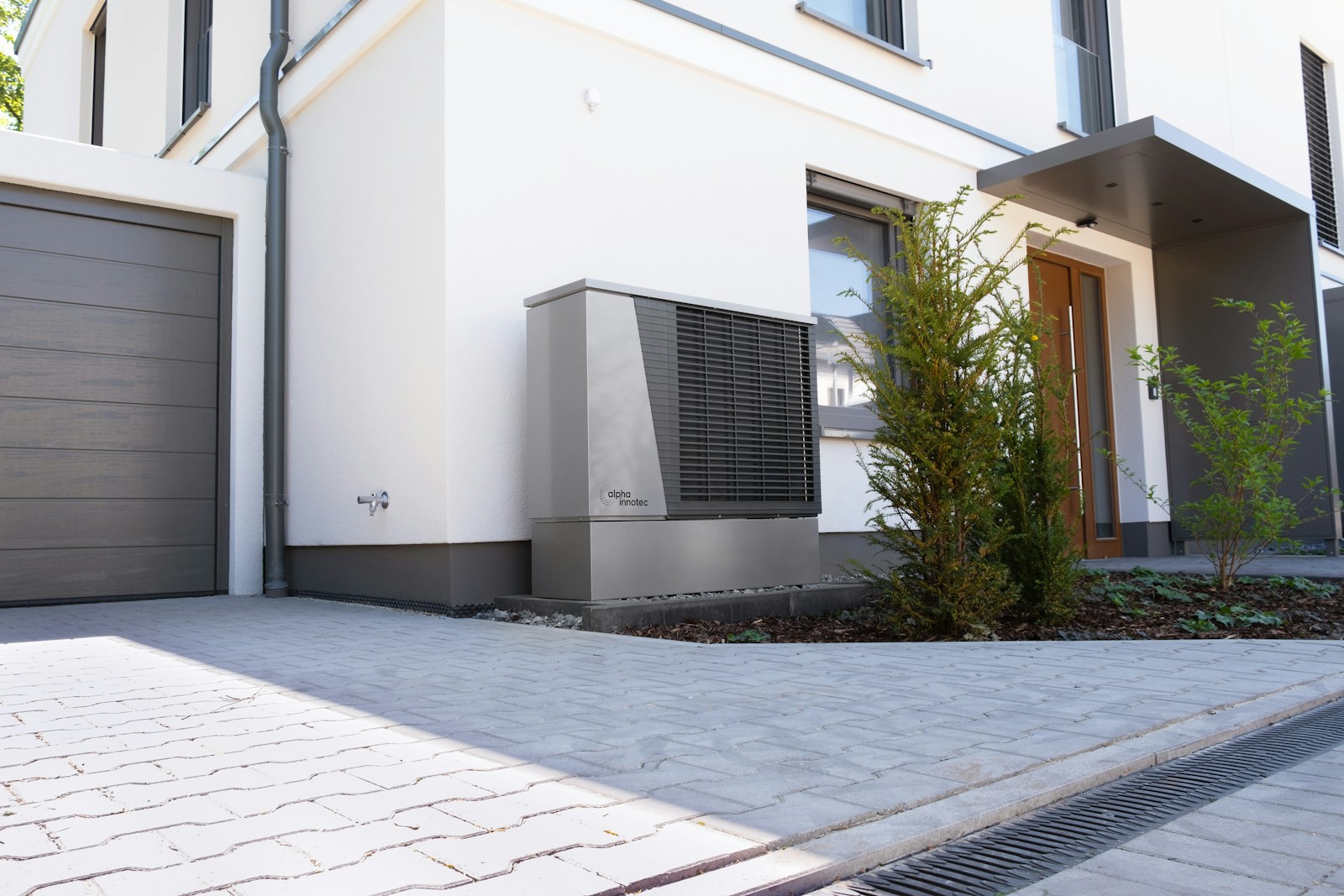
The photograph below shows a heat pump in a real residential setting outside the United States. Use it to understand the relationship between a house and outdoor equipment, rather than to identify your own model or judge installation clearances.
A heat pump beside a real house. This European installation illustrates equipment context; it is not an installation guide or an endorsement. Photo: alpha innotec / Unsplash · Unsplash License. Display resized; no content changes.
Find the indoor equipment from an accessible area
Your furnace or air handler may sit in a utility room, basement, garage, closet, attic, or crawl space. Start with the accessible areas you already use and ask for help if the equipment requires entering a cramped, elevated, or unfamiliar space.
A furnace heats air, and the blower distributes that air through ductwork. An air handler also moves air through the system, but a cabinet that looks furnace-like is not enough to establish the heat source inside it.
Look for an accessible nameplate, an owner's manual, or a previous service invoice. Those records are often more useful than trying to interpret pipes and fittings from a distance.
Leave combustion chambers, electrical panels, and refrigerant components closed. If you notice a fuel smell, a carbon monoxide alarm, or signs of immediate danger, stop the identification exercise and follow the relevant emergency instructions.
If your home uses a boiler, its paperwork should identify the appliance and the distribution method. You might still have a separate air-conditioning system, so avoid describing the whole house by the first heating appliance you find.
Put the pieces together
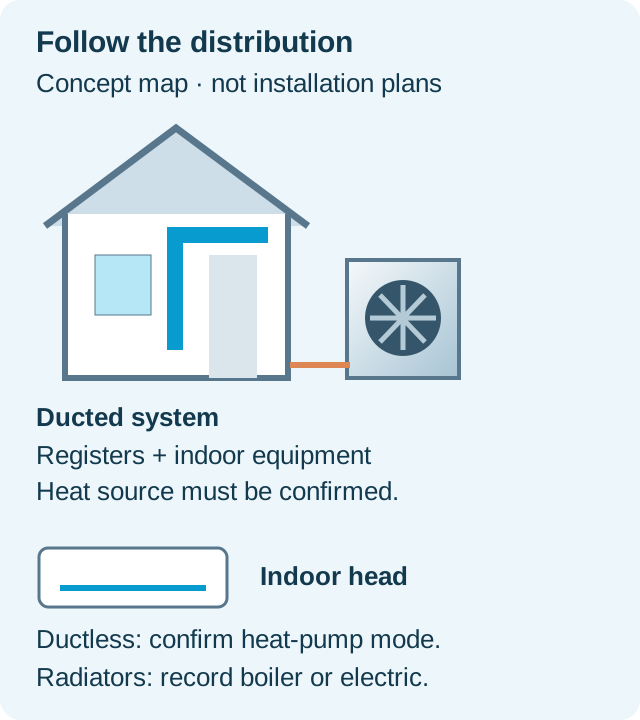
Use the diagram below as a conceptual map of three common arrangements. The equipment details and pipe routes are deliberately simplified, so it is not an installation plan or a guide to making connections.
Original explanatory concept illustration by HVAC Review Hub. Simplified relationships, not a certified setup or wiring plan.
If you find ductwork, a cooling outdoor unit, and a documented furnace, record the system as a furnace with central air conditioning. Add the actual model numbers so a contractor can confirm the pairing instead of relying on the label you chose.
If the paperwork identifies a heat pump, record whether it uses ducts or indoor heads. Ask what supplies backup heat, how the thermostat stages that heat, and which maintenance instructions apply to the complete installation.
If you find a boiler plus a separate cooling system, record both. The same habit helps with homes that have a central system downstairs and independent equipment in an addition.
Leave uncertain fields blank and turn them into questions. Writing “outdoor unit model photographed; heating type unconfirmed” is more useful than choosing a system name that sends a service call in the wrong direction.
Build a one-page system record
Keep a folder with equipment photographs, manual links, service dates, and the rooms each system serves. Include filter locations you have actually confirmed and any thermostat instructions supplied by the installer.
Add your own observations in plain language, such as “the upstairs thermostat affects the bedroom registers.” Keep observations separate from explanations, especially when a problem occurs only during particular weather.
Write down the questions you still need answered before the next service visit. You might ask whether your outdoor unit provides heat, whether the system has separate zones, and which filter size the manufacturer recommends.
You do not need to estimate capacity from floor area or decode every character in a model number. Equipment selection depends on the home and the installed combination, so a model label alone does not establish whether the system was sized correctly.
ENERGY STAR recommends asking about sizing based on your home's actual characteristics, manufacturer airflow requirements, and duct evaluation. Use those topics to make a service conversation more specific, rather than turning your identification notes into a design assessment.
Use the record before you buy anything
Pull out your system record before ordering a filter, shopping for a thermostat, or requesting a replacement quote. The first useful question is whether the product or service fits the equipment you actually have.
For a thermostat, ask about the control voltage, wiring, stages, accessories, and any proprietary controls. Similar-looking thermostats can suit very different installations, so leave compatibility approval to the manufacturer checker or a qualified installer.
For a filter, match the documented dimensions and approved arrangement before considering a higher efficiency rating. For a service call, send the relevant model photographs and a short description of the symptom.
Your goal is a house you can explain clearly to the person helping you. Once you know where comfort comes from and which details remain uncertain, every maintenance and buying decision starts with better information.
Sources & how to use this guide
Sources checked October 15, 2026. Factual references inform this research guide; the examples and planning steps are original editorial suggestions.