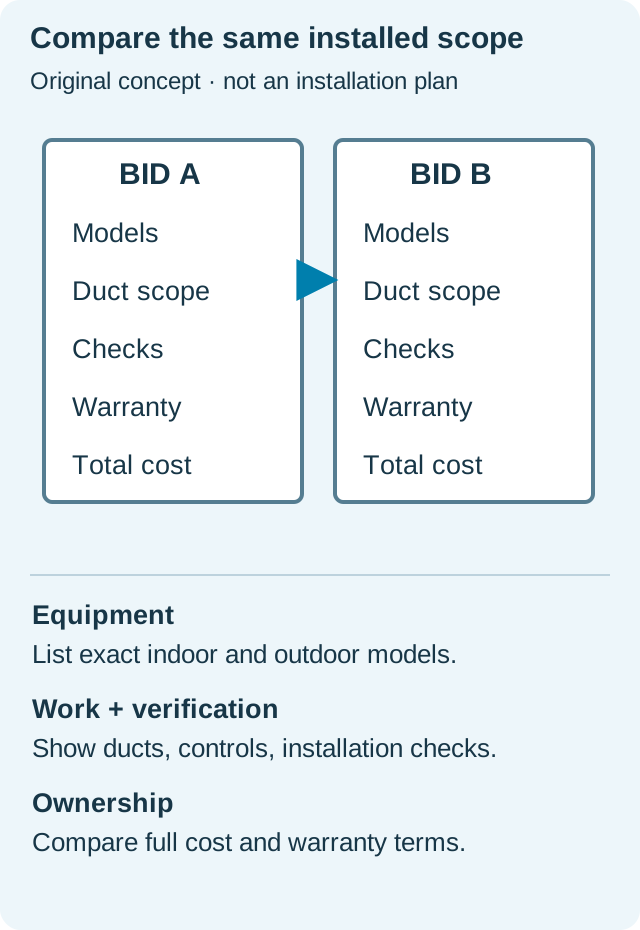
The lowest HVAC quote is easy to spot, but the lowest price for the same finished job takes more work. Before you compare totals, make each proposal describe the equipment, installation, verification, and support you would actually receive.
You aren't trying to turn every bid into an identical brand choice. You're trying to see whether different totals reflect different products, a different scope, or a detail that one contractor hasn't priced clearly yet.
Give every bidder the same starting brief
Prepare a one-page description of the current system, rooms that concern you, maintenance history, and what you want the project to accomplish. ENERGY STAR's hiring guidance recommends gathering system information and noting uncomfortable rooms before contacting contractors.
For an original example, your brief might say, “Upstairs bedrooms are uncomfortable after sunset; please explain whether the proposed work addresses that concern.” That tells bidders what matters without deciding in advance that a larger unit is the answer.
Give the same facts to each contractor and keep a copy of what you sent. Otherwise, one bid may include solving a room problem while another prices only a straightforward equipment exchange, making the totals look more comparable than they are.
If your goals change during the process, update the brief and ask each bidder to respond to the revised scope. A useful comparison needs the same question, even when the proposed answers differ.
Compare the specified system, not a product nickname
Ask each proposal to identify the exact indoor and outdoor equipment, controls, and included accessories where applicable. A broad label such as premium heat pump doesn't let you check the actual combination or understand whether two bids contain the same items.
ENERGY STAR's installation bid checklist asks about a properly matched indoor coil and outdoor unit and documentation such as an AHRI certificate. For an applicable split system, request the proposed combination's supporting identification rather than assuming a shared brand name proves the match.
Keep any model change visible when a contractor revises the quote. If an advertised package isn't available and a substitute is offered, compare the documented replacement combination and terms instead of treating the change as a detail too small to record.
You can put unknowns in a comparison sheet without filling them with guesses. “Indoor coil not identified” is a useful finding because it becomes a precise clarification request before you choose a contractor.

Ask what supports the proposed size
ENERGY STAR's bid checklist asks contractors to calculate heating and cooling loads using Manual J or an equivalent method. It treats sizing as an evaluation of the home, rather than a reason to automatically copy the old equipment's capacity.
Ask what building information was used and whether the proposal addresses your stated comfort concerns. You don't need to perform the calculation yourself to expect an explanation of the result and its relationship to the recommended equipment.
If two contractors propose different capacities, keep the difference visible and ask each to explain it. A larger number isn't a free upgrade, and agreement between two estimates doesn't itself demonstrate that either one evaluated the home properly.
For an original comparison note, write “load calculation supplied,” “promised after selection,” or “not discussed,” using the contractor's actual answer. That gives you more information than a row containing only equipment tonnage.
Make duct and access work explicit
ENERGY STAR's checklist separately asks about duct condition, leakage testing, and the ability of existing ducts to support the proposed system. That helps you see why a replacement project can involve more than exchanging the equipment cabinet.
In your comparison sheet, ask what duct work is included, what condition it addresses, and what happens if an undisclosed problem is found. Keep the answer with the bid rather than relying on a conversation you may remember differently later.
Include access and restoration questions where they matter: how equipment reaches its location, what opening or finish work is anticipated, and who handles it. These are scope questions for your project, not a claim that every installation needs the same construction work.
Ask who is responsible for any required permits, inspections, disposal, and cleanup, with the applicable local process confirmed by the contractor. A complete written answer lets you understand the quoted job without assuming those items are automatically included in every total.
Find the verification step in the proposal
ENERGY STAR's bid checklist calls for documentation of installation procedures and measurements, including checks of refrigerant and airflow for applicable equipment. Ask what commissioning or startup records you will receive, and how the installer will confirm the completed system meets its requirements.
Keep the handover concrete: manuals, model details, user-control guidance, and agreed checks. Clarify the promised scope before treating “make sure it works” as a complete verification plan.
If a contractor uses a particular term for verification, ask what the term means in their proposal. You want to know what will be measured or documented, rather than assuming every company uses the same word for the same work.
The verification plan should also connect to your original complaint. If the project is meant to improve a difficult room, ask how that concern will be reviewed after installation instead of disappearing once the new unit starts.
Separate price, assumptions, and possible additions
Make one row for the base installed price and another for exclusions or potential additional work. Read the circumstances that could change the total, and ask for the process used to approve those changes before work begins.
Keep incentives separate from the undiscounted project price until eligibility, timing, and payment arrangements are confirmed through the current program. A possible rebate should remain a clearly stated assumption rather than hiding inside a total you mistake for a guaranteed amount due.
If financing is offered, compare the complete written terms alongside the equipment proposal. Keep the project cost and payment arrangement visible as separate decisions, so a comfortable monthly payment doesn't prevent you from noticing a different scope or obligation.
An original comparison sheet can use plain answers such as included, excluded, allowance, or unresolved. Those labels are more useful than assigning an invented score to a bid whose missing detail you haven't yet asked about.
Read the warranty and follow-up promises
ENERGY STAR advises comparing written, itemized proposals for cost, efficiency, and warranties, and getting model numbers, schedule, and warranty information into the written agreement. Use that as a prompt to request the actual terms rather than relying on a headline number of years.
Ask what is covered for parts and labor, who handles a claim, and whether registration or service conditions apply to the stated coverage. Record the written answer for the exact equipment and installer arrangement instead of assuming all warranties from the same brand are identical.
Clarify the contact and response process if the original comfort problem remains after startup. You can then compare support as an identifiable commitment without turning a salesperson's reassuring phrase into a guarantee they never actually wrote down.
Resolve the missing rows before choosing
Send each contractor a short list of its unresolved items and ask for a revised written proposal. That gives you something concrete to compare while avoiding repeated conversations about an old version of the bid.
Once the scope is clear, you can weigh price alongside the proposed solution, verification, schedule, and support. The right choice may still be the lowest total, but you will know what that total buys and which tradeoffs you accepted.
Save the final selected proposal and your comparison notes together. When installation day arrives, you will have a readable record of the promised job, making the handover easier to assess than a decision based only on the cheapest line.
Sources & how to use this guide
Primary references checked October 15, 2026. The planning examples are original editorial suggestions; no home inspection, product ownership, or hands-on testing is claimed.