Best Whole House Split System for Year‑Round Comfort
Answering your search for a complete, efficient whole‑house split system, this guide highlights five top options suitable for large homes or multi‑room layouts. Each model targets different needs—from whole‑home heating in colder climates to quiet, energy‑saving cooling for hot summers. Whether you want multi‑zone zoning, high SEER ratings, or easy DIY installation, the selections below help you compare suitability for your home and lifestyle.
Summary of selected products:
- ROVSUN 3 Ton Ducted Central Air Conditioner with Heat Pump and Inverter (18–19 SEER2) — Best for large homes needing strong all‑season performance.
- Senville 2 Ton Central Air Conditioner Heat Pump Split System — Best for mid‑sized spaces seeking reliable, inverter‑driven cooling and heating.
- ACiQ 5 Ton Central Inverter Heat Pump System with 20kW Back‑up Kit — Best for large, cold climates with robust heating capability.
- MRCOOL VersaPro 2.5 Ton Central Ducted Heat Pump Split System — Best for mid‑size homes with DIY line-set access.
- COSTWAY 3 Ton Ducted Central Air Conditioner Heat Pump System — Best for energy‑efficient, flexible installation in varied layouts.
ROVSUN 3 Ton Ducted Inverter System
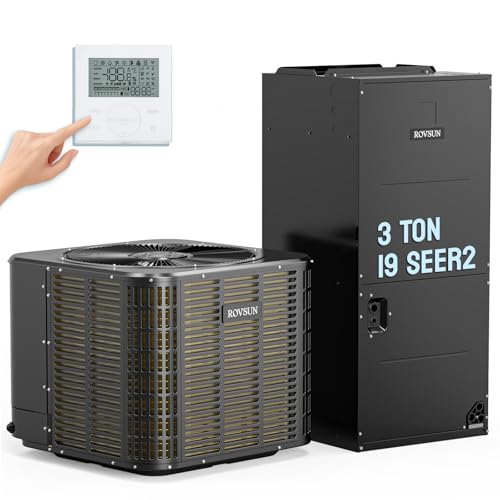
Best for: Large homes needing year‑round climate control with quiet, smooth airflow. This unit features a 24,000 BTU cooling/heating capability, an ECM variable‑speed motor for quiet operation, and full inverter technology to reduce energy waste. Precharged with eco‑friendly refrigerant and adaptable indoor installation options support upflow, downflow, and horizontal configurations.
Why it’s selected: It combines high heating and cooling capacity with energy efficiency and flexible placement. The inverter reduces stop‑start cycling, supporting stable temperatures and lower utility costs.
Caution: Requires proper electrical supply (208/230V) and professional setup to ensure optimal refrigerant charge and duct configuration.
Senville 2 Ton Central Air Conditioner Heat Pump Split System

Best for: Mid‑sized spaces up to roughly 1,500 square feet that need reliable cooling plus heat in winter. This unit uses inverter technology for precise temperature control and energy efficiency, with heating capability in cold conditions as part of a central system approach.
Why it’s selected: It offers substantial cooling capacity with efficient inverter operation, paired with strong heating performance to complement a central system.
Caution: Suitability depends on existing electrical service and ductwork; installation compatibility should be confirmed for non‑traditional layouts.
ACiQ 5 Ton Central Inverter Heat Pump System
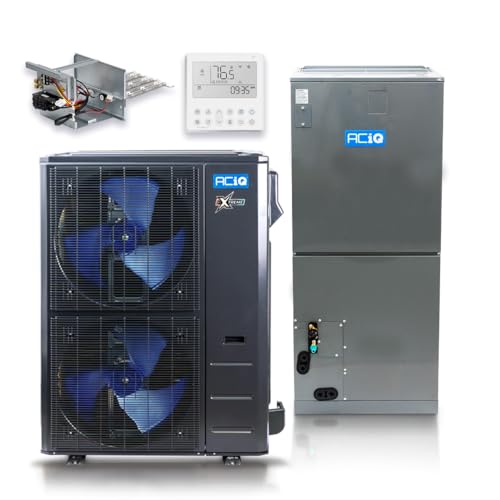
Best for: Large homes in need robust heating in cold conditions along with cooling. The system emphasizes inverter efficiency and a generous 60,000 BTU cooling/heating capacity, plus a back‑up heat kit option for very cold days.
Why it’s selected: The extreme heat capability and inverter control help maintain comfort without large energy spikes, making it a strong all‑season choice for bigger residences.
Caution: The kit option and wiring should be planned with a licensed technician to ensure safe, code‑compliant installation.
MRCOOL VersaPro 2.5 Ton Ducted System

Best for: Mid‑sized homes seeking a DIY‑friendly, energy‑efficient central ducted solution. It features inverter technology and a 17 SEER rating, pairing solid cooling with improved efficiency for daily use.
Why it’s selected: The VersaPro line emphasizes easier installation with pre‑charged line sets, making it appealing for hands‑on installers while still delivering dependable cooling performance.
Caution: Check compatibility with existing ductwork and ensure electrical service meets unit requirements to avoid performance limits in very hot or cold extremes.
COSTWAY 3 Ton Ducted Inverter System
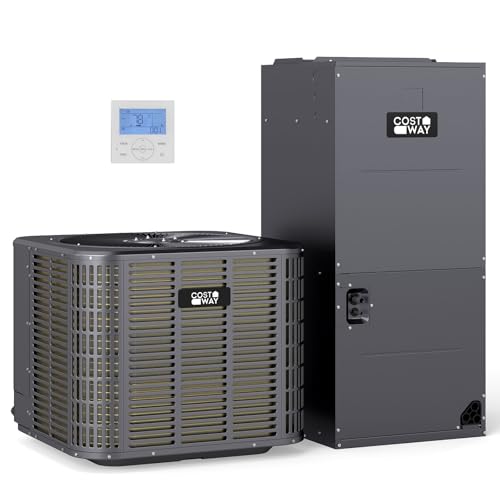
Best for: Homes needing a balanced, energy‑efficient ducted option with flexible installation. The 36000 BTU capacity supports sizeable living spaces, with R454B refrigerant for lower environmental impact.
Why it’s selected: It combines inverter technology with a green refrigerant and a strong SEER2 rating, helping to manage annual energy use while delivering reliable climate control.
Caution: Installation may require compatible line sets and proper zoning to maximize efficiency in larger layouts.
Buying Guide: Key Considerations for a Whole House Split System
- System type and zoning: Determine if you need single‑zone or multi‑zone operation and whether a ducted system fits your home layout.
- Capacity and climate: Match BTU ratings to your home size and climate; oversized or undersized units reduce comfort and efficiency.
- Efficiency and refrigerant: Prioritize high SEER2/HSPF2 ratings and green refrigerants like R454B to balance performance and environmental impact.
- Installation and compatibility: Check electrical requirements (voltage), ductwork, and space for outdoor units and indoor air handlers.
- Maintenance needs: Consider filter access, warranty terms, and service availability in your area.
- DIY vs professional install: Some models offer precharged line sets and easier installation, while others require licensed techs for optimal refrigerant charging.
Frequently Asked Questions
- What does SEER2 mean for a whole house system? SEER2 measures cooling efficiency over a season; higher values indicate better efficiency and lower energy use.
- Is ducted better than ductless for a whole home? Ducted systems cover large areas with centralized components, while ductless options offer zoning flexibility but may require multiple indoor units.
- Can these systems operate in extremely cold weather? Some units include cold‑weather heating capabilities; verify the operational temperature range before purchase.
- What maintenance is needed after installation? Regular filter changes, coil cleaning, and annual professional checkups help maintain efficiency and longevity.
- How do I compare the real energy cost? Compare SEER2 and HSPF2 ratings, plus local climate considerations, to estimate annual energy use for your home.