Best Low Profile HVAC Duct Solutions for Tight Spaces
When space is tight, a low profile HVAC duct setup can save inches without sacrificing airflow. This guide highlights five compact options suited for narrow walls, closets, or ceilings, helping you pick the right vent components for tight installations. Each product is described with who it’s best for, its strengths, and any potential limitation. This summary helps you compare at a glance and decide which solution fits your project needs.
| Product | Best For | Why It Stands Out |
|---|---|---|
| Periscope Dryer Vent | Dryer installations in cramped spaces | Adjustable 0-5″ telescoping design to minimize wall clearance |
| Flutesan End Boot | Rectangular-to-round transitions in tight walls | 90° bend with 4 in round to 10×4 rect opening for compact routing |
| Imperial GV0650 End Boot | Right-angle transitions for wall or floor routes | Lightweight galvanized boot designed for space-limited runs |
| Imperial GV0605 Angle Boot | Floor register outlets in tight spaces | Sturdy galvanized angle boot for low-clearance installs |
| 2Pcs Exhaust Pass-Through | Under-door and thick floor/wall clearances | Slim profile for under-door airflow and clean duct layout |
Periscope Dryer Vent

Best for tight laundry setups, this low-profile dryer vent uses a stainless steel telescoping design to reduce wall clearance. The 0-5″ adjustable range helps avoid contact with nearby surfaces while maintaining maximum airflow. It’s built to resist heat and provide durable performance over time. Choose this if you need a space-saving option that minimizes vent overlap with the wall outlet.
Limitations include a smaller maximum extension compared to longer hoses, so plan wall-to-dryer spacing accordingly.
Flutesan End Boot

Best for converting a round duct to a rectangular register in tight spaces behind walls or under floors, this 90° boot is crafted from 30-gauge galvanized steel. It provides smooth airflow redirection and solid durability for residential use. Choose this if your duct run requires a compact, rigid transition between shapes.
Limitation to note: the boot size is fixed to 4 inch round to 10×4 rectangular openings, which must match your ductwork.
Imperial GV0650 Duct End Boot

Best for right-angle transitions from round ducts to registers in restricted spaces, this 3-¼” x 10″ x 4″ galvanized boot is designed to handle compact layouts. It provides a reliable connection point where space is at a premium, making it a practical option for ceiling or wall routes. Consider this when you need a sturdy, space-conscious boot to anchor the duct run.
Note: Availability of exact dimensions should be confirmed for your system to ensure a proper fit.
Imperial Gv0605 Duct Angle Boot
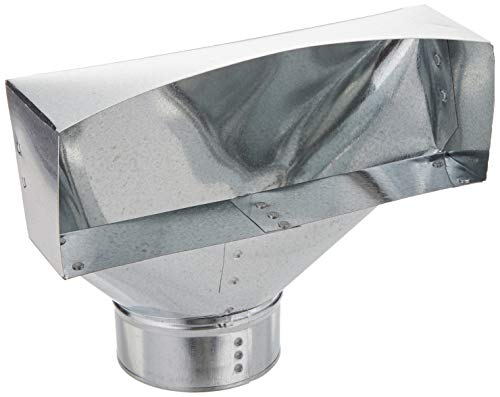
Best for floor register outlets in tight spaces, this galvanized angle boot closes a heat duct run neatly. The 3-¼” x 10″ x 4″ profile makes it suitable for low-clearance rooms, such as basements or narrow hallways. It’s a solid choice when a right-angle transition to a floor vent is required.
Limitation: its angle design is best suited for specific register orientations; verify your room layout before purchasing.
2Pcs Exhaust Vent Duct Pass Through

Best for under-door and thick floors where a slim, pass-through solution is needed, these ducts help maintain clean airflow and organized layouts. The two-pack design supports multiple rooms or zones with a consistent narrow profile. Choose this if you need to preserve headroom under doors or minimize carpet interference.
Caution: The slim profile may limit maximum airflow compared to full-size ducts in high-demand spaces.
Buying Guide
What is a low profile duct solution?
Low profile ducts are designed to occupy less space along walls, ceilings, and floors while maintaining adequate airflow. They are ideal for rooms with limited clearance, such as laundry closets, crawlspaces, or tight corridors.
What should I check before buying?
- Duct size compatibility: match the product’s inlet/outlet dimensions to your existing ductwork.
- Material and finish: galvanized steel or stainless steel offer durability and corrosion resistance in typical home environments.
- Angle and bend radius: ensure the available angles fit your room layout without excessive length or sharp twists.
- Installation space: measure wall depth, floor height, and ceiling clearance to confirm a low-profile option fits.
- Load and heat considerations: verify the boot or vent can handle the expected air volume and heat load.
How to choose by room type?
- Laundry rooms: prefer adjustable or telescoping vents to minimize wall protrusion.
- Basements and crawlspaces: end boots and angle boots help navigate tight corners.
- Under doors: pass-through kits keep airflow organized without door interference.
Installation tips
- Plan the layout to minimize bends and long runs, which reduce efficiency.
- Seal connections to prevent air leaks and improve performance.
- Avoid crush points where ducts pass through tight spaces or under furniture.
FAQ
Are low profile ducts suitable for all HVAC systems?
They are suitable when compatible with the duct size and layout of your system. Always check the size and connection type before purchasing.
Do these products require professional installation?
Installation can be straightforward for standard duct sizes, but complex routes or high heat loads may require a professional.
Can I mix products from different brands?
Yes, as long as the duct sizes and fittings match, but ensure consistent material quality for durability.
Will these reduce airflow?
Properly planned low-profile components preserve airflow by minimizing sharp angles and long runs.
What maintenance is needed?
Inspect connections periodically and clean any visible debris to maintain airflow efficiency.
Which option is best for tight doorways?
Under-door pass-through kits provide a slim profile that helps maintain airflow under doors without interference.