Best Smart Thermostats for Radiant Heat in 2026: Efficient, WiFi-Enabled Control
If you’re retrofitting or upgrading radiant heating, a high-voltage smart thermostat can trim energy use while keeping comfort. This guide highlights five top options, focusing on 120/240V baseboard and underfloor systems. Each pick suits different installation setups, budgets, and smart-home ecosystems. Use the buyer notes to choose the best match for your climate, wiring, and preferred voice assistants.
Product snapshot:
- Mysa Smart Thermostat LITE (Electric Baseboard Heaters) — Best for homes using HomeKit and remote control without a hub.
- meross Matter Smart Thermostat (High-Voltage) — Best for cross-platform compatibility with Matter, Alexa, HomeKit, and Google.
- Mysa Smart Thermostat 240V (Baseboard) — Best for high-volt installations needing local app control and alerts.
- SunTouch SunStat CommandPlus — Best for floor heating with touchscreen and floor/air sensing.
- YeloDeer 1 PC Dual Voltage — Best for flexible 120V/240V setups with Smart Life app support.
Mysa LITE: Economical Smart Thermostat
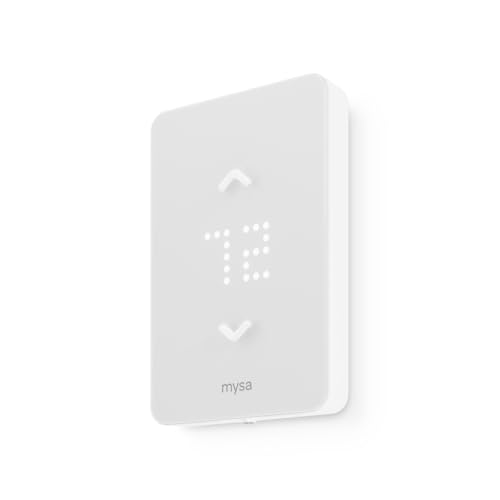
Best for: Homeowners seeking energy savings on electric baseboard heat with flexible scheduling and Apple HomeKit integration. This model provides 7-day scheduling and remote WiFi control without a hub, making it a straightforward setup for many 120V–240V systems.
Why selected: It emphasizes energy savings and remote management, with in-app scheduling to reduce unnecessary heating while preserving comfort. It integrates with HomeKit, Alexa, and Google via WiFi.
Caution: Ensure your system uses high/line voltage (not compatible with low-voltage HVAC). Some users may want additional sensors for larger rooms.
Meross Matter Smart Thermostat — Cross-Platform
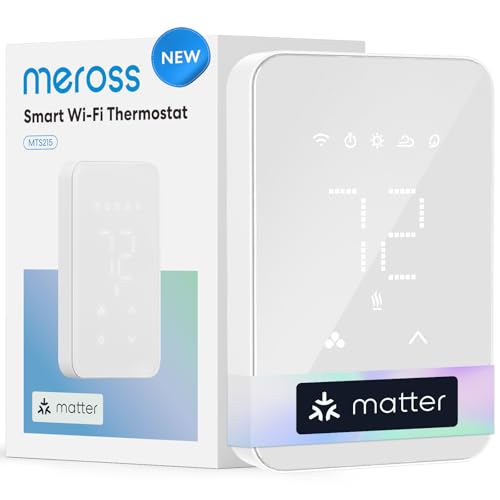
Best for: Homes that want Matter compatibility along with voice control via Alexa, HomeKit, Google, and SmartThings. Suitable for baseboard or convector heating in 120–240V systems.
Why selected: It supports universal Matter compatibility, eliminating ecosystem lock-in. The 24/7 scheduling and remote control help manage energy use efficiently.
Caution: Not compatible with low-voltage HVAC; confirm your wiring includes enough conductors for proper operation (4 wires recommended in some setups).
Mysa 240V Baseboard Thermostat

Best for: 240V baseboard installations requiring local app control, temperature/humidity alerts, and robust HomeKit/Alexa/Google compatibility.
Why selected: This model explicitly targets high-voltage baseboard setups with remote control, avoiding older two-wire compatibility concerns.
Caution: Requires a neutral or second live wire; verify your wiring and compatibility with older baseboards before purchase.
SunTouch SunStat CommandPlus — Floor Heating Focus

Best for: Radiant floor heating systems that want a touchscreen interface, floor and air sensing, and energy monitoring. Supports remote access for 4.3″ display convenience.
Why selected: It combines a dedicated floor-sensing approach with a modern touchscreen and robust programming options, including away and energy monitoring.
Caution: Primarily designed for floor heating; confirm compatibility with your specific flooring type and system configuration.
BOWSEN Programmable Thermostat — GFCI Included
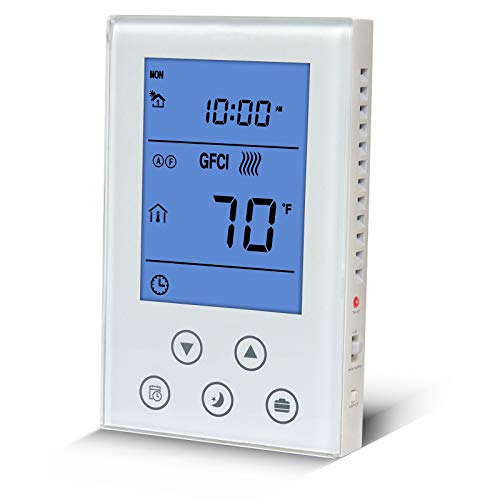
Best for: Underfloor radiant heating projects needing built-in GFCI protection and dual voltage support (120V/240V). It includes a floor and air sensor with GFCI inside the unit.
Why selected: It provides safety features (GFCI) plus dual voltage compatibility, which can simplify wiring in some installations.
Caution: Maximum current is 15A; verify that your system’s wattage and wiring fit within the limits and that a proper neutral or second live is available.
YeloDeer Dual Voltage WiFi Thermostat

Best for: Homes needing flexible 120V/240V operation with the Smart Life app and voice assistant support (Alexa, Google). Ideal for mixed wiring environments.
Why selected: It supports 5+1+1 scheduling and works with most underfloor heating systems, offering broad compatibility and remote control via mobile app.
Caution: Verify the wiring requires 4 wires (including neutral or second live) for proper operation and that the Smart Life app is your preferred control method.
Buying Guide: Key Considerations For Radiant Heat Thermostats
- Voltage compatibility: Check whether your system is 120V, 240V, or dual voltage. Choose a model that explicitly supports your baseboard or underfloor wiring.
- Wiring requirements: Many high-voltage thermostats require four wires (including neutral). Confirm your wiring before buying to avoid compatibility issues.
- Smart-home ecosystem: Decide which platform you’ll use (HomeKit, Alexa, Google Home, SmartThings, or Matter). Some models offer broader compatibility than others.
- Scheduling and energy savings: Look for 7-day or multi-day programming, adaptive displays, and energy monitoring to maximize savings without sacrificing comfort.
- Floor-sensing features: For floor heating, consider thermostats with floor and air sensing to maintain comfort at the surface level and to protect flooring materials.
- Safety features: GFCI protection is important for floor heating installations in some regions; verify if your setup requires it and if the thermostat includes it.
- Remote access and control: WiFi-enabled thermostats allow adjustments from mobile devices, away from home, or during travel — useful for unpredictable schedules.
- Display and usability: A touchscreen or clear interface helps with setup and daily adjustments, particularly in living spaces where easy readability matters.
Frequently Asked Questions
- Are high-voltage smart thermostats safe for radiant floor heating? Yes, when installed according to the manufacturer’s wiring instructions and local electrical codes. Look for models with proper GFCI or safety features if required by your installation.
- Can I use any smart thermostat with baseboard heaters? Not every thermostat is compatible with 120V/240V baseboard systems. Check voltage, wiring, and installation notes before purchase.
- Do these thermostats require a hub? Some do not. Models like Mysa LITE connect directly to WiFi; others may support multiple ecosystems without a separate hub.
- Can I control these thermostats with voice assistants? Most listed options support Alexa, Google Home, or HomeKit. Verify compatibility with your preferred assistant.
- Will a thermostat with floor-sensing improve comfort? Floor sensing can improve comfort by adjusting heating based on floor temperature, reducing hot spots and energy waste.
- What if my home uses older wiring or two-wire baseboards? Some models require four wires; if you have an older setup, choose a compatible model or consult an electrician for wiring updates.
Table of chosen products for quick reference:
| Product | Best For | Voltage | Smart Home |
|---|---|---|---|
| Mysa LITE | HomeKit lovers; remote control | 120–240V | HomeKit, Alexa, Google |
| Meross Matter | Cross-platform, Matter ready | 120–240V | Alexa, HomeKit, Google, Matter |
| Mysa 240V Baseboard | High-voltage baseboard control | 240V | HomeKit, Alexa, Google |
| SunTouch CommandPlus | Floor sensing; programmable | Floor heating systems (varies) | WiFi remote; app |
| BOWSEN | GFCI safety; dual voltage | 120/240V | Depends on setup |
| YeloDeer Dual Voltage | Flexible voltage; Smart Life | 120/240V | Smart Life; voice assistants |
Bottom line: For radiant heat, select a thermostat that matches your voltage, supports your preferred smart-home ecosystem, and offers scheduling and floor-sensing features when floor heating is involved. The five options above provide a spectrum from strong HomeKit compatibility to broad, cross-platform support with Matter.