Best Plug-in Heat Trace Solutions for Winter-Proof Pipes
Answering the search for reliable plug-in heat trace solutions, this guide highlights five practical options for keeping water lines, hoses, roofs, and RV systems from freezing. Designed for homeowners, renters, and small commercial setups, these cables offer self-regulating heat, easy installation, and compatibility across metal and plastic pipes. The top picks emphasize energy efficiency, safety features, and clear indications of when heat is active.
Summary table of selected products:
| Product | Best Use | Length | Voltage |
|---|---|---|---|
| Cupohus 6FT Heat Tape | Household pipes, roof, RV | 6 ft | 110-120V |
| MAXKOSKO 9ft Heat Tape | Longer runs, metal & plastic pipes | 9 ft | 120V |
| Cupohus 3FT Heat Tape | Short runs, hose protection | 3 ft | 110-120V |
| 12ft Self Regulating Heat Tape | Longer water lines | 12 ft | 120V |
| RADIANT SOLUTIONS HeatTapePro | Commercial-grade, large installations | 75 ft | 120V |
Cupohus 6FT Heat Tape With Digital Thermostat

Best for: Homeowners needing a compact, easy-to-install heat trace for small pipe runs or roof lines. The digital thermostat provides straightforward control and integrated protection for typical residential applications.
Caution: Ensure outlet is GFCI protected to reduce electrical risk in wet areas.
MAXKOSKO 9ft Self Regulating Heat Tape
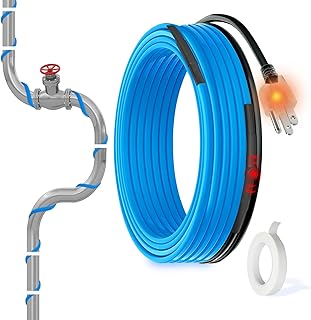
Best for: Benchtop to medium-length runs where longer cable sections simplify installation. The self-regulating design helps manage heat across variable temperatures.
Limitation: Longer cables may require more planning for power outlet placement to avoid overheating near outlets.
Cupohus 3FT Heat Tape With Thermostat

Best for: Short hose or pipe segments requiring targeted protection. The thermostat-enabled design helps maintain a steady 41°F–59°F (5°C–15°C) range to conserve energy.
Selected for: Its compact length and explicit temperature control suit small-space applications, including hose lines and brief pipe runs.
Caution: Suitable for 120V outlets with proper grounding; ensure GFCI where moisture is present.
12ft Self Regulating Heat Tape
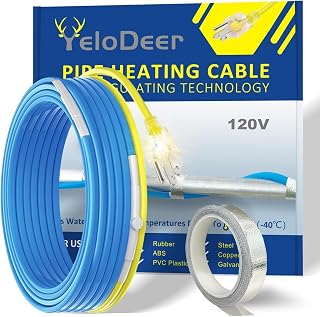
Best for: Projects needing a longer, continuous heat trace section with thermostat control, such as longer water lines or building gutters.
Limitation: Slightly longer installation planning required to route the cable safely along pipes and avoid pinch points.
RADIANT SOLUTIONS HeatTapePro

Best for: Commercial-grade needs with high durability and extended protection across various roof surfaces and large-scale piping. GlowCap technology provides end-to-end status verification.
Selected for: A 75 ft cable with a robust 10-year warranty, designed for tough environments and heavy use. Its injection-molded connections reduce risk of failure from weather exposure.
Caution: This is a longer cable; ensure proper power and space management to prevent overheating in confined areas.
Buying Guide
- What length do I need? Choose a length that covers the entire run, plus a safety margin for turns and bends. Longer runs can reduce cold gaps but require more power planning.
- What temperature range is required? Self-regulating cables automatically adjust heat output; verify that the target range meets your climate needs and keeps water above freezing without wasting energy.
- Are safety features included? Look for ground fault protection (GFCI), waterproof/ moisture-sealed construction, and robust end-connectors to minimize risk of shorts or corrosion.
- What materials are supported? Most cables work with metal and plastic pipes; confirm compatibility with your pipe type and any insulation present.
- Do I need thermostat control or continuous heat? Thermostats conserve energy by maintaining a set temperature, while basic cables provide constant heat that can burn more energy.
- Installation considerations? Plan outlet proximity, route along pipes away from heat sources or mechanical damage, and use proper clamps or clips for secure mounting.
FAQ
- Q: Can I use heat tape on any outdoor pipe? A: Most heat tapes are designed for metal and plastic pipes and suitable for outdoor use when rated for weather exposure; check product specs for outdoor suitability.
- Q: Do these cables require professional wiring? A: In most cases, plug-in models operate on standard 120V outlets; follow local electrical codes and product instructions for safe installation.
- Q: Will heat tape prevent hose or pipe freezing in severe cold? A: Heat tape helps keep water within a safe temperature range but may not guarantee protection in extreme conditions; use alongside proper insulation.
- Q: How should I maintain heat tape for longevity? A: Inspect connections, keep cables dry, avoid kinking, and replace damaged sections to prevent short circuits.
- Q: Is a thermostat necessary? A: A thermostat improves energy efficiency by regulating heat; without it, the cable might consume more power to maintain heat.
- Q: Can I overlap cables? A: Some models tolerate overlap, but read manufacturer guidance; improper overlap can create hotspots or void warranties.