Best Kerosene Heater With Thermostat: Safe, Efficient Picks for Any Space
Looking for a kerosene heater with a thermostat to keep spaces warm reliably? This guide highlights five verified options that balance heat output, safety features, and fuel efficiency. Each heater is suited for different environments—garages, workshops, living areas, and emergency setups. Read on to find which model fits your space, then compare at a glance with a quick summary table below.
| Product | Best For | Key Benefit |
|---|---|---|
| Sengoku HeatMate Portable Kerosene Heater (10,000 BTU) | Small to medium rooms | Long burn time, automatic safety shut-off |
| Reddy Heater 80,000 BTU Forced Air Kerosene Heater | Large spaces, workshops | High heat output, multi-fuel compatibility |
| VEVOR 215,000 BTU Kerosene Forced Air Heater | Big workshops, barns | Large area coverage, thermostatic control |
| AHUAWA 10,000 BTU Kerosene Heater | Emergency use, garages | Electricity-free operation, portable |
| VEVOR 70,000 BTU Kerosene Forced Air Heater | Medium to large spaces | Thermostat, efficient fuel use |
Sengoku HeatMate Portable Kerosene Heater, 10,000 BTU

The Sengoku HeatMate is a compact, cordless kerosene heater designed for portability. With a 1.2-gallon tank, it can provide up to 14 hours of continuous heat in suitable spaces. It includes an automatic safety shut-off for added peace of mind and a push-button start for quick setup without external power. Best for: small-to-medium rooms, apartments, or patio spaces where mobility is essential. Caution: monitor fuel levels to avoid unexpected shutdowns during extended use.
Reddy Heater 80,000 BTU Forced Air Kerosene Heater

The Reddy Heater RFA80T-V3 delivers 80,000 BTU to heat up to about 2,000 sq ft, making it suitable for large garages or construction sites. It’s a multi-fuel option capable of using kerosene, diesel, or fuel oil, which adds flexibility in fuel availability. Best for: large workshops or contractor spaces that require robust, rapid heat. Caution: heavier unit with higher fuel use; ensure adequate ventilation in confined spaces.
VEVOR Kerosene Forced Air Heater 215,000 BTU
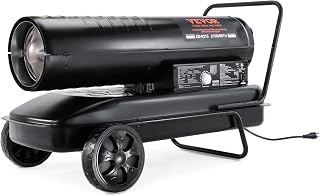
This heavy-duty heater delivers 215,000 BTU and covers large spaces up to 1,260 m³ (approx. 44,496.6 cu ft). It includes a thermostat and room-temperature display to manage energy use, plus dual-fuel protection and a fuel gauge. Best for: expansive spaces like barns, workshops, and farms that need strong, sustained heat. Caution: higher fuel consumption; ensure good ventilation to avoid fumes in enclosed areas.
10,000 BTU Kerosene Heater & Stove

AHUAWA’s model provides 9,000–10,000 BTU for spaces up to 200–500 sq ft, with a 1.4-gallon tank offering up to 20 hours of heat. It’s designed for electricity-free operation and includes a complete accessory set. Best for: emergency readiness, garages, or camping adjacencies where electric power may be unavailable. Caution: best suited for smaller rooms due to BTU range.
Buying Guide
- Space size and heat output: Choose BTU ratings that align with your room size. Larger spaces need higher BTU units or multiple units; smaller rooms benefit from 10,000 BTU models for stable warmth.
- Thermostat and temperature control: A built-in thermostat helps maintain a steady temperature and saves fuel. Consider models with a clear display and automatic shutoff at set thresholds.
- Fuel type and availability: Most kerosene heaters support kerosene; some offer multi-fuel options (diesel or fuel oil). Ensure you can source clean fuel locally and within safety guidelines.
- Safety features: Look for tip-over switches, automatic shut-off, and proper ventilation requirements. Heaters should have stable bases and protective housings for adults and pets in the space.
- Ventilation and odors: Kerosene combustion can produce fumes. Ensure adequate ventilation and consider models with odor-reducing features like dual-fuel filters and clean-burning designs.
- Portability vs. permanence: Portables are ideal for quick warmth in different rooms or outdoor areas; heavier, contractor-grade heaters suit fixed workshop setups with higher heat needs.
- Fuel tank capacity and runtime: Larger tanks extend run time, reducing refueling frequency. Match tank size to your expected usage pattern and safety considerations.
FAQs
Do kerosene heaters require electricity?
Some models operate without electricity, using a manual spark or push-button start. Others include electric components for ignition or thermostat control. Check the product description for specifics.
Is it safe to use kerosene heaters indoors?
Yes, if you provide adequate ventilation and follow the manufacturer’s safety guidelines. Never run a heater in an enclosed, unventilated space for extended periods.
What maintenance is needed for kerosene heaters?
Regularly check fuel lines, filters, and wicks, and replace them as recommended by the manufacturer. Clean the exterior and ensure the fuel cap seals properly to prevent leaks.
How do I choose between a portable vs. forced-air kerosene heater?
Portable units are best for flexible warmth in small to medium spaces. Forced-air heaters deliver higher BTU for larger areas but are heavier and require more fuel and ventilation planning.
Can these heaters burn other fuels?
Some models are multi-fuel capable (kerosene, diesel, or fuel oil). Only use one fuel type at a time, following the manufacturer’s instructions.
What safety features are most important?
Automatic shut-off, tip-over protection, stable bases, and clear ventilation guidelines are critical for reducing risk in occupied spaces.