Best Convection Garage Heater Solutions for Reliable Warmth
A practical guide to choosing top convection heaters for garages, workshops, and outdoor workspaces. This article examines five well-regarded models that deliver steady heat through convection, plus a buying guide to help compare efficiency, safety features, and installation needs for American garages.
| Product | Type | BTU/Coverage | Fuel / Power |
|---|---|---|---|
| Mr. Heater 25,000 BTU MH25CVX | Propane Convection | Up to 625 sq. ft. | Propane |
| ProTemp 80,000 BTU LP Propane Convection Heater | Propane Convection | Up to 1,800 sq. ft. | Propane |
| Dyna-Glo Indoor Kerosene Convection Heater WK95C8 | Kerosene Convection | Up to 1,000 sq. ft. | Kerosene |
| Comfort Zone CZ230ER | Ceiling-Mount Electric Convection | Up to 1,250 sq. ft. | Electric (Hard-Wired) |
| Dyna-Glo RMC-LPC200DG | Propane Convection | Outdoor/Indoor up to large spaces | Propane |
Mr. Heater MH25CVX Convection Heater
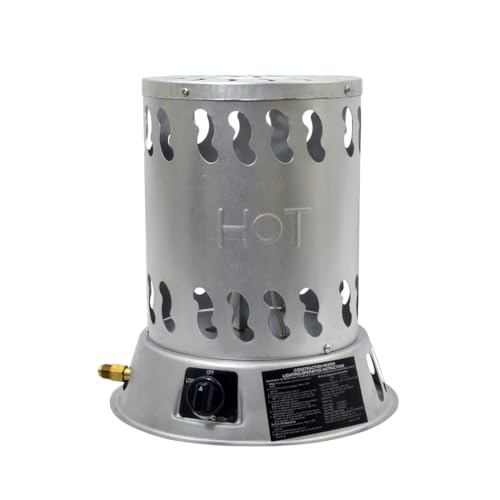
This 25,000 BTU propane convection heater delivers robust warmth suitable for garages, workshops, and outdoor work areas. It heats up to 625 sq. ft. and can run up to 17 hours on a standard 20 lb tank. Safety features include a standing pilot light and a thermo-electric valve that shuts off gas if the flame goes out, and operation does not require electricity, ensuring heat even in power outages.
Key strengths include straightforward setup with a 10 ft propane hose, regulator, and P.O.L. tank connection, plus Piezo ignition for quick starts. This model is CSA certified and designed for reliable, portable heat where electricity may be limited or unavailable.
ProTemp 80,000 BTU LP Propane Convection Heater

ProTemp offers a large-space convection heater with 80,000 BTUs designed for garages, barns, and workshops up to 1,800 sq ft. It operates on a 20 lb propane tank, ensuring long run times with broad fuel capacity. This unit emphasizes safety and steady heat distribution for bigger work areas that require consistent temperature control during cold seasons.
Dyna-Glo WK95C8 Indoor Kerosene Convection Heater

The Dyna-Glo WK95C8 provides 23,800 BTU with a 1,000 sq. ft. heating capacity, and no electricity is required. Kerosene models are a practical option when electrical power is limited or unavailable onsite. The convection design promotes even heat distribution across workspaces, making it suitable for garages where a steady, standalone heat source is essential.
Comfort Zone CZ230ER Ceiling-Mount Electric Convection Heater

This 7,500-watt ceiling-mounted unit frees floor space while delivering wide-area heat up to 1,250 sq. ft. The heavy-gauge steel body supports demanding environments, and adjustable louvers combined with a configurable mounting angle focus airflow where it’s most needed. A digital thermostat and 12-hour timer add convenience for controlled operation in garages and workshops.
Dyna-Glo RMC-LPC200DG Gas Convection Heater
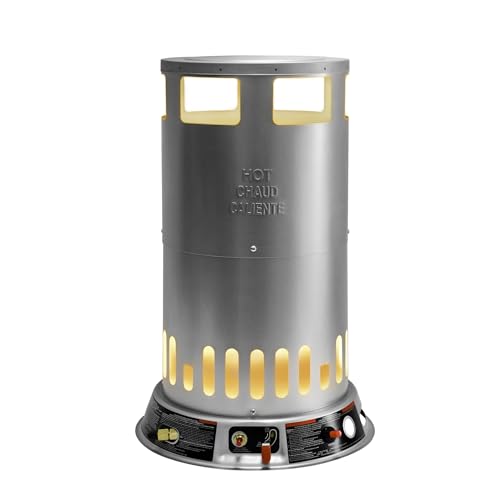
The RMC-LPC200DG model offers a wide heat range (50,000 to 200,000 BTU) for flexible heating of large spaces, both outdoors and indoors with proper ventilation. Its convection design supports even heat distribution, making it suitable for garages and commercial settings that require scalable warmth for evolving workspace needs.
Buying Guide: Key Purchase Considerations
- Heat source and space: Choose propane if you need portability and longer run times in unpowered spaces; kerosene is an option where electricity is unavailable but requires fuel handling and ventilation considerations; electric units suit garages with hard-wired power supply and ceiling mounting to save floor space.
- Room size and heat distribution: Match BTU to the area. Convection models generally provide even warmth, but larger spaces may benefit from higher BTU units or multiple heaters for uniform coverage.
- Ventilation and safety: Propane and kerosene models require proper ventilation and fuel handling protocols. Electric heaters minimize emissions but require electrical capacity and proper mounting.
- Installation and clearance: Consider ceiling-mount or floor-mounted configurations based on space and workflow. Ensure clearances from combustibles and secure mounting when needed.
- Operating features: Look for thermostats, timers, and safety protections such as tip-over, overheat shutoff, and automatic shutoffs for flame-out events.
- Energy efficiency and maintenance: Evaluate efficiency ratings, fuel economy, and filter or maintenance requirements to keep operating costs predictable.
- Durability and warranty: For commercial or frequent use, prioritize rugged builds (steel housings) and validated safety certifications to ensure long-term reliability.
- Noise and air quality: Electric units tend to be quieter; consider fanless or low-noise designs if the workspace requires minimal disruption.