Best Air Conditioners for Sliding Windows: Top Picks for Easy Cooling
Answering the demand for efficient, easy-to-install cooling for sliding windows, these units and kits are tailored for horizontal sliding or casement windows. This guide highlights five options that balance power, ease of installation, and practical use in American homes. The best buyers are those updating a single room, replacing an old unit, or adding cooling to a space with wide sliding windows. Below you’ll find a quick buying table, followed by detailed product sections and a practical buying guide.
| Product | Best For | Window Type | Approx. Coverage |
|---|---|---|---|
| Perfect Aire 10,000 BTU Casement Window AC | Mid-size living rooms | Casement | Up to 450 sq ft |
| Perfect Aire 10,000 BTU Slider Window A/C | Sliding windows users | Horizontal Sliding | 400–450 sq ft |
| Durastar 10,000 BTU Casement Window AC | Casement window setups | Casement | 400–450 sq ft |
| Frigidaire 6,000 BTU Window AC | Smaller rooms | Typical Window | Up to 250 sq ft |
| Soleus Air Sliding Window Kit (Accessory) | Existing sliding window units | Sliding window kit | Various window sizes |
Perfect Aire 10,000 BTU Casement Window AC

Best for larger rooms that fit casement windows. This 10,000 BTU unit cools up to 450 sq ft and includes a follow-me remote, digital LED display, and a 24-hour programmable timer for daily comfort. It ships with an expandable mounting kit suitable for 15½”–16¼” window widths and 21¼”–39½” window heights. The unit offers three cooling and fan speeds, adjustable air direction, and sleep mode.
Who this is for: buyers with sliding casement windows seeking strong cooling for living rooms or home offices. Limitation: installation must align with casement window dimensions; check your window width/height against the kit’s range.
Perfect Aire 10,000 BTU Slider Window A/C
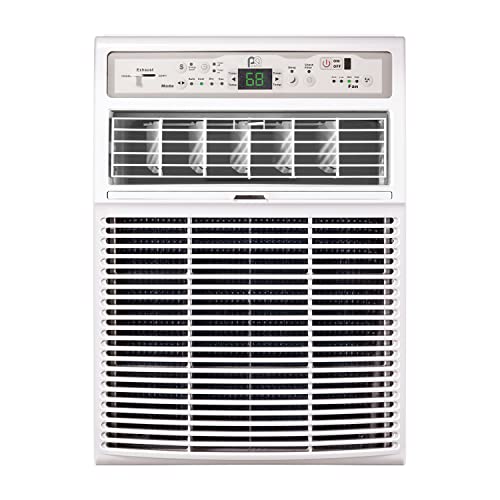
Best for horizontal sliding windows that require a robust 10,000 BTU capacity. The unit cools 400–450 sq ft and uses an expandable window mounting kit compatible with sliding or casement configurations. It offers adjustable temperature control (62°F–86°F), the same three-speed cooling and fan options, and a versatile installation approach for sliding windows.
Who this is for: ideal for homes with sliding windows needing strong cooling. Limitation: ensure the kit’s width and height ranges fit your specific window.
Durastar 10,000 BTU Casement Window AC

Best for casement window setups that require dedicated cooling for mid-to-large rooms. This 10,000 BTU unit fits left-to-right sliding casement windows and provides a digital display, a dehumidifier function, sleep mode, three fan speeds, and a remote with a 16-foot range. It is designed for 400–450 sq ft areas.
Who this is for: buyers with casement windows seeking strong, quiet operation across multiple speeds. Limitation: not suitable for vertical sliding windows; confirm your window orientation before purchase.
Frigidaire 6,000 BTU Window AC

Best for smaller rooms or bedrooms, this 6,000 BTU unit provides reliable cooling for spaces up to about 250 sq ft. It features three fan speeds, eco mode, and a sleep mode to conserve energy while maintaining comfort. A remote control makes it easy to adjust settings from across the room.
Who this is for: ideal for compact sliding windows or smaller living spaces. Limitation: lower BTU means it’s most effective in smaller areas; check room size before buying.
Soleus Air Sliding Window Kit (Accessory)
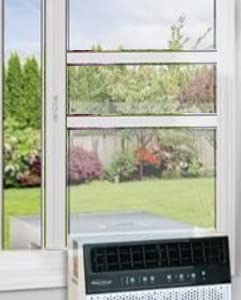
Best for existing Soleus Air exclusive hybrid “Saddle” air conditioners on sliding windows. This reinforced aluminum window kit is adjustable for heights from 23.5 inches to 43 inches and enables a secure, easy install with minimal tools. It preserves window view by using plexiglass while maintaining efficiency.
Who this is for: buyers with a Soleus or compatible sliding-window A/C setup requiring a durable seal kit. Limitation: not a stand-alone unit; pairing with a compatible AC is required.
Buying Guide
- Window type compatibility: Confirm whether your window is a casement, horizontal sliding, or standard sliding sash. Some units specify “casement” while others require an expandable mounting kit for sliding windows.
- Unit size and room fit: Match BTU to room size. A 6,000–8,000 BTU unit is typically sufficient for small rooms (up to 250–300 sq ft), while 10,000 BTU units cover larger living spaces (up to about 450 sq ft).
- Installation kit and window width/height: Check the kit’s min/max window width and height. Ensure your window falls within those measurements for a secure fit.
- Cooling features and energy use: Look for multiple fan speeds, sleep mode, and programmable timers. Energy-saving modes help reduce power consumption over time.
- Portability vs. permanence: Portable units offer flexibility but may be less efficient and noisier. Window units tend to be more energy-efficient but require a fixed window setup.
- Accessories and kits: For sliding windows, a reinforced window kit can improve seal and efficiency. The right kit reduces drafts and improves cooling performance.
Frequently Asked Questions
- What BTU should I choose for a sliding window setup? Choose 6,000–8,000 BTU for smaller rooms and 10,000 BTU for larger spaces up to about 450 sq ft, depending on insulation and climate.
- Are window air conditioners easy to install on sliding windows? Yes, especially when the unit includes an expandable mounting kit designed for sliding or casement windows. Follow the manufacturer’s width and height ranges.
- Is a window kit necessary for sliding windows? A kit is often recommended to ensure a tight seal and proper drainage. It helps maximize efficiency and reduce drafts.
- Can I use a standard window AC in a sliding window? Some units are designed specifically for sliding windows, while others require a kit or alternative mounting method. Verify compatibility before purchase.
- Do these units have dehumidify modes? Several listed models include dehumidification as part of a 3-in-1 or dedicated mode, which helps reduce humidity in addition to cooling.
- Which unit is best for a bedroom? A quieter model with sleep mode and appropriate BTU for the room size is ideal; for many bedrooms, 6,000–8,000 BTU units with low-noise operation perform well.