Best Solar Fans for Attics: Smart, Energy-Efficient Cooling Solutions
Answer: If you’re looking to reduce attic heat with an automatic, weatherproof solution, a solar attic fan is a practical choice. These models use solar power to vent hot air, lowering cooling loads and improving overall home comfort. The top picks below are best for different spaces—ranging from large attics to workshops and garages—each with features like automatic thermostats, weatherproof housings, and smart controls for year-round performance.
The following table summarizes the 5 products selected for this guide. It highlights typical applications, cooling capacity, and key strengths to help you compare at a glance.
| Product | Brand | CFM | Power | |
|---|---|---|---|---|
| VEVOR 42W Solar Attic Fan | VEVOR | Up to 2800 | 42W MPPT | Large attics; balanced cost and performance |
| VEVOR 35W Solar Attic Fan | VEVOR | Up to 2400 | 35W MPPT | Medium-to-large spaces; simple automation |
| KingMiKi 25W Solar Exhaust Fan | KingMiKi | 430 | 25W Monocrystalline | Compact spaces; budget-friendly solar option |
| iLiving HYBRID Ready Smart Thermostat Solar Roof Attic Exhaust Fan | iLiving | 1150 | 40W | Smart control; larger homes; flexible mounting |
| Hon&Guan Solar Attic Fan with Thermostat | Hon&Guan | 2000 | 40W | High airflow; adjustable thermostat |
VEVOR 42W Solar Attic Fan, 2800 CFM

Best for large, heat-prone attics where maximum airflow is essential. This model uses a 42W MPPT regulator to optimize solar intake and can move up to 2800 CFM with a brushless DC motor for quiet operation. It also includes a built-in temperature and humidity controller, enabling automatic adjustments to maintain comfortable attic conditions.
Who it’s best for: homeowners with big attic spaces seeking strong venting and automatic environmental control. Why selected: high cooling capacity and intelligent monitoring work together to keep attic temperatures down while reducing electric bills.
Caution: performance depends on sun exposure; at low light, electrical switching may occur to maintain cooling, so expect some variability on cloudy days.
VEVOR Gable Mount Fan, 14 Inch Solar Power Attic Exhaust

Better for mid-sized spaces or when roofline installation is preferable. This 14-inch gable-mount unit delivers around 1300 CFM and offers an adjustable thermostat plus durable housing. It’s a practical choice for attics, garages, or workshops needing steady ventilation and a simple control setup.
Who it’s best for: homeowners with limited roof space who still want solid airflow. Why selected: good balance of airflow and install versatility. Caution: mounting location can affect intake efficiency; ensure a clear line of sight for optimal solar exposure.
VEVOR 35W Solar Attic Fan, 2400 CFM

Choose this if you want solid airflow without the highest price. The 35W MPPT controller maximizes sunlight to pull hot air from the attic, delivering up to 2400 CFM. It’s suitable for metal and masonry roofs and includes a built-in thermostat to kick in at higher attic temperatures.
Best for: larger attics or spaces that require reliable daytime cooling with modest energy use. Caution: still dependent on sun; performance during long overcast periods will rely on stored electricity or automatic switching if available in the model.
KingMiKi 25W Solar Exhaust Fan
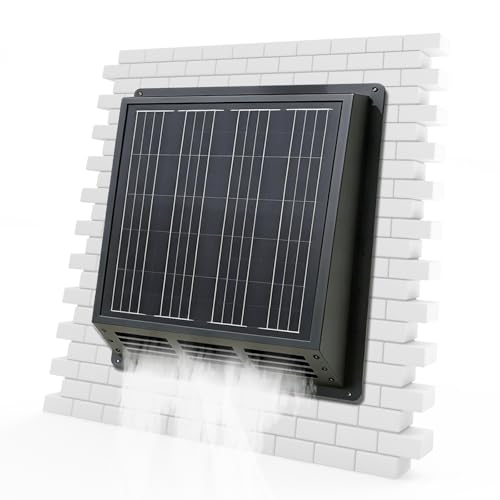
Best for compact spaces with tight budgets, this 25W solar exhaust fan provides up to 430 CFM at 2500 RPM. It runs without batteries or wiring and includes IP68/IP67 all-weather durability, making it suitable for attics, sheds, garages, or RV compartments.
Who it’s for: budget-conscious buyers seeking straightforward solar ventilation. Why selected: strong airflow relative to size and a simple, all-weather build. Caution: lower overall CFM means less impact in very large attics.
iLiving HYBRID Ready Smart Thermostat Solar Roof Attic Exhaust Fan

Best for smart-home enthusiasts and larger homes needing programmable control. This 14-inch, 40-watt unit offers 1150 CFM and a coverage area up to 2900 sq ft. It includes a smart thermostat with adjustable solar panel orientation and an AC/DC adapter option for continuous operation.
Best for: homes demanding automation and flexible operation. Why selected: hybrid-ready control expands use beyond purely solar days. Caution: requires careful wiring and setup to maximize smart features.
Hon&Guan Solar Attic Fan with Thermostat
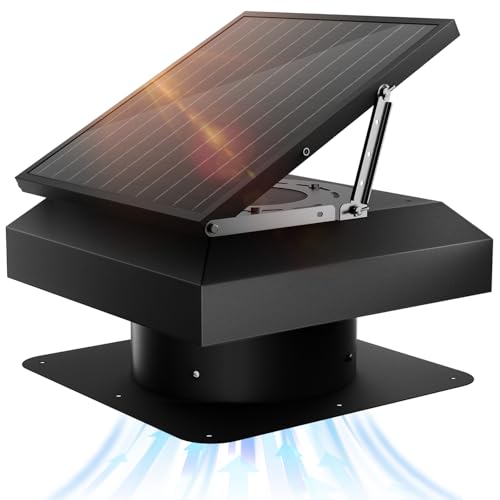
Best for high airflow without extra complexity. This 40-watt unit delivers up to 2000 CFM with a dual thermostat/auto-start feature that can be tuned to door temperatures or humidity levels. It accepts horizontal and vertical solar panel adjustments for optimal sun exposure.
Who it’s for: buyers seeking robust cooling and flexible installation. Why selected: strong airflow and dual-mode thermostat make it a versatile choice. Caution: higher airflow may require larger attic access and more secure mounting.
Buying Guide: What To Look For In Solar Attic Fans
Size and airflow: Choose a unit with sufficient CFM for your attic’s size. Bigger attics need higher CFM to move hot air effectively. Look for a model that matches or slightly exceeds your space’s required airflow for comfortable results.
Power and controls: MPPT controllers optimize solar energy capture. Consider fans with built-in thermostats or smart controls for automatic operation. If you want day-and-night operation, check for AC/DC options or hybrid modes.
Durability and weatherproofing: Attic fans should resist heat, moisture, and temperature swings. Look for IP-rated housings, corrosion-resistant materials, and robust motors (brushless DC preferred for quieter operation).
Installation considerations: Gable-mount or roof-mount configurations affect airflow and ease of installation. Ensure mounting location has clear access to sun and minimal obstructions for airflow.
Energy efficiency: Solar-powered operation reduces electricity use. Some models offer thermostatic auto-start to prevent running when not necessary, saving energy and extending equipment life.
Maintenance: Check for easy access to guards, housings, and motors for routine cleaning and inspection. Consider models with removable grilles or accessible mounting hardware.
Frequently Asked Questions
- Do solar attic fans work on cloudy days? Yes, most can run on stored solar energy or switch to a connected electric supply if available, but efficiency drops with reduced sunlight.
- What size attic needs the most airflow? Larger or hotter-attic spaces require higher CFM units; calculate attic volume (length x width x height) and choose a fan close to or slightly above the recommended CFM for your space.
- Is it better to mount a solar attic fan on the roof or gable? Roof-mounted fans are common and often have higher airflow; gable mounts can be easier to install in some homes and may suit specific roof lines.
- Do I need an electrician to install a solar attic fan? Many are designed for DIY installation, especially those with simple wiring to solar panels or direct roof connections. Some hybrid models may require basic wiring or mounting, so check the product’s installation guide.
- Can solar attic fans replace air conditioning? They reduce attic heat and cooling loads but are not a full replacement for central cooling. Use them to improve overall cooling efficiency and reduce energy use.
- How do thermostat-controlled solar attic fans save energy? Thermostats prevent fan operation when temperatures are comfortable, reducing unnecessary airflow and saving energy over time.