Best 8000 BTU Window Air Conditioners With Heat for All-Season Comfort
Looking for an 8000 BTU window AC that also provides supplemental heat? This review highlights five of the best options for American homes, stressing who each unit is best for, how the heat functions work, and practical buying guidance. Each model is suitable for rooms up to about 350 square feet, with options featuring smart controls, energy efficiency, and easy installation. The buyer profiles below help you choose based on climate, usage needs, and preferred control style.
Summary table of chosen products
| Product | Best For | Key Benefit | Notes |
|---|---|---|---|
| Midea 8,000 BTU Smart Inverter Window Unit | Smart homes, energy-savvy buyers | Energy Star, inverter tech, app/voice control | Heat works above 41°F |
| ROVSUN 8,000 BTU Window AC With Heat | Smart, app-driven homes | WiFi/Voice control, multi-mode | Includes 4,000 BTU heat |
| Whirlpool 8,000 BTU Window AC With Supplemental Heat | Quiet environments | Eco/Sleep modes, programmable timer | Supplemental heat only |
| Keystone 8,000 BTU Window AC With 3,500 BTU Heat | Remote-centric users | Remote with smart sensing, multi-function | Supplemental heat range outside winter |
| Frigidaire 8,000 BTU Window AC With Supplemental Heat | Reliable performance | Durable controls, eco and sleep modes | Standard remote included |
Midea 8,000 BTU Smart Inverter Window AC With Heat

- Best for energy savings and smart control in medium-to-large rooms up to 350 sq ft.
- Features: Energy Star, inverter technology, 5 modes (Heat, Auto, Cool, Dry, Fan), 24-hr timer, ECO mode, app and voice control via Alexa/Google Assistant.
- Best for buyers who want remote access and voice automation; heat function is available when outside temps exceed 41°F.
- Caution: Heat performance diminishes at very low outdoor temperatures; consider backup heat for very cold climates.
ROVSUN 8000 BTU Window AC With Heat

- Best for app-controlled setups and multi-function use in rooms up to 350 sq ft.
- Features: 8000 BTU cooling, 4000 BTU heating, dehumidifier, five modes, timer, ECO mode, 3 speeds, and voice control with Alexa/Google Assistant.
- Best for households wanting seamless smart integration and a combined cooling/heating solution.
- Caution: Installation may require careful window sizing; verify window dimensions before purchase.
Frigidaire 8,000 BTU Window AC With Supplemental Heat
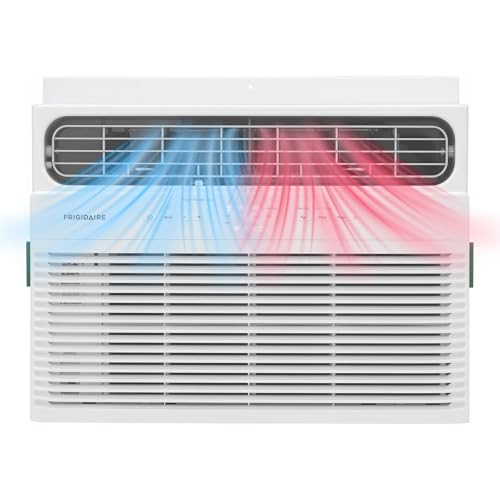
- Best for users prioritizing quiet operation and customizable airflow up to 350 sq ft.
- Features: Supplemental heat, 6-way airflow, 3 fan speeds, remote control, eco mode, sleep mode, and washable filter alerts.
- Best for bedrooms or living spaces where low noise is important and occasional extra warmth is needed.
- Caution: Heat is supplemental; use primary heat sources for colder months.
Keystone 8,000 BTU Window AC With 3,500 BTU Heat

- Best for smart remote users who want temperature sensing and year-round comfort in spaces up to 350 sq ft.
- Features: 8000 BTU cooling, 3500 BTU supplemental heat, remote with LCD feedback, dehumidification, and multi-mode operation.
- Best for rooms that require automatic adjustment from a smart remote; ideal for transitional seasons.
- Caution: Supplemental heat range is temperature-dependent; not a primary heat source in winter.
Frigidaire 8,000 BTU Window AC With Remote
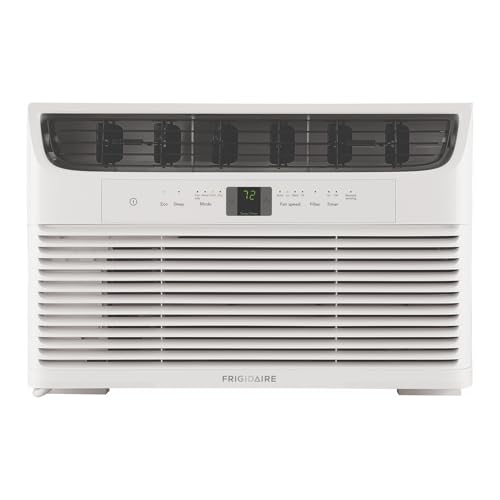
- Best for straightforward setup and reliable performance in standard living spaces up to 350 sq ft.
- Features: Supplemental heat, 6-way airflow, eco and sleep modes, remote control, and washable filter alerts.
- Best for users who value simple operation without sacrificing energy efficiency.
- Caution: Heat function is supplemental and should not replace a primary heating system in cold months.
Buying Guide: Key Considerations for 8000 BTU Window Units With Heat
What should you look for when choosing an 8000 BTU window unit with heat? Consider climate, room size, energy efficiency, and control options. If you live in a warmer climate with mild winters, a heat function that operates above 41°F can keep spaces comfortable without running a separate heater. In cooler regions, prioritize units with robust cooling and a dependable supplemental heat mode intended for transitional seasons.
Room size and cooling capacity
All models listed target rooms up to about 350 square feet. If your room is on the higher end of that range, look for energy-saving inverter tech or units with multiple fan speeds to maintain a comfortable baseline without excessive energy use.
Heat function and climate considerations
Most units provide supplemental heat rather than primary heating. Check the outdoor temperature range in which heat operates effectively. Some models stop heating when temperatures drop below 41°F or 23–76°F ranges for supplemental modes. This helps prevent inefficient operation in very cold weather.
Smart controls and remote operation
Smart-enabled models offer app control and voice assistant compatibility. This can simplify scheduling, remote temperature adjustments, and routine-based comfort when you’re away from home.
Installation, maintenance, and filters
Look for units with easy front-panel filter access and clear maintenance alerts. A washable filter reduces ongoing costs and helps maintain peak performance. Window height and width requirements should be confirmed before purchase to ensure a proper fit.
Energy efficiency and operating costs
Energy Star certification and inverter technology typically yield lower operating costs. Compare modes like Eco and Sleep to understand long-term energy consumption and how quickly a unit can reach or hold the desired temperature.
Practical buying tips
- Choose a model with a reputable drainage and venting plan; ensure your window can support installation kits and side panels.
- Plan for smart home integration if you use a voice assistant or IFTTT routines.
- Assess noise levels for bedrooms or study spaces; quieter models are preferable for sleep.
FAQ
- What does 8000 BTU mean for a window AC?
Answer: It roughly equates to the cooling capacity suitable for spaces up to 350 square feet, depending on insulation and ceiling height. - Can these units heat every day in winter?
Answer: Most provide supplemental heat and are not designed as primary heating sources in very cold weather. - Are all these units adjustable via a smartphone?
Answer: Several models include wireless control through apps and compatibility with voice assistants. - Do I need professional installation?
Answer: Many units come with installation kits and guide for DIY installation, but window size and mounting accuracy are critical. - Is it better to pick a model with inverter technology?
Answer: Inverter models typically use less energy and can maintain temperatures more consistently, reducing overall running costs. - What is the difference between supplemental heat and primary heating?
Answer: Supplemental heat assists when needed but should not replace central heating in very cold conditions.