Best Roof Mounted RV Air Conditioners for Efficient On‑Road Comfort
When shopping for a roof mounted AC unit for your RV, size, efficiency, and installation ease matter. The following selections represent popular rooftop cooling solutions suited for campers, trailers, and motorhomes. Each unit combines cooling power, installation practicality, and reliability to keep your adventures comfortable in varying climates. This guide highlights five standout models and a buying guide to help you compare features and plan your setup.
| Product | BTU (Cooling) | Heating (if any) | Notable Features |
|---|---|---|---|
| Furrion Chill Cube 18K | 18,000 | Heat pump capable (varies by model) | Variable speed, high efficiency, quiet operation |
| TOSOT 16000 BTU GO Cool | 16,000 | 12,500 Heating | WiFi with Gree+ app, wide operating range |
| FOGATTI InstaCool 13,500 | 13,500 | Not primary heater (uses 115V AC/12V DC) | All-in-one design, eco refrigerant |
| RecPro 15K | 15,000 | Heat pump option | Low amp draw, quiet operation, durable |
| Treeligo 12V RV A/C | 7,900 cooling (plus 3,000 heating) | Heating function included | 12V DC, off‑grid friendly |
Note: The right unit for your RV depends on your space, power supply, and climate. Larger RVs often require higher BTU models, whereas smaller RVs or off‑grid setups benefit from units with lower amps and efficient heat pumps. Always verify roof load capacity, mounting dimensions, and compatibility with your RV’s electrical system before purchase.
Furrion Chill Cube 18K RV Rooftop Air Conditioner

Designed for campervans, trailers, and motorhomes, the Furrion Chill Cube 18K rooftop unit offers high cooling capacity with advanced efficiency. It uses variable speed compressors to move air more effectively, delivering strong cooling quickly and reducing energy use. While this unit is marketed as an AC only, it is known for its lighter weight and quiet operation compared with many traditional RV units, making it a popular choice for off‑grid or mixed power setups. It relies on a separate installation kit and components for full system integration, including ducting in ducted configurations.
TOSOT 16000 BTU GO Cool RV Air Conditioner

The TOSOT Go Cool series provides robust cooling with a 16,000 BTU capacity and a 12,500 BTU heat pump option to cover larger RV spaces up to about 600 square feet. This unit emphasizes flexible operation through WiFi control via the Gree+ app, enabling remote temperature management and monitoring. Its operating range is designed to handle a broad spectrum of climates, making it suitable for year‑round RV travel. The unit supports non‑ducted installations and is a strong all‑weather performer for mid‑to‑large RVs.
FOGATTI InstaCool 13,500 BTU RV Air Conditioner
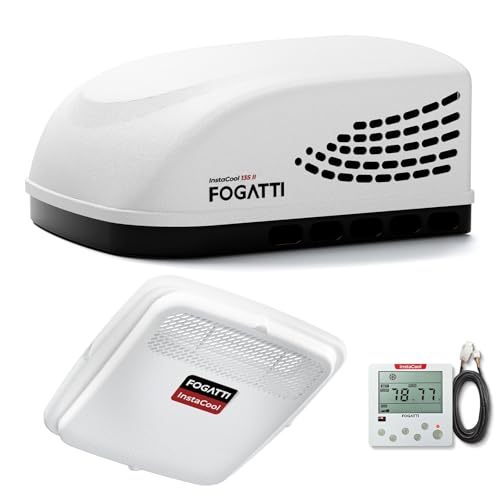
FOGATTI InstaCool combines a compact, all‑in‑one design with 13,500 BTU cooling power, making it a solid option for mid‑sized RVs. It requires connection to both 115V AC and 12V DC power, ensuring reliable operation in various power scenarios. The unit uses eco‑friendly refrigerant (R32) and features smart energy management to balance cooling effectiveness with efficiency. It is noted for quick cooling and straightforward installation, though it’s best paired with adequate power supplies and compatible mounting hardware.
RecPro RV Air Conditioner 15K (Ducted or Non‑Ducted)

RecPro’s 15,000 BTU unit is designed for versatility, offering a quiet operation at about 55.4 dB and low amp draw for energy efficiency—an excellent match for off‑grid or solar setups. It supports both ducted and non‑ducted configurations, making it adaptable to a wide range of RV layouts. The durable, UV‑resistant housing reduces drag and helps the system stand up to road and weather wear. Users appreciate the balance of cooling power, energy efficiency, and long‑term reliability in a rooftop package.
Treeligo 12V RV Air Conditioner
Treeligo offers a 12V DC rooftop unit with a 7,900 BTU cooling capacity and a 3,000 BTU heating function, making it well suited for smaller RVs or travel trailers where off‑grid power is critical. It emphasizes energy efficiency by drawing power from the vehicle’s battery and is designed for roof installation with a compact footprint. The system is noted for cost‑effective operation and reliable cooling, though larger spaces may require higher BTU units or supplemental cooling strategies in hot climates.
Buying Guide: Key Considerations for Roof Mounted RV AC Units
- BTU vs space: Match cooling capacity to your RV length, layout, and insulation. Larger or uninsulated spaces require higher BTU; smaller rigs benefit from efficient, lower‑BTU units with heat pump options for shoulder seasons.
- Power and electrical needs: Check amperage and compatibility with your electrical setup (12V DC, 110/120V AC, or dual systems). Off‑grid owners should prioritize low amp draw and, if possible, solar compatibility.
- Heat pump capability: Models with integrated heat pumps provide both cooling and heating, which is advantageous for year‑round comfort in moderate climates. Verify operational temperature ranges for heating.
- Ventilation and ducting: Consider whether you need a ducted or non‑ducted setup. Ducted systems offer uniform air distribution but require more complex installation; non‑ducted units are simpler to install and suitable for smaller spaces.
- Noise and comfort: Look for units with low decibel operation for better sleep and quieter living spaces. Noise ratings vary by model and fan speed.
- Installation and hardware: Some units require additional installation kits, roof brackets, or sequence of wiring. Ensure you have professional assistance if needed and confirm compatibility with your roof structure.
- Reliability and service: Brands with robust customer support and readily available replacement parts help reduce downtime and maintenance concerns during trips.
- Weatherproofing: UV‑stabilized housings and weather‑resistant gaskets prolong life in harsh sun and varying climates; verify gasket quality and corrosion protection of condensers.
Choosing a roof mounted RV air conditioner involves balancing capacity, power, and installation practicality. The five models highlighted here cover a spectrum from compact, 12V options to high‑capacity, heat‑pump capable units. Evaluate your typical travel environment, available electrical resources, and whether you prefer a ducted or non‑ducted configuration to select the best fit for your RV lifestyle.