Best Fiberglass Insulation for Ductwork: Top 5 Panels and Wraps for Home or Commercial HVAC
For effective HVAC energy efficiency and quieter operation, choosing the right fiberglass insulation for ductwork matters. This guide highlights five top-performing products designed to fit various duct configurations, from panels to wraps and blankets. Each option focuses on durability, moisture resistance, and thermal performance, helping you select the best solution for your ducts. Read on to compare features, installation notes, and practical considerations for American homes and small commercial spaces.
Summary of Selected Products
- JOHNS MANVILLE Duct Insulation, 1-1/2″ x 48″ x 25 Ft — 4.2 R-value, foil-faced wrap
- Frost King CF55 Foil Backed “No Itch” Natural Cotton Duct Wrap — easy install, no protective gear needed
- F&L R6 Johns Manville Duct Insulation Panel — 1.5″ x 24″ x 48″, R-6.5, moisture-resistant
- 48″ x 25ft Reflective FOIL FRK Fiberglass Duct Insulation — FRK facing, moisture and condensation control
- F&L R4 Johns Manville Duct Insulation Panel — 1″ x 24″ x 48″, R-6.5, foil facing
JOHNS MANVILLE Duct Insulation Panel and Wrap, 1-1/2″ Thick
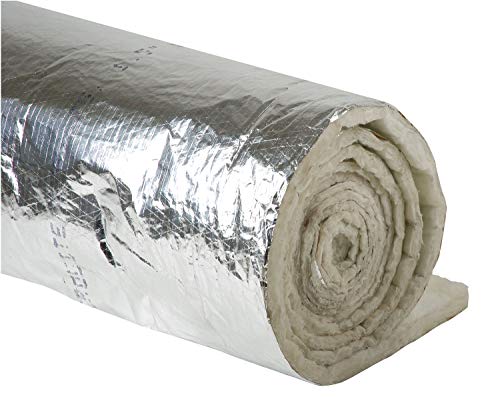
JOHNS MANVILLE INTL offers a fiberglass duct insulation option measured at 1-1/2 inches thick, with dimensions of 48 inches by 25 feet. This product is designed to meet multiple industry standards including ASTM C-411, ASTM C-1104, and NFPA 90A, among others. Its foil-scrim kraft (FSK) facing provides a durable, moisture-resistant jacket suitable for sheet metal ducts. The insulation delivers an approximate R-value of 4.2, which helps limit heat loss and reduce duct surface temperatures. Suitable for long, straight runs, it supports improved energy efficiency with a straightforward installation process.
Key features: foil-backed wrap, wide roll length for large ducts, robust fire and code compliance ratings, and domestic manufacture in the United States. This option is well-suited for retrofits or new installations where a durable, professional-grade duct wrap is required. Consider this choice when you need a proven, standard-compliant insulation that can withstand temperature ranges from -32 to 250 F.
Frost King CF55 Foil Backed No Itch Duct Wrap

The Frost King CF55 duct wrap uses a foil-backed natural cotton facing designed to be a no-scratch, no-itch option for installers and occupants alike. This wrap is intended to cushion ducts while insulating them, reducing vibrations and heat transfer. It is described as a safe alternative that minimizes the need for gloves, masks, or goggles during installation, and it has a Class A fire rating. The wrap is suitable for HVAC ducts where a flexible, easy-to-install solution is preferred, particularly in residential settings where quick retrofits are common. It prioritizes user-friendly handling without sacrificing performance.
Considerations include the foil-backed cotton facing’s durability and its ability to resist moisture intrusion. It’s important to verify compatibility with existing duct materials and ensure that the wrap’s thickness and density align with your system’s airflow and clearance requirements. This option excels in simplicity and comfort during installation while delivering reliable thermal protection.
F&L R6 Johns Manville Duct Insulation Panel
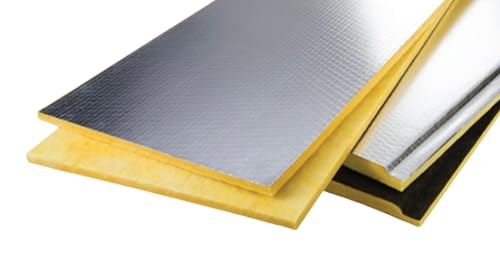
The F&L panel option from Johns Manville provides a rigid fiberglass solution for sheet metal duct systems. With an approximate R-value of 6.5, these panels help reduce heat loss and improve overall system efficiency. The panels are 1.5 inches thick, 24 inches wide, and 48 inches long, offering solid thermal performance and structural support for rigid duct work. The foil-scrim kraft facing enhances moisture resistance and durability, contributing to longer service life in challenging duct environments. The 3 lb density adds stiffness, aiding installation in pre-cut or factory-insulated duct sections.
This product is ideal for installers seeking a durable, high-R-value panel that can be integrated into sheet metal ducts with reliable supporting rigidity. When selecting this panel, confirm compatibility with duct dimensions, connection types, and any local building code requirements related to fibrous insulation panels and facing materials.
48″ x 25ft Reflective FOIL FRK Fiberglass Duct Insulation

This option features reflective foil-faced (FRK) fiberglass duct wrap in a broad 48″ width and 25-foot length. The FRK facing serves as a vapor barrier and moisture retarder, designed to minimize condensation and moisture migration in duct runs. The product emphasizes compatibility with existing NFPA 90A/B standards and mechanical energy codes, making it suitable for both residential and light commercial installations. The blanket-like wrap is described as flexible and easy to install, which can speed up retrofit projects while maintaining energy efficiency and occupant comfort by reducing duct surface temperatures and limiting condensation.
Installation considerations include ensuring a proper seal at joints and transitions to maximize moisture resistance and thermal performance. Because FRK facings are laminated to fiberglass, inspectors may look for consistent lamination and seam integrity to preserve the vapor barrier functions over time.
F&L R4 Johns Manville Duct Insulation Panel
The R4 panel from Johns Manville is another rigid insulation option, delivering approximately the same performance class as the R6 variant but in a thinner 1 inch thickness for spaces with tighter clearances. The 24″ x 48″ dimensions and 3 lb density offer a balance of flexibility and stiffness, with a foil-scrim kraft facing for moisture resistance and code compliance. With an R-value around 6.5, this panel can provide meaningful thermal resistance in duct runs where a compact panel is required. It suits metal duct assemblies where space constraints or retrofit work demands a slim profile while maintaining robust insulation performance.
Practical considerations include evaluating duct geometry, access for panel installation, and the need for consistent edge sealing. Panels are well-suited for segments where long, straight runs can accommodate standard panel sizes, minimizing seams and potential thermal bridging.
Buying Guide: Key Purchase Considerations For Duct Insulation
- R-Value and thermal performance: Higher R-values deliver better insulation but may come with thicker materials. Match the insulation thickness and density to your duct size and airflow requirements.
- Facing and moisture resistance: Foil facing or FRK (foil-scrim kraft) helps resist moisture and provides a durable outer jacket. Assess whether a vapor barrier is needed for your climate and duct layout.
- Moisture management: Moisture resistance is critical in basements, unheated spaces, and in areas with high humidity. Select products with moisture barriers or vapor retarders appropriate for the installation.
- Application type: Duct wraps, blankets, and panels serve different installation scenarios. Wraps are versatile for irregular ducts, while rigid panels suit straight sections and easier end-to-end assembly.
- Durability and codes: Look for compliance with NFPA codes and industry standards (e.g., ASTM, UL). This ensures safe operation and easier inspections.
- Ease of installation: Some products emphasize easy handling (no-glove or no-itch features), while others require more traditional installation practices. Consider installer experience and safety requirements.
- Size and fit: Confirm duct dimensions (diameter, length, and profile) to choose panels or wraps that minimize cuts and seams, reducing thermal bridging and installation time.
- Durability under temperature: Ensure the product supports the duct’s operating temperature range, from cold supply lines to hot return air in heating seasons.
- Cost and availability: Compare unit costs per square foot or per run and verify supplier lead times, especially for larger projects or renovations.
- Warranty and manufacturer support: A solid warranty and accessible technical support can help address installation questions and long-term performance.
When planning duct insulation, assess your specific HVAC configuration, climate, and local building codes. Combining a high-R-value solution with moisture resistance can yield better energy efficiency, reduced condensation, and longer duct life. Select a product line that offers consistent performance across installations, with clear installation guidelines and compatibility with existing duct materials. For retrofits, prioritize flexible wraps or thinner panels that fit into tight spaces without sacrificing thermal performance. For new installations, rigid panels may provide stronger support and easier long-term maintenance.