Best Low Profile RV Air Conditioners for Off-Grid Comfort
When choosing a low-profile RV air conditioner, the balance between size, power, efficiency, and off-grid capability matters. This guide highlights five popular low-profile roof units designed for RVs, campers, trailers, and mobile work setups. Each option emphasizes compact dimensions, quiet operation, and reliable performance in various climates. Use the quick comparison below to narrow your choice, then explore detailed product insights to compare cooling power, heating options, and energy considerations.
| Product | BTU | Power | Key Benefit |
|---|---|---|---|
| OutEquip 10,000 BTU Low Profile with Heater | 10,000 | 12V with heater | Built-in 4,500 BTU heater for mild warmth |
| OutEquipPro 10,000 BTU (No Heater) | 10,000 | 12V (no heater) | Battery-powered for off-grid use |
| TOSOT 16,000 BTU GoCool | 16,000 | Electric (smart features) | WiFi control; heat pump option |
| Whtoufou 15,000 BTU 12V | 15,000 | 12V DC inverter | Strong cooling with energy efficiency |
| RecPro 13.5K BTU Low Profile | 13,500 | 110–120V | Low amp draw for off-grid/solar setups |
Note: All products listed here are low-profile, rooftop, non-ducted or semi-ducted units suitable for RVs, campers, trucks, and trailers. Check compatibility with your roof space, electrical system, and ongoing power strategy before purchasing.
OutEquip 10,000 BTU Low Profile with Heater

Efficient Cooling: This 10,000 BTU unit cools an RV quickly, delivering comfort within minutes. Its compact footprint makes it suitable for roofs with limited space while still handling moderate heat loads.
Supplemental Heating: A built-in 4,500 BTU PTC heater provides additional warmth for mild seasons or cool nights. It is not intended as the primary heat source in extreme cold or large spaces, but it can take the edge off shoulder-season temperatures.
Durability and Weather Resistance: Constructed with UV-stabilized ABS materials, EPDM foam gasket, and a zinc-coated condenser. The design aims to endure harsh weather and rough road conditions, preserving performance over time.
OutEquipPro 10,000 BTU 12V (No Heater)
Efficient Cooling: The OutEquipPro unit delivers rapid cooling in a compact roof package, maintaining comfortable temperatures in RV interiors in 15 minutes as reported by users.
Off-Grid Ready: Powered by the vehicle’s 12V system, this model is designed for off-grid use. When parked, it can run on sizeable battery banks and is compatible with extended battery setups for longer stays.
Durability and Weather Resistance: Built with UV-stabilized ABS, EPDM foam gasket, and a zinc-coated condenser for weather resistance and long service life in varied climates.
TOSOT 16000 BTU Go Cool RV AC

All-Weather Comfort: The GoCool series offers 16,000 BTU of cooling and 12,500 BTU of heating capacity, covering larger RV spaces (up to about 600 sq ft). It handles warm climates and provides warmth in cooler periods, expanding comfort year-round.
Smart and Flexible: Features WiFi control via the Gree+ app, enabling remote temperature management and monitoring. This adds convenience for RVers who want to adjust climate settings from a distance.
Versatile Performance: Designed to operate across extreme outdoor temperatures—from 23°F to 115°F—while maintaining indoor comfort. Suitable for larger RVs and seasonal travelers seeking robust climate control.
Whtoufou 15,000 BTU 12V Rooftop AC
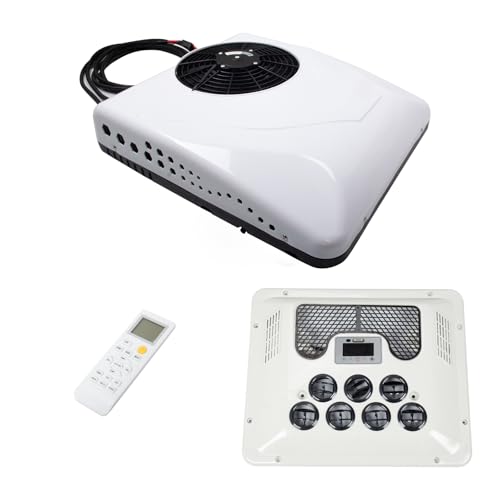
Stable and Durable: Featuring a horizontal compressor design to reduce vibration and lower the roofline impact, this unit emphasizes stability and longevity for long trips.
Cooling and Heating Capacity: 15,000 BTU cooling with integrated heating supports year-round comfort. Intelligent frequency conversion improves efficiency, reducing waste and battery draw when off-grid.
Quiet Operation: Designed for low noise—about 45 decibels—delivering even airflow that minimizes direct cold blasts while maintaining a comfortable cabin environment.
FOGATTI InstaCool 13,500 BTU RV AC
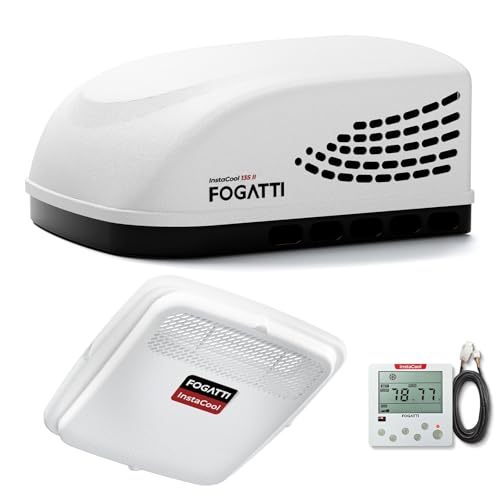
All-in-One Easy Install: InstaCool installs with straightforward bolt-on mounting and includes a clear installation guide. Note that this unit is the AC component only; additional installation components may be required depending on the setup.
High Capacity and Efficiency: Dual high-efficiency compressors deliver robust cooling with eco-friendly R32 refrigerant. The unit is designed to deliver faster cooling and better energy use, potentially extending off-grid battery life during travel.
RecPro 13.5K BTU Low Profile RV AC

Low Amp Draw and Off-Grid Ready: Engineered for minimal electric draw, enabling operation alongside other RV appliances. This makes it suitable for solar-powered or generator setups without overloading the system.
Durable and Quiet: Built with UV-stable plastics and a sleek, aerodynamic profile to minimize drag. Quiet operation, around typical home-air-conditioner noise levels, supports restful travel and onboard work sessions.
Buying Guide: Key Purchase Considerations
When selecting a low-profile RV air conditioner, consider: roof dimensions and weight tolerance, electrical supply (12V DC off-grid versus 110–120V AC), and whether you need heating capability. If off-grid freedom is a priority, prioritize 12V models with efficient inverter compressors and larger battery bank compatibility. For larger RVs or frequent cold-season travel, units with heat pump options or integrated heating functions provide more year-round comfort. Noise level matters for sleeping and work, so review decibel ratings and fan speeds. Installation requirements vary by model; some units require a dedicated venting and mounting kit, while others offer simpler bolt-on installation.
Power strategy matters as well. 12V models are great when you have ample battery capacity or solar panels, but they may demand careful power budgeting. AC-powered units offer robust cooling for larger spaces but require shore power or a generator. If you rely on off-grid power, compare BTU per watt efficiency and the inverter compatibility of the unit. Roof-fit and weather resistance are critical for longevity on the road, so select models with UV-stable housings, gasket integrity, and corrosion-resistant condensers.
In choosing between the options above, evaluate: 1) space size and roof suitability, 2) cooling versus heating needs across seasons, 3) whether you prefer WiFi or remote control features, 4) the availability of off-grid capability, and 5) total weight and installation compatibility with your RV’s roof structure.
Across the lineup, these low-profile RV air conditioners offer scalable options—from compact 10,000 BTU units with heater for smaller spaces to high-capacity 16,000 BTU or 15,000 BTU models for larger RVs. Each focuses on quiet operation and weather resistance to support comfortable RV living in diverse climates.