Best Check Valves for Irrigation Systems That Last
Choosing a reliable check valve is essential for protecting irrigation lines from backflow and ensuring consistent water pressure. The following selections are designed for American lawns and landscapes, offering sturdy construction, easy installation, and durable materials suitable for irrigation applications. Each option helps prevent reverse flow, reduces pressure fluctuations, and fits common hose sizes. Review the product highlights and features to determine the best match for your system’s needs and local backflow prevention requirements.
| Product | Brand | Notes | Reference |
|---|---|---|---|
| HC50F50M HCV 1/2-Inch | Hunter | Compact, adjustable check height | Hunter HC50F50M |
| HC75F75M HCV 3/4-Inch | Hunter | Durable 3/4″ inlet/outlet; robust for larger lines | Hunter HC75F75M |
| HC50F50F HCV 1/2-Inch | Hunter | 1/2″ inlet and outlet; quick install between riser and head | Hunter HC50F50F |
| Inline Check Valve 3/4″ PVC | Midline Valve | Leak-free, corrosion-resistant, backflow prevention | Midline Valve 4I2U34 |
| Inline Poppet Check Valve | IPW Industries | Versatile backflow prevention for irrigation and more | IPW 6850090 |
Hunter HC50F50M HCV 1/2-Inch Check Valve

The Hunter HC50F50M HCV features a 1/2-inch female inlet and 1/2-inch male outlet, designed to fit common irrigation lines. It includes an adjustable check height, simplifying installation between the riser and the sprinkler head. Constructed to Schedule 80 specifications, the unit emphasizes durability and long service life, which helps maintain reliable one-way flow and protect downstream components from backflow.
Hunter HC75F75M HCV 3/4-Inch Valve
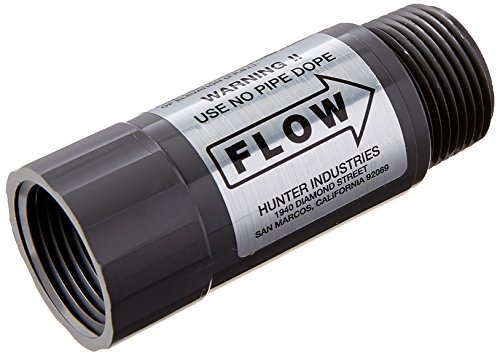
The Hunter HC75F75M uses a 3/4-inch inlet and outlet with adjustable height to suit larger irrigation lines. Its build adheres to Schedule 80 standards for enhanced durability, offering reliable backflow prevention within zone lines and longer-lasting performance under variable pressure. This valve is suitable for mid to large yard installations where a robust inline check valve is beneficial for maintaining consistent head pressure.
Hunter HC50F50F HCV 1/2-Inch Valve

This 1/2-inch model mirrors the smaller end of irrigation needs, providing straightforward installation and a compact footprint. The adjustable check height helps align the valve with the sprinkler riser, ensuring smooth water flow and minimizing the risk of backflow. Its Schedule 80 construction contributes to resilience against pressure surges and environmental exposure in outdoor settings.
Midline Valve Inline Check Valve 3/4″ PVC

This 3/4-inch PVC inline check valve from Midline Valve emphasizes a leak-free seal with EPDM O-rings and a stainless steel spring-loaded mechanism. It’s designed to prevent backflow in cold water lines and is rated for up to 150 psi at 73 degrees, with a cracking pressure around 0.5 psi. The valve’s ANSI and ASTM approvals support installation in residential irrigation and similar applications, though it’s not intended for potable water use in some regulations.
IPW Industries Inline Poppet Backflow Valve

The IPW SMC 6850090 inline polypropylene poppet backflow preventer is designed for home improvement and irrigation applications. It focuses on efficient one-way flow, ensuring clean water delivery to filtration, pumps, or under-sink setups. The polypropylene construction resists corrosion and supports broad chemical compatibility, making it a versatile option for non-potable water lines and irrigation contexts alike.
Buying Guide: Key Purchase Considerations for Irrigation Check Valves
- Valve size and fitting type: Match the valve inlet/outlet to your irrigation line diameter (e.g., 1/2″, 3/4″). Consider female vs. male connections and whether union or slip-fit designs are needed for your setup.
- Material and durability: Schedule 80 components offer higher strength and longevity in outdoor environments. PVC and polypropylene bodies provide corrosion resistance and lighter weight, while metal components generally handle higher pressures.
- Backflow prevention requirements: Ensure the valve meets local codes for backflow prevention in irrigation systems. Some installations require certified backflow preventers or specific check valve configurations.
- Pressure and flow characteristics: Check cracking pressure (the minimum pressure to overcome the valve seal) and pressure rating (psi). For irrigation, a low cracking pressure helps with head loss and smooth operation across zones.
- Ease of installation and maintenance: Look for adjustable check heights, simple between-riser placement, and accessible seals. Replaceable O-rings and easy latching mechanisms reduce maintenance time.
- Compatibility with water quality: Some valves are not recommended for potable water or require particular materials if used with treated water. Review manufacturer guidance for your application.
- Installation environment: Outdoor exposure, temperature range, and potential exposure to chemicals in the irrigation mix can influence material choice and durability.
- Warranty and support: Consider products with manufacturer warranties and readily available replacement parts or service networks for irrigation systems.
When selecting a valve, it’s helpful to map your irrigation layout, noting line sizes, zone counts, and where backflow prevention is most critical. The options above provide a range of sizes and construction styles to address typical residential and small-to-medium commercial setups, balancing ease of installation with long-term reliability.