Best Welding Rod Heaters for Reliable Dry Electrodes in the Field
Choosing the right welding rod heater helps maintain electrode quality, prevents moisture-related defects, and speeds up field work. The following products are among the most reliable rod ovens for keeping low-hydrogen and stainless welding rods dry, organized, and ready for use in workshops, garages, and remote job sites. Each option balances capacity, temperature control, portability, and build quality to fit different shop sizes and welding workflows.
| Product | Brand | Capacity | Max Temp | Notes |
|---|---|---|---|---|
| YESWELDER 15lb Portable Welding Rod Oven | YESWELDER | 15 lb | 300°F | Moisture protection; portable; 14″ rods |
| Ridge Products 11 Lb Portable Welding Rod Oven | Ridge Products | 11 lb | 300°F | Focus on low hydrogen and stainless rods |
| Keen Ovens KT-50 Portable Heavy-Duty | Keen Ovens | 50 lb | 300°F | Dual voltage; field-ready |
| Keen Ovens K-200 Bench Oven | Keen Ovens | 200 lb | 300°F | Factory thermometer; high capacity |
| TIANGUOHE Portable Welding Rod Oven | TIANGUOHE | 11 lb (approx) | 180°C | Auto-heating cycle; portable |
YESWELDER 15lb Portable Welding Rod Oven

The YESWELDER rod oven is designed to protect moisture-sensitive electrodes while offering practical portability. It accommodates up to 14″ rods and up to 15 pounds, making it suitable for longer welding sessions or multiple jobs without frequent restocking. A hinged lid and comfortable handle support quick loading and access, and the unit is rugged enough for shop floors and outdoor sites. Operators benefit from a straightforward 85–300°F temperature range that suits most stick welding rods while maintaining low-hydrogen properties.
Features include moisture protection to preserve electrode quality, a portable under-8-pound design for easy transport, and a wide-opening lid for glove-friendly access. For shops needing a compact, ready-to-go solution, this oven delivers consistent results with a simple power setup. When selecting any rod oven, consider rod length, storage capacity, and the typical welding schedule to ensure enough dry stock is available between sessions.
Ridge Products 11 Lb Portable Welding Rod Oven

The Ridge Products rod oven emphasizes reliability for low hydrogen and stainless welding rods. It supports up to 11 pounds and pairs a practical 300°F maximum with a design intended to reduce moisture-related defects such as slag inclusions or porosity. The oven’s straightforward construction suits small to mid-size shops and field crews that need a stable dry environment for electrodes stored near the welding position.
Pros include a clear focus on common rod types and compliance with typical welding standards, while potential users should verify compatibility with their specific rod types and length requirements. The model is a solid choice for shops that prioritize stable storage conditions and minimal maintenance in a portable format.
Keen Ovens KT-50 Portable Heavy-Duty Welding Rod Oven

The KT-50 offers a balance of portable design and robust capacity with 50 pounds of storage and dual voltage operation. It is designed to keep hygroscopic low-hydrogen electrodes dry in the field, with a compact footprint suitable for mid-sized workshops. The 300°F maximum aligns with the needs of many flux-coated rods, and the dual voltage feature supports mobility across sites with different power supplies.
Practical benefits include field readiness, straightforward operation, and improved rod longevity. For buyers, consider how much field travel is involved and whether the extra capacity justifies the size and weight, especially when transporting between job sites.
Keen Ovens K-200 Bench Welding Rod Oven
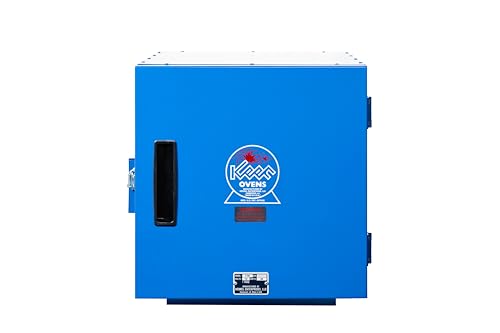
The K-200 is a bench-style welding rod oven built for higher-capacity storage, holding up to 200 pounds of rods with a consistent 300°F maximum temperature. This model is designed for fabrication shops and pipeline facilities with steady welding demands, exceeding the requirements for many standard welding projects. The included analog thermometer provides a straightforward readout for operators who prefer a simple, non-digital control approach.
Key considerations include the high capacity for uninterrupted work and the importance of proper ventilation and electrical supply to support continuous heating. The K-200 is ideal for larger operations where rod inventory management and heat retention are critical for efficiency and quality control.
TIANGUOHE Portable Welding Rod Oven

The TIANGUOHE oven emphasizes portability and user-friendly operation, with a compact 11-pound form factor and a capacity to handle 18″ electrodes. It features an auto-heating cycle and a temperature range up to 180°C (±15°C), with visual indicators for power and heating status. The design supports quick loading via a removable rack, helping welders retrieve electrodes while wearing gloves. This model suits field crews and smaller shops seeking a balance between portability and consistent dry storage.
Its cycle-based heating and auto-maintain functionality reduce the risk of overheating or under-drying rods. Buyers should assess whether their electrode sizes align with the 18″ limit and the 180°C maximum for the intended welding processes.
Buying Guide: Key Purchase Considerations
- Capacity vs. space: Larger capacity (50–200 lb) suits busy shops; smaller models excel for mobile crews. Balance space, weight, and the number of electrodes typically needed on one job.
- Temperature control: Most rods benefit from 150–300°F ranges. Confirm the max temperature and stability, especially for low-hydrogen and stainless rods to prevent hydrogen-induced defects.
- Rod length compatibility: Ensure the oven accommodates your typical electrode length (14″–18″ is common for SMAW rods).
- Portability: For field work, weight and handles matter. Look for ergonomic designs, built-in handles, and secure lids that remain closed during transport.
- Power requirements: Check voltage compatibility (110V vs 220V) and the available electrical infrastructure at job sites.
- Build quality and materials: Fire-resistant linings and durable casings improve longevity in shop environments and on-site conditions.
- Maintenance: Look for easy access to the interior for cleaning and moisture reconditioning between sessions.
- Regulatory alignment: Some models claim compliance with welding standards (AWS D1.1) for stored electrode quality. Verify based on your project requirements.
When evaluating options, map your typical workflow: how long you need to keep electrodes dry, how many rods you use per project, and whether mobility or capacity is the priority. A modular approach—combining a portable unit for field use with a larger bench oven for the shop—can offer the best balance of reliability, cost, and uptime. Always verify product specs with the manufacturer or retailer to ensure current features meet your welding practice standards.