Best Condensate Water Heater Pumps for HVAC Systems in 2026
Answering the common question “which condensate pump should I choose for my water heater or HVAC system?” this guide highlights reliable condensate pumps ideal for homes and small commercial setups. Each product targets a specific need, from compact footprints to higher lift heights and safety switches. Best-for buyers include contractors installing in basements, homeowners replacing aging pumps, and HVAC technicians seeking quiet operation and durable construction. The following table compares five top picks to help you decide quickly.
| Product | Best For | Lift / GPH |
|---|---|---|
| Little Giant VCMA-15ULST | Small spaces, overflow detection included | 65 GPH, 6 ft cord |
| Little Giant VCMA-15UL | Low-profile installs, safety switch not included | 65 GPH, 6 ft cord |
| Little Giant VCMA-20ULS | Highest flow in this group, longer lift | 80 GPH, 6 ft cord |
| Aquastrong 1/38 HP | Multiple connections and safety features | 85 GPH, 20 ft lift |
| Aquastrong 70–85 GPH Series | General purpose with solid safety options | 70 GPH, lift up to 16 ft |
Little Giant VCMA-15ULST 65 GPH Condensate Pump with Overflow Detection

The Little Giant VCMA-15ULST is a compact condensate pump designed to automatically remove condensate from boilers, furnaces, air conditioners, and dehumidifiers. It features a vertical-type switch to minimize footprint and a thermally protected motor that runs at 1/50 HP, 1.0 Amps, 60 Watts, 115 Volts. Suitable for temperatures up to 140°F (60°C), it includes an overflow detection switch for added safety. Best for: small apartments or utility closets where space is at a premium and overflow protection matters. Caution: the unit relies on a safety switch integration; verify wiring compatibility with your HVAC setup.
Little Giant VCMA-15UL 65 GPH Condensate Pump (No Safety Switch)

This version mirrors the 1/50 HP motor and general design of the ST model but omits the overflow safety switch. Best for: installations where an external safety switch is already employed or is not required. Limitation: no built-in overflow alert, so external monitoring may be needed.
Little Giant VCMA-20ULS 80 GPH Condensate Pump with Overflow Detection

The VCMA-20ULS provides higher flow at 80 GPH and includes an overflow detection switch. Its 1/30 HP motor (1.5 Amps, 93 Watts) supports longer operation times and a 6-foot cord for flexible placement. Best for: mid-sized HVAC installations needing more drainage capacity without upgrading to a larger unit. Caution: ensure tubing and outlets fit your existing condensate line.
Aquastrong 1/38 HP 85 GPH HVAC Condensate Pump
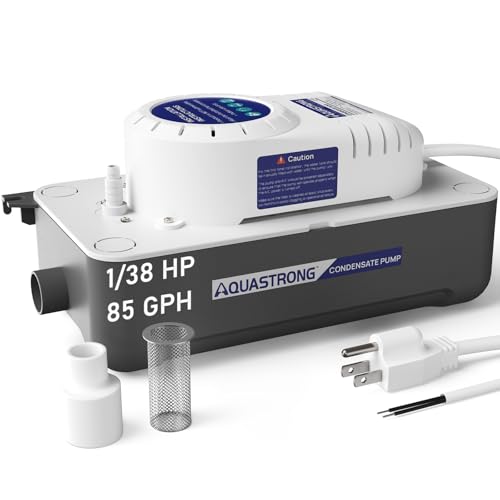
Aquastrong’s 85 GPH pump moves water efficiently with a vertical lift up to 20 ft. It includes a high-performance motor, a hall sensor for automatic operation, and a removable 0.5 gallon reservoir. It also offers five 1″ inlet ports for multiple connections. Best for: installations requiring multiple device connections and a built-in safety switch for automatic shutoffs. Limitation: verify compatibility of the five inlets with your piping setup.
Asurity by Diversitech Ultracp-22 22 ft Lift Condensate Pump
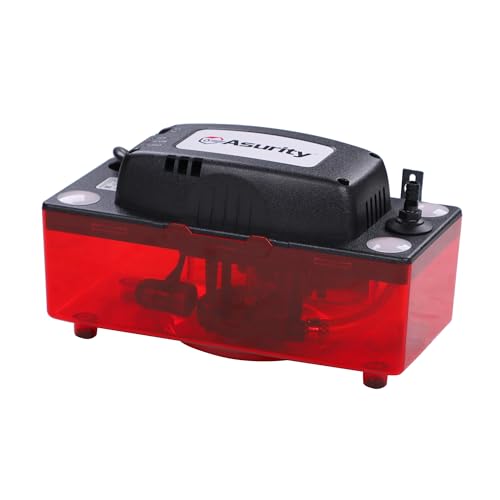
Asurity’s Ultracp-22 provides a powerful 22 ft maximum vertical lift and automatic condensate removal. It’s designed for standard HVAC systems and can manage warm condensate up to 160°F. Best for: installations requiring significant vertical discharge height in tight spaces. Caution: check clearance for the 22 ft lift in your location to avoid reach issues.
VIVOHOME 65 GPH Condensate Pump with Alarm

The VIVOHOME model operates at 65 GPH with a quiet DC motor and 19.6 ft tubing. It features automatic protection with a hall sensor and an alarm that alerts and shuts down when water levels exceed safe limits. Best for: users seeking quiet operation and a built-in alert system. Limitation: higher price point may be a consideration compared to basic units.
VIVOHOME 80 GPH Condensate Pump with Alarm

This model provides higher flow at 80 GPH and a 20 ft lift capability, with a quiet 28 dB DC motor. A hall sensor activates automatic shutoff and an alarm in abnormal water conditions. Best for: homes needing robust lift and safety features without external monitoring. Caution: ensure the 19.6–20 ft tubing is compatible with your drain setup.
Buying Guide
- Lift height: Choose a unit with a vertical lift sufficient for your installation. In basements, look for 20+ ft lifts; for standard closets, 6–16 ft is usually enough.
- Flow rate (GPH): Higher GPH is better for systems with larger condensate loads or multiple connected devices. Consider 70–85 GPH for higher demand.
- Safety features: Overflow detection switches and automatic shutoffs prevent basement flooding. An alarm helps with remote monitoring.
- Power/cord length: A longer cord offers installation flexibility, but ensure circuit compatibility and safe routing.
- Materials: ABS tank and stainless steel shafts enhance durability; check temperature tolerance up to at least 140°F (60°C).
- Multiple connections: Pumps with several inlet ports accommodate parallel connections but verify compatibility with your tubing sizes.
- Quiet operation: For living spaces and offices, consider models with DC motors and low dB ratings.
- Installation environment: Wall or vertical surface mounting can save space; ensure vertical orientation for proper drainage.
Frequently Asked Questions
- What is a condensate pump used for? A condensate pump removes liquid condensate produced by HVAC equipment, boilers, and dehumidifiers to prevent overflow and water damage.
- Which lift height do I need? Choose a lift height that reaches your drain or discharge point. Higher basements may require 20 ft lifts; smaller closets may need less.
- Do I need an overflow alarm? An alarm helps monitor abnormal levels and can shut off connected equipment automatically to prevent overflow.
- Is a safety switch necessary? A safety switch reduces overflow risk by stopping the unit or appliance when water level is too high.
- Can I install a condensate pump myself? Yes, but follow the manufacturer’s mounting instructions, ensure proper electrical connections, and verify tubing compatibility and drainage routing.
- What maintenance is required? Regularly inspect the reservoir, float, and tubing for clogs and clean every few months to maintain reliable operation.