Best Vented Garage Heaters for Reliable Garage Heating
When winter demands more warmth, a vented garage heater can deliver consistent, focused heat while venting safely to the outside. This guide highlights five top vented options, covering natural gas and LP configurations suitable for residential garages and workshops. Each selection balances heating power, venting flexibility, and installation practicality to help you compare features side by side.
| Product | BTU | Vent Type | Fuel |
|---|---|---|---|
| Mr. Heater F260550 Big Maxx MHU50NG | 50,000 | Vertical or Horizontal Venting | Natural Gas |
| Mr. Heater F260560 Big Maxx MHU80NG | 80,000 | Category 1 Vertical, Category 3 Horizontal | Natural Gas |
| Modine Hot Dawg HD45AS01-21 | 45,000 | Direct Vent | LP Gas |
| Direct Vent Garage Heater Hot Dawg | 60,000 | Direct Vent | LP Gas |
| Modine HD45AS0111 Hot Dawg 45K | 45,000 | Direct Vent | Natural Gas |
Note: The table above highlights vented options suitable for garages. For integrated safety features and installation details, refer to each product section below.
Mr. Heater F260550 Big Maxx MHU50NG
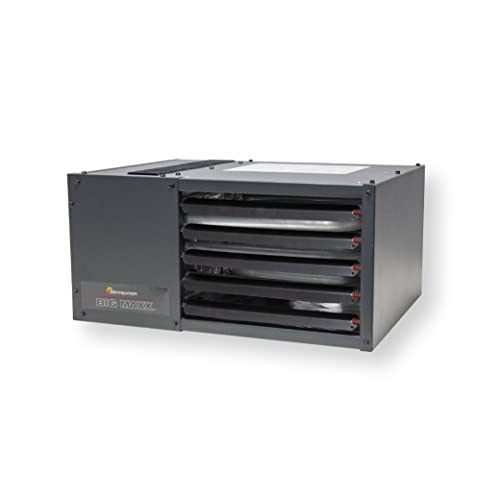
Powered by natural gas, this unit heater delivers up to 50,000 BTU per hour, warming spaces up to about 1,250 sq. ft. It features an easy outside access to thermostat and gas connections, simplifying maintenance. The heater’s exhaust system supports vertical or horizontal venting, offering flexible installation in varied garage layouts. This model is designed for durability and reliable operation in colder conditions, making it a strong choice for larger workshops that require steady warmth.
Mr. Heater F260560 Big Maxx MHU80NG
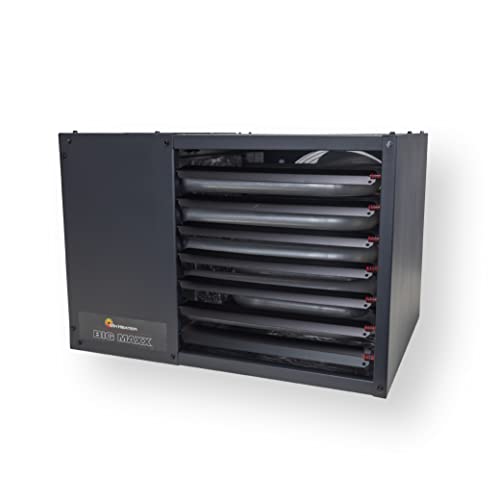
This model raises heating capacity to 80,000 BTU for garages up to roughly 2,000 sq. ft. It ships with two angle brackets and a liquid propane conversion kit in some packages, with thermostat and regulator not included. Its stated venting versatility supports vertical or horizontal configurations, aligning with multiple garage layouts. It’s well-suited for larger spaces requiring robust, consistent warmth and quick temperature stabilization.
Modine Hot Dawg HD45AS01-21

The Modine Hot Dawg line is known for reliable vented heat, and the HD45AS01-21 configuration delivers 45,000 BTU with LP gas. Its direct vent design helps vent exhaust safely outdoors, which enhances indoor air quality while providing ample warmth for mid-sized spaces. This unit emphasizes quiet operation and is sized for residential and light commercial use.
Direct Vent Garage Heater Hot Dawg (60K BTU LP Gas)

This direct vent unit delivers 60,000 BTU and uses LP gas, designed for garages that require substantial warmth with vented installation. The direct vent setup provides a sealed combustion process, reducing outdoor air intrusion and enabling placement in slightly more confined spaces. It’s ideal for frequent cold-weather use in home garages and workshops seeking rapid heat output.
Modine HD45AS0111 Hot Dawg 45K Natural Gas
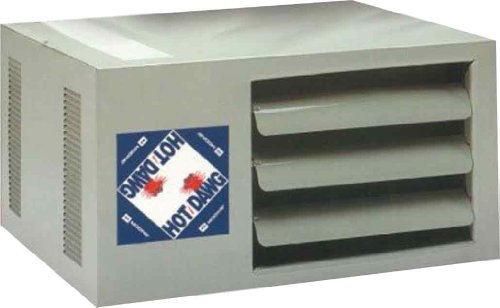
This natural gas variant provides 45,000 BTU with a focus on low profile design and neutral aesthetics. It is suitable for garages requiring a compact, wall-mounted heat source that vents directly outside, delivering dependable warmth without occupying excessive floor space. The unit is designed for residential installations and is recognized for steady performance in smaller to mid-sized garages.
Buying Guide: Key Considerations For Vented Garage Heaters
- Ventilation type and placement: Confirm whether the unit uses vertical or horizontal venting, and ensure compatibility with your garage’s exterior venting options. Proper venting is essential for safety and efficiency.
- Fuel type and availability: Natural gas units generally offer convenience where a gas line is already present; LP gas units provide flexibility where gas lines are not available. Check local supply and installation feasibility.
- BTU and space coverage: Match BTU output to your garage size. Higher BTUs heat larger spaces quickly, but oversized units may cycle frequently and waste energy; undersized units struggle to maintain comfort in extreme cold.
- Installation considerations: Many vented models require professional installation to handle venting, gas connections, and electrical hookup. Verify clearance requirements and mounting options (wall vs. ceiling) before purchasing.
- Thermostat and controls: Look for models with accessible thermostats and straightforward controls. Some units offer external thermostats or compatible control accessories for easier temperature management.
- Safety features: Automatic shut-off, oxygen depletion sensors, and flame arrest systems enhance safety in enclosed spaces. Review safety certifications and maintenance expectations for long-term reliability.
- Maintenance and service: Consider ease of access for routine maintenance, filter checks (if applicable), and availability of replacement parts from the manufacturer or authorized dealers.
- Noise and vibration: Many garage heaters run quietly, but some models produce more noticeable operation sounds. If the space is adjacent to living areas, noise levels may influence your choice.
- Energy efficiency: Compare efficiency ratings and venting design to minimize heat loss and optimize fuel usage, particularly in smaller garages or spaces that require steady, moderate warmth.
In evaluating these vented options, balance space size, desired heat output, and installation constraints. The models showcased here provide a spectrum of BTUs and venting configurations to address typical American garages and workshops, with emphasis on safe venting and durable performance in cold seasons.