Best Underfloor Heating Digital Thermostats for Cozy Homes
Answering the needs of homeowners and installers, these underfloor heating digital thermostats optimize comfort, energy use, and safety. The top picks include models with dual sensing (air and floor), built-in GFCI protection, and smart features such as app control or voice integration. This guide helps buyers choose by system type (120V/240V), sensor options, and programmability. The five highlighted products are best for different setups: contractors seeking rugged, code-compliant units; mid-range homes needing simple operation; and smart homes aiming for remote control and energy savings.
Summary table of chosen products
| Product | Voltage | Sensor | Smart/Programmable | Best For |
|---|---|---|---|---|
| BOWSEN Programmable Thermostat | 120/240V | Floor & Air | Programmable with GFCI | Homeowners needing dual sensing and robust safety |
| OJ Microline UTN4 | 120/240V | Dual Sensing | Non-programmable | Simple setup, quick warmth |
| VEVOR Floor Heating Mat | Likely 120V/240V (depending on model) | Floor | Programmable | Medium installs with built-in monitor |
| MAXKOSKO WiFi Smart Thermostat | WiFi compatible, typically 120/240V | Not specified | Smart with app, voice assist | Smart homes with mobile control |
| Mysa Smart Thermostat | 120V-240V | Floor Sensor | Smart with app | App-based control and energy reporting |
The following sections break down each option, focusing on who should buy and why. Each product includes a quick note on a potential limitation to consider before purchase.
BOWSEN Programmable Thermostat For Underfloor Heating
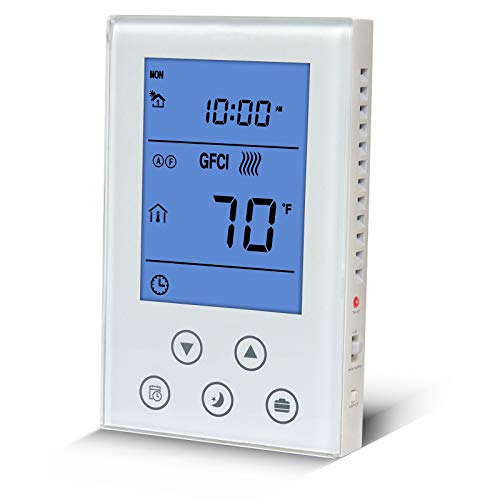
Best for: Homes needing dual sensing with robust safety. This model operates on 120V or 240V, handling up to 3600W at 240V. It includes floor and air sensors, built-in GFCI, and a test routine for safety. The GFCI protects occupants from shock and can help prevent electrical fires by interrupting leakage. A limitation: configuration and maintenance may require navigating a hidden menu to handle GFCI alerts.
OJ Microline UTN4 Radiant Floor Thermostat

Best for: Buyers wanting a simple, plug-and-play non-programmable option. It includes a Class A GFCI and works with both 120V and 240V systems. It is easy to install with minimal setup. Limitation: lacks programmable scheduling for energy savings; daily temperature must be adjusted manually.
VEVOR Floor Heating Mat With Digital Thermostat

Best for: Installations seeking a ready-to-run kit with four control modes and a built-in GFCI. The kit includes a 20 sq ft mat, a touchscreen thermostat, and a floor sensor. The product supports a seven-day scheduling feature. Caution: the cable should not be cut; embed the wires properly in an underlayment or mortar for safety and reliability.
MAXKOSKO WiFi Smart Radiant Thermostat

Best for: Smart-home enthusiasts who want remote control and voice integration. This WiFi thermostat supports standard underfloor heating systems and works with common assistants. It enables energy savings through scheduling and remote adjustments. Limitation: detailed compatibility with specific floor types or subfloor materials may require verification before installation.
Mysa Smart Thermostat For Electric In-Floor Heating
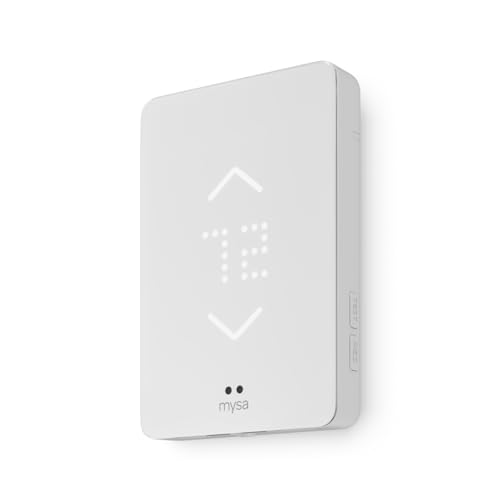
Best for: Homes prioritizing app-based control, energy reporting, and compatibility with 120V-240V systems. Mysa includes a built-in Class A GFCI, a floor sensor, and supports Apple HomeKit, Alexa, and Google Assistant. Limitation: Not suitable for hydronic or water-based systems; ensure your setup uses electric wiring compatible with Mysa.
Buying Guide: Key Purchase Considerations
What voltage is your system? Most underfloor heating thermostats support 120V or 240V. Confirm your circuit and wattage limits before choosing a model. A higher wattage rating is essential for larger rooms or dense flooring materials.
Do you need dual sensing? If precise floor temperature is important, look for models offering both air and floor sensing. Dual sensing improves comfort and can prevent overheating in warm rooms or under thick floors.
Is a GFCI required? Many jurisdictions require GFCI protection for underfloor systems. A built-in GFCI simplifies wiring and improves safety, but some installations may prefer a separate device depending on local codes.
How important is remote control? Smart thermostats offer mobile apps, voice control, and energy reports. If you value remote adjustments and automated scheduling, choose a WiFi-enabled model with compatibility to your home ecosystem.
What about installation and compatibility? Verify compatibility with your flooring type (tile, laminate, carpet), subfloor structure, and whether the thermostat supports your cable layout or membrane installation. Some kits require professional help for safe wiring and proper insulation.
FAQ
- Do all underfloor thermostats require professional installation? Not always. Simple plug-and-play units can be user-installed, but high-wattage or high-voltage systems often benefit from professional wiring and compliance with electrical codes.
- Can a thermostat protect against floor overheating? Yes, many models include floor sensing and safety features to prevent overheating and protect flooring materials.
- Are smart thermostats compatible with voice assistants? Many are. Check for compatibility with Alexa, Google Assistant, or Apple HomeKit.
- Is dual sensing necessary for every installation? Not always, but dual sensing improves comfort by managing both ambient and floor temperatures, especially in thick or insulating floors.
- What is the advantage of built-in GFCI? GFCI protection helps prevent electric shock and can reduce the risk of electrical fires by interrupting leakage currents.
- Will these work with existing radiant floor cables? Most listed models are designed to work with standard radiant floor heating cables; verify compatibility with your specific mat or cable system before purchasing.