Best Through-the-Wall HVAC Units for Apartments and Small Homes
The best through-the-wall HVAC units provide solid cooling with optional dehumidification and heat, designed to fit directly into a wall sleeve. This guide compares five top models to help renters and small-home owners choose the right unit for spaces like living rooms, bedrooms, or studios. Each option favors different needs: some prioritize compact fit and quiet operation, others emphasize higher cooling capacity or smart features. Below you’ll find clear comparisons, who each unit is best for, and practical buying tips.
| Product | Best For | Key Benefit |
|---|---|---|
| Whirlpool 14,000 BTU Through-The-Wall | Large rooms up to 700 sq ft | Strong cooling with supplemental heat and flexible airflow |
| Keystone 10,000 BTU 230V Through-The-Wall | Medium rooms up to 450 sq ft | Efficient cooling with built-in dehumidifier |
| LG 7,800 BTU Through-The-Wall | Bedrooms or home offices up to 330 sq ft | Energy efficient with multiple speeds and modes |
| TCL H10T9E1-A 10,000 BTU | Smart homes and bedrooms up to 450 sq ft | Smart control via Alexa/Google Assistant |
| Frigidaire 12,000 BTU Through-The-Wall | Medium rooms up to 550 sq ft | Three-in-one features with dehumidification |
Whirlpool 14,000 BTU Through-The-Wall Air Conditioner

This 14,000 BTU unit is designed for spaces up to 700 sq ft and includes 10600/8600 BTU supplemental heat, suitable for cooler evenings. It features 8-way directional louvers, 3 fan speeds, and 4 operating modes for flexible cooling. The wall sleeve fits standard 24.5–27 inch openings and includes a trim kit and rear grille. Best for renters or small homes needing strong cooling with optional heat without occupying floor space.
Who it’s best for: larger living rooms or open-plan spaces where you want robust cooling and a supplemental heat option. Limitations: supplemental heat is not intended as a primary heat source in very cold months.
Keystone 10,000 BTU 115V Through-The-Wall AC With Dehumidifier
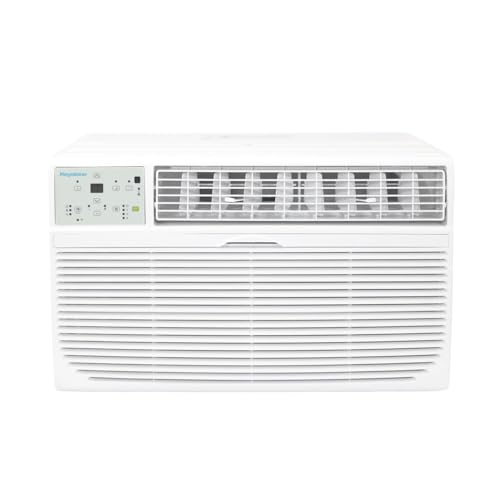
This 10,000 BTU unit is designed for comfort in bedrooms or small living spaces up to 450 sq ft, with 3 cooling modes, 3 fan speeds, and four-way louvers. It includes a built-in dehumidifier and a programmable timer, helping maintain comfortable humidity levels. Space-saving design makes it ideal for apartments where window space is limited. Best for: quiet, efficient cooling with easy installation in a smaller room. Caution: check sleeve compatibility and ensure the trim kit is included for a clean finish.
Keystone 10,000 BTU 230V Through-The-Wall AC With Dehumidifier
This 230V model is built for similar room sizes as the 115V version but designed for higher voltage compatibility, making it a strong option for spaces that can support 230V outlets. It provides three cooling modes, three fan speeds, a programmable timer, and a built-in moisture removal rate similar to its counterpart. Best for: homes with 230V wiring and a desire for reliable dehumidification. Limitation: installation requires proper 230V circuit and sleeve compatibility.
LG 7,800 BTU Through-The-Wall Air Conditioner

LG’s 7,800 BTU unit is suited for spaces up to 330 sq ft. It uses an energy-efficient refrigerant and offers 3 cooling speeds plus 3 modes. A notable feature is the Energy Saver mode that circulates air while turning off the compressor when the desired temperature is reached, plus a dry mode to remove moisture. Best for: smaller bedrooms or home offices where energy efficiency is important. Limitation: lower cooling capacity compared to larger 12k–14k BTU models.
TCL H10T9E1-A 10,000 Smart Through-The-Wall AC
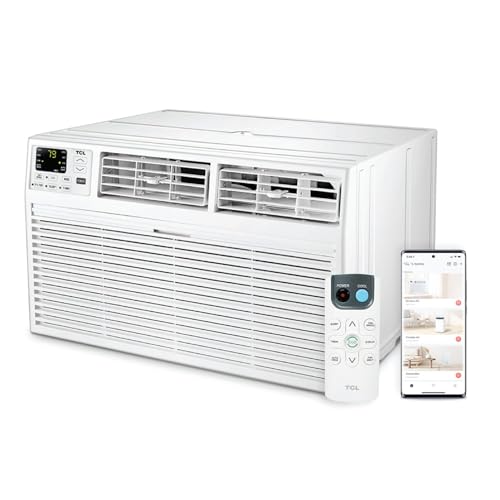
This 10,000 BTU unit cools up to 450 sq ft and includes a built-in dehumidifier. It supports smart control via Alexa and Google Assistant, enabling voice or app control. Best for: smart homes or users who want seamless remote control. Caution: confirm wall sleeve compatibility and ensure proper electrical requirements for 230V or 115V installations are met, depending on model.
Buying Guide: Through-The-Wall HVAC Units
- Room size and BTU: Match BTU rating to room size. Larger rooms benefit from 12k–14k BTU units; smaller spaces may only need 7k–10k BTU units.
- Electrical requirements: Check whether the sleeve and outlet are 115V or 230V and ensure electrical circuits can handle the load.
- Installation space: Confirm wall sleeve compatibility, width (typically 24.5”–27”), and available depth for proper fit and trim.
- Dehumidification vs. cooling: If humidity is a concern, favor units with built-in dehumidification and moisture removal rates.
- Heat function: Some units include supplemental heat. Use as a secondary heat source and verify months of cold-season performance expectations.
- Energy efficiency: Look for efficient refrigerants and settings like Energy Saver or Dry modes to save energy over the season.
- Smart features: If you want remote or voice control, prefer models with smart compatibility and mobile app access.
- Noise levels: Consider the unit’s fan speeds and insulation, especially for bedrooms or home offices.
FAQs
- What is a through-the-wall air conditioner? A through-the-wall unit is designed to mount into a wall sleeve, cooling a room without occupying floor or window space.
- Do these units require professional installation? Many can be installed by a capable DIYer, but efficient setup often benefits from professional help to ensure sleeve alignment and electrical wiring is correct.
- Can through-the-wall units replace central AC? They are best suited for individual rooms or small spaces and are not designed to replace central or zoned cooling in larger homes.
- What refrigerant types should I look for? Modern units commonly use eco-friendly refrigerants such as R-32, which offer good efficiency and lower environmental impact.
- Are 230V models more powerful than 115V? In general, 230V units can support higher BTU ratings and may be better for larger rooms where electrical infrastructure allows it.
- Can I use a dehumidifier feature year-round? Dehumidification helps improve air comfort in humid climates; its effectiveness varies with ambient humidity and room conditions.