Best Thermostat for HVAC System: Simple Guides for Easy Climate Control
Answer: This guide highlights the best thermostats for traditional single- and multi-stage HVAC systems, focusing on ease of installation, compatibility, and energy savings. It is ideal for homeowners, renters with flexible HVAC access, and DIY enthusiasts seeking straightforward, reliable temperature control. The top picks below are best for different setups: smart models for remote control and energy reports, non-programmable options for single-stage systems, and adjustable units for older or specialized furnaces. A quick buyer table follows to help compare core details at a glance.
| Product | Best For | System Type |
|---|---|---|
| Sensi Smart Thermostat ST55 | Smart control and energy savings | Most HVAC systems, Wi‑Fi |
| Sensi Lite Smart Thermostat ST25 | Budget-friendly smart control | Most HVAC systems, Wi‑Fi |
| Honeywell Home RTH9585WF1004 | Customizable color screen and advanced programming | 7‑day programmable |
| Honeywell Home RTH20B | Simple 5‑2 day schedules | Single‑stage, basic programming |
| Riseem Non‑Programmable | Reliability for single‑stage systems | 1 Heat / 1 Cool, non‑programmable |
Sensi Smart Thermostat ST55

The Sensi ST55 is a Wi‑Fi smart thermostat designed for most homes with common HVAC equipment. It emphasizes easy DIY installation, privacy protection, and energy management. It often supports flexible scheduling, remote access, and usage reports. Best for households seeking hands‑free control via apps or voice assistants; it is suitable for homeowners who want to avoid complex wiring when a common wire is not strictly required.
Who it’s best for: homeowners wanting remote control and energy insights without complicated setup. Why chosen: widely compatible with typical HVAC systems and supports standard installation processes. Caution: some configurations may still require a C‑wire if your system is older or more complex.
Sensi Lite Smart Thermostat ST25

The Sensi Lite ST25 offers budget‑friendly smart features in a compact package. It provides easy DIY installation and remote access, with ENERGY STAR certification for efficiency. Best for households that want smart capabilities without premium options, especially where a C‑wire is not strictly required in many setups.
Who it’s best for: budget‑conscious buyers seeking smart features. Why chosen: reliable for common systems and energy saving features. Caution: some heat pump or C‑wire dependent configurations may require additional wiring.
Honeywell Home RTH9585WF1004
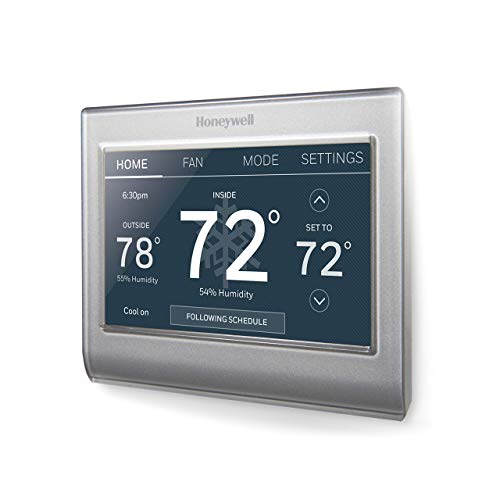
The RTH9585WF1004 is a Wi‑Fi smart color thermostat offering a 7‑day programmable schedule and a touchscreen interface. It supports energy‑saving modes and can work with utility rebate programs in some regions. Best for homes wanting color customization and robust scheduling capabilities for weekday and weekend patterns.
Who it’s best for: users who value a large display and flexible programming. Why chosen: strong programmable options and smart home compatibility. Caution: more complex setup may be needed for advanced energy programs or certain HVAC configurations.
Honeywell Home RTH20B

The RTH20B is a programmable thermostat focused on simple 5‑2 day scheduling for single‑stage systems. It provides a clear interface with a larger screen and straightforward controls. Best for households that want predictable daily patterns without the need for Wi‑Fi or remote control.
Who it’s best for: users who prefer a classic programmable model without smart features. Why chosen: dependable for basic climate control on one heating and one cooling system. Caution: lacks wireless connectivity and advanced energy features found in newer models.
Riseem Non‑Programmable

The Riseem non‑programmable thermostat is designed for single‑stage heating and cooling with easy installation. It supports conventional systems such as furnaces, boilers, and cooling units but excludes multistage or heat pump configurations. Best for renters or homeowners who want a reliable, no‑frills temperature control that’s quick to install.
Who it’s best for: those with simple, single‑stage HVAC setups. Why chosen: straightforward operation and broad compatibility with common systems. Caution: not suitable for multistage systems, heat pumps, or line‑voltage heating.
Buying Guide: How to Choose the Right Thermostat for Your HVAC System
- Check system compatibility: Confirm whether your HVAC is single‑stage or multi‑stage, and if you have a heat pump, auxiliary heat, or line‑voltage heating. This determines which thermostats will physically and electronically work with your equipment.
- Consider wiring needs: Some models require a C‑wire for power; others are designed to work with fewer wires. If your current wiring is sparse, look for models advertised as accommodating 2–5 wires.
- Smart vs. basic: Smart thermostats offer remote control, energy reports, and potential rebates, but may require a stable Wi‑Fi connection and more complex installation. Non‑programmable units are simpler and can be ideal for straightforward setups.
- Programming features: For busy schedules, a programmable thermostat with 5‑2 or 7‑day layouts helps tailor comfort and savings. If you prefer manual, non‑programmable models reduce complexity.
- Energy savings: ENERGY STAR certification often correlates with better efficiency features and potential utility rebates. Consider whether your utility program offers rewards for demand response or price‑based pricing.
- Display and ease of use: A large, readable display helps daily use. Color screens and backlighting can aid visibility in dim rooms, while tactile controls reduce misadjustments.
- Futureproofing: If you anticipate upgrading to a smart home setup, choose a model with reliable app support and compatibility with major voice assistants.
Frequently Asked Questions
- What is the difference between programmable and non‑programmable thermostats?
Answer: Programmable models allow you to set schedules for different times and days, optimizing comfort and energy use. Non‑programmable units offer manual temperature control without stored schedules, often simplifying operation. - Do I need a C‑wire for a smart thermostat?
Answer: Many smart thermostats require a C‑wire for constant power, but some models are designed to work without one in certain configurations. Check your HVAC wiring before purchasing. - Can a thermostat work with a heat pump?
Answer: Some thermostats support heat pumps with or without auxiliary heat. If you have a heat pump, verify compatibility with your exact setup and any auxiliary/heating requirements. - Is Wi‑Fi required for smart thermostats to save energy?
Answer: Not always. While remote features enhance savings, many smart models still offer energy‑saving modes and schedules even when not connected. - Should I prioritize energy rebates when choosing a thermostat?
Answer: If your utility offers rebates for ENERGY STAR or demand‑response programs, selecting a compatible thermostat may provide ongoing savings beyond installation costs. - What if my current wiring is limited to 2–5 wires?
Answer: Look for thermostats that explicitly support 2–5 wires, and follow installation instructions to avoid compatibility issues with your HVAC system.