Best Tankless Hot Water Heaters for Efficient On‑Demand Comfort
Finding the right tankless hot water heater depends on your home size, water usage, and electrical setup. This guide highlights five top options designed for quick hot water, space-saving installation, and energy efficiency. Best for small apartments and point‑of‑use needs are compact units; better for mid‑sized homes are 11–14 kW models; choose this if you need reliable performance at multiple fixtures. The selections below are compatible with common 240V electrical systems and are suitable for indoor installation. A quick product table follows to help compare core specs at a glance.
| Product | Best For | Approximate Output |
|---|---|---|
| Rheem 18kW 240V Tankless Electric Water Heater | Mid‑sized homes, higher hot water demand | Up to 4.4 GPM |
| Orbek 14kW Tankless Water Heater | 2 fixtures or primary point‑of‑use | Up to 3.38 GPM |
| EcoSmart ECO 11 | Compact spaces, single bathroom or small condo | Up to 1–2 GPM (typical) |
| CAMPLUX 6kW Tankless Water Heater | Under-sink use, space‑limited areas | Up to 2.0 GPM (typical) |
| Rheem 11kW 240V Tankless Electric | Compact to mid‑sized, easy upgrade | Up to 2.68 GPM |
Rheem 18kW 240V Tankless Electric Water Heater
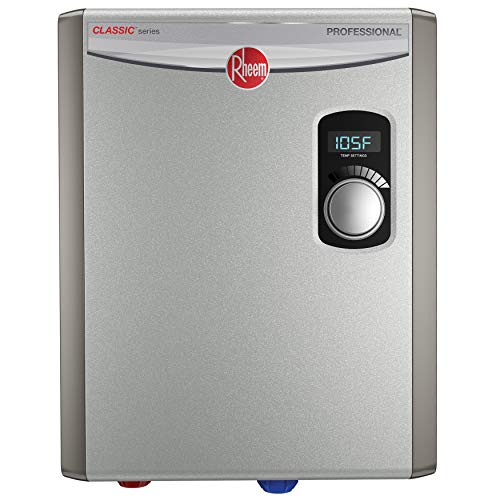
The Rheem model offers external digital thermostatic control with an LED display showing ±1 degree accuracy. It uses self‑modulation to adjust power to meet hot water demand and features durable copper immersion heating elements with field serviceability. This unit is best for homes with higher hot water needs or where multiple fixtures require on‑demand warmth. Caution: installation may require professional electrical work to ensure 240V compatibility and safe wiring. Flow rate supports up to 4.4 GPM, suitable for moderate simultaneous use.
Orbek 14kW Tankless Water Heater

The Orbek 14kW unit is designed for 240V operation and supports up to 3.38 GPM, suitable for 1–2 fixtures. It requires a substantial electrical setup (at least a 150A panel, 240V/60A two‑pole breaker, 6 AWG wires) for proper performance. This makes it a strong choice where electric capacity is available and space is limited. Best for homes that want reliable hot water at two points of use. Limitation: high electrical demand may constrain installation in smaller apartments.
EcoSmart ECO 11 Electric Tankless Water Heater

The EcoSmart ECO 11 uses patented self‑modulating technology at 13 kW and 240V. It is designed to be space‑saving (approximately 11.5 x 8 x 3.75 inches) and is 90% smaller than traditional tanks. It matches well with smaller homes or point‑of‑use needs, delivering consistent on‑demand water with energy efficiency. Best for single bathroom or compact living spaces. Note: flow rates vary with incoming water temperature and may be lower in very cold climates.
CAMPLUX Tankless Water Heater Electric 6kW

This 6kW CAMPLUX unit is a compact, under-sink option with self‑modulating technology and a temperature display. It is energy efficient and designed for under‑sink installations, making it ideal for apartments, tiny homes, or office spaces where space is at a premium. Best for point‑of‑use hot water at one location; be aware it may not support multiple fixtures simultaneously in colder climates or if hot water demand is high.
Rheem 11kW 240V Tankless Electric Water Heater
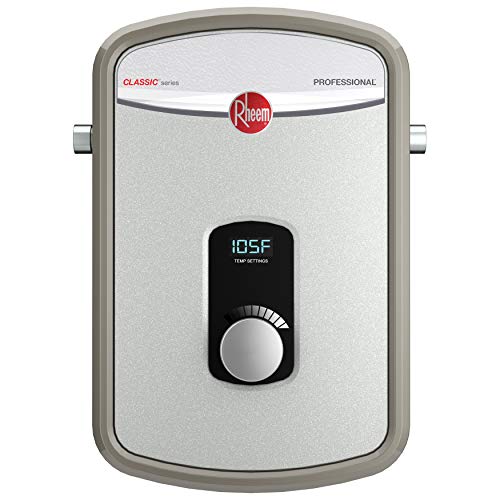
This 11 kW Rheem model features an ON/OFF dial control with a digital temperature display and self‑modulating power. It is designed to deliver up to approximately 2.68 GPM. Best for upgrading a single bathroom or small apartment where a compact, easy‑to‑install unit is desired. Limitation: lower flow at very cold inlet water temperatures may require a larger model if multiple fixtures are used simultaneously.
Buying Guide: Key Factors For Tankless Electric Water Heaters
Sizing and flow: Determine hot water demand by listing fixtures and their typical usage. Choose a unit that offers a GPM rating that meets or exceeds your peak draw. Electrical capacity: Check the main panel capacity and wire gauge. Some units require dedicated 60A or higher circuits.
Space and installation: Consider whether you need a wall‑mounted unit or a compact under‑sink model. Self‑modulating technology helps conserve energy by adjusting output to demand. Temperature control: Look for units with digital or easy‑read temperature displays for precise comfort.
Brand and serviceability: Reputable brands provide field service options and replacement parts; copper elements generally offer durability and longer service life. Environment and climate: In colder inlet conditions, higher kW models may provide better performance at multiple fixtures.
Frequently Asked Questions
- What is a tankless water heater?
A tankless water heater provides hot water on demand without storing large volumes of water in a tank. It heats water as it flows through a heat exchanger when a hot water tap is opened. - Do these units require professional installation?
Some installations involve electrical upgrades or specific clearances; consult a licensed professional if unsure about wiring, breaker requirements, or venting (where applicable). - What affects hot water flow rate?
Incoming water temperature, pipe length, heat exchanger capacity, and the number of fixtures drawing water simultaneously influence GPM. - Can tankless heaters save energy?
Yes. They generally use energy only when hot water is needed, reducing standby losses common with tanks, especially in climates with large temperature differentials. - Will a tankless unit work for a whole house?
It depends on the number of fixtures and the unit’s GPM rating. For higher simultaneous hot water needs, consider larger kW models or multiple units. - Is buffer storage necessary with tankless systems?
Not typically; most installations are point‑of‑use or whole‑home with adequate sizing. Some setups use multiple units to improve supply reliability.