Best Single-Unit Heat Pump Options for Home Comfort
Looking for a single-unit heat pump solution that can both heat and cool a space efficiently? This guide highlights five strong choices that are easy to install and suitable for different environments. The top picks include portable units for flexible cooling/heating, a ductless mini-split for focused zoning, and packaged units for all-in-one HVAC setups. Ideal buyers include apartment dwellers seeking portable climate control, small business spaces needing compact systems, and homeowners wanting year-round comfort without multiple components.
Summary table of selected products:
| Product | Best For | Key Benefit |
|---|---|---|
| Amenitlif 14,000 BTU Dual Hose Portable AC with Heat Pump | Large rooms, portable flexibility | Energy-efficient inverter with quiet operation |
| Garvee 14,000 BTU Inverter Portable AC with Heat Pump | Versatile spaces up to 700 sq.ft. | Very quiet at 42dB |
| Cooper & Hunter 24,000 BTU 230V Mini Split | Zoned cooling/heating for open layouts | Smart control via app |
| Ace Air Packaged Heat Pump Unit (2.5 Ton) | Residential/outdoor packaged installs | High efficiency with 13.4 SEER2 |
| MERXENG Window Air Conditioner Heat Pump 12,000 BTU | Window-install space-saving control | 7-in-1 functionality |
Amenitlif 14,000 BTU Dual Hose Portable AC with Heat Pump
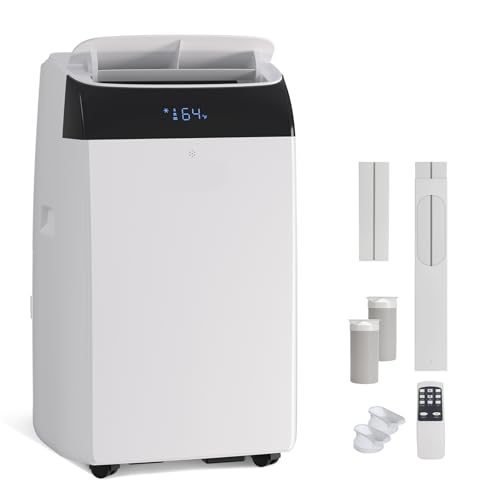
This inverter-driven portable air conditioner combines cooling and heating in a single unit, making it a strong fit for flexible spaces like living rooms and home offices. It uses smart inverter technology to adjust compressor speed, reducing energy use while maintaining stable temperatures. The dual-hose design helps prevent negative pressure, improving cooling efficiency in rooms up to 700 sq.ft. Best for renters or spaces where a permanent system isn’t feasible. Caution: setup and venting may require extra space and routine maintenance to keep dual-hose efficiency high.
Garvee 14,000 BTU Inverter Portable AC with Heat Pump

This inverter portable unit provides quiet cooling and heating for medium to large rooms. Its 14,000 BTU capacity and dual-hose design help evenly distribute climate control up to about 700 sq.ft. The low noise level (as quiet as 42dB) makes it suitable for bedrooms or offices. Best for: users prioritizing ultra-quiet operation and stable temperatures. Limitation: energy savings rely on maintaining proper air circulation; ensure good room airflow.
Cooper & Hunter 24,000 BTU Mini Split Heat Pump

This ductless mini-split offers 24,000 BTU of heating and cooling in a single, compact indoor unit paired with a wall-mount air handler. It includes smart kit support for remote control and scheduling, making it a solid choice for zone cooling/heating in open-plan rooms, studios, or additions. Best for: spaces needing precise zoning and app-based management. Caution: installation requires professional mounting and line-set routing.
Ace Air Packaged Heat Pump Unit (2.5 Ton)

This all-in-one packaged heat pump unit delivers 2.5 tons of cooling and heating with a high SEER2 rating and R32 refrigerant. The horizontal design and all-in-one configuration suit residential spaces or small commercial setups that require a streamlined HVAC footprint. Best for: replacing an old standalone system with a single, integrated package. Limitation: outdoor installation requires suitable space and weatherproofing precautions.
MERXENG Window Air Conditioner Heat Pump 12,000 BTU

This 12,000 BTU window unit combines cooling, heating, fan, dehumidification, and a sleep mode in a single compact package. It’s designed for window installation, offering a cost-effective path to year-round comfort without a full split or ducted system. Best for: rooms with window access and space constraints. Limitation: window installation may limit placement flexibility and may require fitment in the window frame.
Buying Guide: Key Considerations for Single-Unit Heat Pumps
- Space and placement: Portable units offer flexibility, while packaged units require outdoor space. Mini splits need wall mounting. Choose based on room size, window availability, and whether you want permanent installation or mobility.
- BTU and area coverage: Match BTU to room size. Up to 700 sq.ft units are common for portable dual-hose designs; smaller spaces may do with 12,000 BTU or less.
- Energy efficiency: Look for inverter technology and SEER ratings. Inverter-driven models typically save electricity by adjusting compressor speed rather than cycling on and off.
- Sound levels: If the unit resides in a bedroom or home office, prioritize models with low decibel operation (often around 40-50 dB in sleep mode).
- Heat function performance: For year-round comfort, ensure the heat pump’s heating capacity aligns with your climate and room insulation. Some units include dehumidification, sleep modes, and dimmed displays.
- Ease of installation and control: Apps, remote controls, and smart kits enhance usability. Consider whether you prefer wireless scheduling or manual operation.
- Maintenance and durability: Packaged units and minisplits may require professional service for refrigerant handling. Look for corrosion resistance and service access.
FAQ
What is a single-unit heat pump?
A single-unit heat pump provides heating and cooling in one integrated system, either as a portable unit, a packaged outdoor unit with an indoor component, or a ductless mini-split with an indoor air handler and outdoor condenser.
Are portable heat pumps efficient?
Yes, especially inverter-driven portable units. They adjust compressor speed to maintain set temperatures, reducing energy use compared with traditional on/off cooling.
Do I need professional installation for a mini-split?
Most mini-splits require professional installation due to refrigerant piping, electrical wiring, and outdoor condenser mounting.
Which unit should I choose for a large open room?
A 14,000 BTU dual-hose portable or a 24,000 BTU mini-split can effectively cover large spaces. Consider layout and ventilation.
Can a window heat pump replace a full HVAC system?
For smaller rooms and specific zones, it can be a suitable alternative. Large homes may still need centralized or multi-zone solutions for uniform comfort.