Best Propane Heaters for Garages and Workshops: Efficient Space Heating
Looking for reliable propane heaters to warm a garage or workshop? This guide highlights five strong options that cover a range of space sizes and needs, from compact installations to portable torpedo-style units. Each product is evaluated for best use cases, safety features, and practical limitations to help you choose wisely for your space and heater setup.
Quick overview
| Product | BTU Range | Best For | |
|---|---|---|---|
| Mr. Heater 50,000 BTU Forced-Air Unit Heater | 50,000 | Medium to large garages | Ceiling-mounted; thermostat compatibility |
| SunStar Garage Tube Heater – LP, 45,000 BTU | 45,000 | Low-ceiling garages, compact installs | Long, tube-style; installation ease |
| Mr. Heater 80,000 BTU Forced-Air Unit Heater | 80,000 | Large garages/workshops | Ceiling-mounted; larger space coverage |
| GASLAND 125,000 BTU Propane Force Air Heater | 75,000–125,000 | Very large spaces, job sites | High heat output; CSA certified |
| Anrain 150,000 BTU Forced Air Propane Heater | 120,000–150,000 | Industrial-scale heating | Extended run-time, heavy-duty hose |
Mr. Heater 50,000 BTU Forced-Air Unit Heater

This ceiling-mounted heater delivers 50,000 BTUs to warm spaces up to approximately 1,667 square feet, or a typical 3-car garage. It works with standard 24-volt thermostats or newer Wi-Fi enabled units (sold separately), allowing integration with compatible climate controls. Best for medium-sized garages or workshops that require substantial heat without occupying floor space. A potential limitation is thermostat compatibility; ensure your control system is compatible with this model’s wiring options.
SunStar Garage Tube Heater – LP, 45,000 BTU

Designed for compact installation, this tube-style heater provides 45,000 BTUs and fits where space is tight. Its overall length of about 110 inches helps with unobtrusive placement along walls or overhead beams. Efficiency can reach up to 84.5%, and installation is feasible with the heater placed as low as 8 feet above the floor. Choose this option for tight garages or workshops with limited ceiling clearance; its long form may require thoughtful placement to avoid obstacles.
Mr. Heater 80,000 BTU Forced-Air Unit Heater
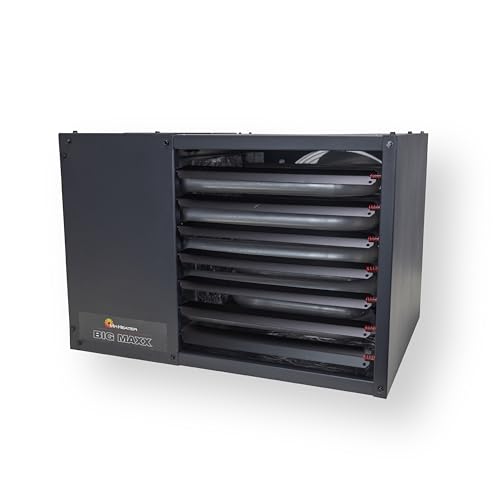
This ceiling-mounted unit delivers 80,000 BTUs to heat large spaces—safer and more efficient for big garages or barns. It’s compatible with propane or natural gas and is noted for consistent heat distribution across substantial areas. Best for large workshops; a caution is that higher output can require more robust ventilation planning and may be overkill for smaller spaces.
GASLAND Flame Jet 125,000 BTU Propane Heater

With adjustable output from 75,000 to 125,000 BTUs, this heater targets spaces up to 3,100 square feet. It includes an extended run option via a 10-foot hose and regulator for easy connection to a propane tank. CSA-certified with continuous electronic ignition and safety features such as overheat protection and flame-out shut-off. Best for rapidly heating larger areas or outdoors; be mindful of energy use and ventilation in enclosed spaces.
Anrain 150,000 BTU Forced Air Propane Heater

High-capacity heating with up to 150,000 BTUs makes this model suitable for very large garages or industrial spaces. It includes an 11-foot hose and regulator, along with a triple safety system that protects against overheating, flame-out, and tipping. Best for prolonged, high-heat demands; a caveat is larger footprint and fuel consumption in smaller spaces which may reduce efficiency.
UBACKS 80,000 BTU Portable Propane Heater

This portable unit covers up to about 2,000 square feet with 30,000–80,000 BTUs and comes with a 10-foot hose and regulator. It features a piezo push button igniter, safety shut-off on flame loss, and a standing pilot for added stability. Best for movable heating needs or temporary spaces; avoid using in highly drafty or enclosed areas without ventilation planning.
Mr. Heater 125,000 BTU Forced-Air Unit Heater
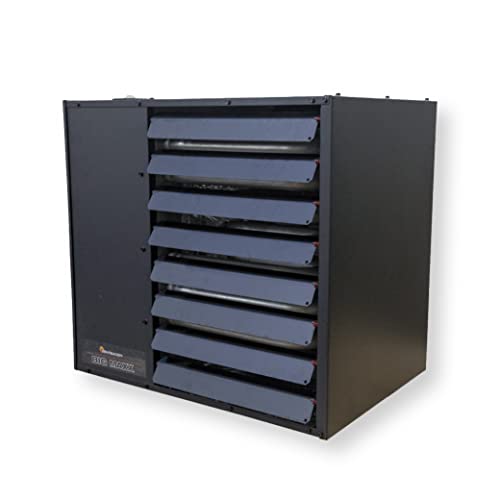
A high-output option delivering 125,000 BTUs, suitable for very large garages or commercial spaces. It includes electronic ignition and a liquid propane conversion option, offering flexibility for different fuel sources. Best for expansive spaces; caution that installation and ventilation requirements increase with higher BTUs.
Buying Guide: Key Considerations For Propane Heaters
- Space size and ceiling height: Match BTUs to the volume you must heat. Overpowered units can create waste and ventilation issues; underpowered units may fail to maintain comfort.
- Ventilation and safety: Propane heaters require adequate airflow and proper clearance from combustibles. CSA or UL certification, safety shut-offs, and tip-over protection are important.
- Fuel source flexibility: Some models offer propane or natural gas compatibility. Decide which fuel is more accessible and cost-effective in your area.
- Installation type: Ceiling-mounted units save floor space but may demand professional installation. Portable or torpedo-style units offer versatility but require safe placement.
- Thermostat and controls: Compatibility with existing thermostats or smart controls can simplify operation and improve energy efficiency.
- Run time and fuel availability: Higher BTUs often require more fuel; consider tank size, hose length, and expected runtime for extended projects.
- Maintenance and safety features: Look for electronic ignition, overheat protection, flame-out shut-off, and easy access for routine checks.
FAQ
- What size heater should I choose for a 2-car garage?
– For about 400–800 square feet, a heater in the 40,000–80,000 BTU range is typical, depending on insulation and climate. - Are gas heaters safe for enclosed garage spaces?
– Yes, when properly vented and installed with safety features like overheat protection and flame-out shut-off. - Can I vent propane heaters through a wall?
– Many units vent to the outdoors via purpose-built venting; follow the manufacturer’s installation instructions and local codes. - Is a high-BTU heater more energy-efficient?
– Not necessarily. Efficiency depends on space size, heat loss, and thermostat control. Oversizing wastes fuel and can cause uneven heating. - Do these units require professional installation?
– Some ceiling-mounted units and high-BTU models benefit from professional installation to ensure proper venting and clearances. - Can I use these heaters in uninsulated spaces?
– Heat retention is a key factor. Insulation improvements will improve performance and reduce running costs.