Best Propane Heaters for Workshop Spaces: Top Picks for Warmth and Safety
Answering your search for a reliable propane heater for a workshop, this guide covers five top options and helps you choose the right one for your space. These heaters are best for different work environments—garage bays, construction sites, or home workshops—depending on heat output, portability, and safety features. The top picks balance energy efficiency, ease of installation, and practical safety controls to keep your workspace comfortable. This overview includes a quick comparison and a buyer-friendly table to help you decide who each heater is best for.
| Product | Best For | BTU / Output | Key Benefit |
|---|---|---|---|
| Reznor 60K BTU Propane Garage Heater (UDXC-60) | Medium-to-large workshops | 60,000 BTU | Ceiling-mount capable, high efficiency |
| ThermoMate 18,000 BTU Cabinet Heater PHF18B | Smaller garages and outdoor-work setups | 18,000 BTU | CSA certified, compact cabinet |
| Gasland MHA18BN Propane Radiant Heater | Portable, mobile workspaces | 18,000 BTU | Portable cabinet with wheels and built-in tank housing |
| 60,000 BTU Portable Forced Air Heater | Job sites and temporary setups | 60,000 BTU | Includes hose and regulator, versatile |
| Mr. Heater 50,000 BTU Forced-Air Unit | Garages and barns | 50,000 BTU | Ceiling-mounted option, thermostat compatibility |
Reznor 60K BTU Propane Garage Heater
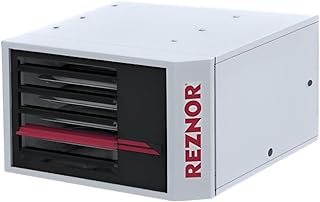
The Reznor UDXC-60 is a 60,000 BTU propane heater designed for indoor spaces like workshops, garages, and light industrial sites. It emphasizes high thermal efficiency (83%) to deliver warm air when you need it most, with a ceiling-mount option using threaded-nut retainers for flexible installation. This unit suits larger workshops where ceiling mounting is feasible and robust heat output is essential. Best for: mid-size spaces that require steady, powerful heat without frequent cycling.
Why chosen: It combines strong output with ceiling-mount versatility, making it a practical choice for permanent workshop installations. Clear benefits come from indoor-use design and strong efficiency. A potential limitation is that mounting hardware and brackets are sold separately, so plan for installation needs accordingly. Best for those seeking a high-output, semi-permanent solution.
ThermoMate 18,000 BTU Cabinet Heater PHF18B

The ThermoMate PHF18B delivers up to 18,000 BTU of radiant heat, warming spaces up to about 450 square feet. It includes safety features like ODS (Oxygen Depletion Safety) and tip-over protection, making it a strong pick for well-ventilated garages and workshops. The unit is CSA certified, offering added assurance for indoor use. Best for: smaller garages or workshops where quiet operation and safety are priorities. A limitation: do not use in tightly enclosed spaces, as indicated by safety guidelines.
Why chosen: This heater offers reliable radiant warmth with built-in safety systems and compact cabinet design. It’s well-suited for users who value safety certifications and a balance between heat and space. Choose this if you want a dedicated indoor unit with straightforward setup and no external electrical requirements beyond standard gas lines.
Gasland MHA18BN Propane Radiant Heater
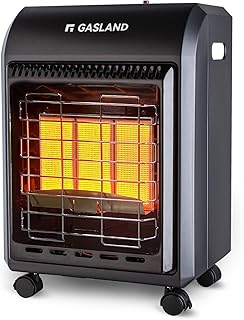
The Gasland MHA18BN is an 18,000 BTU propane radiant heater that emphasizes portability and space-saving design. It features a built-in tank compartment and wheels for easy relocation around a workshop or job site. Safety features include tip-over and low-oxygen shut-off. Best for: mobile, temporary heating needs or spaces where you need to move heat between areas. A caveat: while portable, it relies on a separate propane supply and may require careful handling when moving due to tank integration.
Why chosen: It’s a versatile option for users who frequently relocate heat across different zones. The integrated cabinet and wheels simplify transport, and the safety features address common concerns in open or semi-open workshop layouts.
60,000 BTU Portable Forced Air Heater

The 60,000 BTU portable forced-air heater is designed for job sites, workshops, and temporary heating needs. It often includes a hose and regulator, offering flexibility for different venting setups. Best for: larger, more open spaces or temporary work zones where mobility and quick deployment are priorities. A caution: portable units may require careful placement to avoid heat exposure to flammable materials and ensure proper ventilation.
Why chosen: Its high BTU output and portable design make it a strong option for contractors and temporary setups where quick heat is needed across multiple zones. It’s an efficient choice when you must move heat to different work areas during the day.
Mr. Heater 50,000 BTU Forced-Air Unit Heater

The Mr. Heater 50,000 BTU unit heater is a ceiling-mounted forced-air option designed to heat garages, barns, and workshops. It can heat up to about 1,667 square feet, making it suitable for larger workspaces like three-car garages. It’s compatible with standard 24-volt thermostats or newer Wi-Fi enabled thermostats (sold separately). Best for: permanent or semi-permanent installations where thermostat control improves energy use. A limitation: BTU performance is most effective in well-ventilated areas and when properly sized for the space.
Why chosen: It offers a proven heating method with compatibility to common thermostat ecosystems, supporting energy management in a workshop setting. Choose this if you want a strong, ceiling-mounted heater with easy integration into existing climate control plans.
Buying Guide: How To Choose The Right Propane Heater For Your Workshop
- Space size and heat needs: Measure the workshop area (length × width × height) and pick BTU output accordingly. Larger spaces require higher BTU models or multiple units for even distribution.
- Installation type: Consider ceiling-mount, wall-mount, or portable units. Ceiling-mounted units save floor space but may require professional installation. Portable options offer flexibility but may need more frequent repositioning.
- Ventilation and safety: Ensure proper ventilation to avoid oxygen depletion and monitor for CO risks in enclosed spaces. Look for safety features such as tip-over protection and low-oxygen shut-off (ODS).
- Fuel source and availability: Propane supply should be reliable in your area. Some units include regulators and hoses; others require separate purchases. Plan for safe storage of fuel canisters or tanks.
- Power and controls: Some units rely solely on gas with basic controls, while others offer thermostat compatibility or Wi-Fi-enabled thermostats for precise climate control. Consider how you’ll integrate heating with existing tools and schedules.
- Portability vs. permanence: Decide if you need a mobile heater for shifts between spaces or a fixed unit for consistent warmth. Mobility affects ease of use and setup time.
- Safety certifications: CSA or equivalent certifications indicate compliance with safety standards, particularly important for indoor use near combustible materials.
Frequently Asked Questions
- What size propane heater do I need for a 300 sq ft workshop? For a 300 sq ft space, a heater in the 15,000–25,000 BTU range is typically sufficient, depending on insulation and climate. Consider radiant or combination heating for even warmth.
- Are propane heaters safe for indoor use? Yes, when used as directed with proper ventilation and safety features such as oxygen depletion shut-off and tip-over protection. Follow manufacturer guidelines for installation and operation.
- Can I install a ceiling-mounted propane heater myself? Some models allow DIY installation, but many require professional mounting and venting assessment. Check mounting brackets and clearances in the manual.
- Do propane heaters require electricity? Some models operate without electricity, while others use electricity for fans, thermostats, or safety sensors. Verify the unit’s electrical requirements before purchase.
- Is it better to buy a radiant or forced-air propane heater for a workshop? Radiant heaters heat objects and people directly, ideal for open spaces and drafts. Forced-air heaters provide quicker air warmth and are better for larger, open areas when you need rapid temperature rise.