Best Pellet Stove Basement Vent Kit for Safe Indoor Venting
Answering the common search: a pellet stove basement vent kit helps move exhaust and bring in outside air safely, promoting efficient burning in enclosed spaces. This guide highlights five vetted options, with clear guidance on who each kit is best for, and practical caveats to consider before buying. The selections emphasize horizontal venting through basement walls, external fresh air intake, and durable stainless or aluminum construction. Use this overview to choose a kit that matches your stove size, wall type, and climate.
| Product | Best For | Key Benefit |
|---|---|---|
| Duravent 3 Inch PelletVent Stainless Steel Double Wall | 3″ pellet stoves and tight spaces | Double-wall stainless inner for safety |
| DURAVENT 4″ Pellet Vent KIT | Medium-output stoves with wall vent | Horizontally vented through wall |
| Pellet Stove Fresh Air Intake Kit, 2″ x 60″ | Improved combustion with outside air | Fresh-air intake to boost efficiency |
| 2 in Pellet Stove Vent Pipe Kit, Outside Fresh Air | Outside air for compact stoves | Wall plate screen included |
| Zhaoyao Pellet Stove Pipe Kit, 2″ x 59″ | Flexible setup with weather protection | Long, bendable aluminum pipe |
Duravent 3 Inch PelletVent Stainless Steel Double Wall Vent Pipe Kit

This kit is designed for 3-inch pellet stoves and multi-fuel heaters requiring a double-wall vent for safe horizontal through-the-wall installation. It includes five 12-inch pipes, a 90-degree elbow tee, cleanout tee with cap, appliance adapter, wall thimble, horizontal termination cap, and installation instructions. Best for: homeowners with 3-inch pellet stoves seeking a complete, install-ready horizontal vent through a wall. Caution: ensure wall thimble compatibility with your wall material and intake room clearance.
DURAVENT 4″ Pellet Vent KIT Stainless

This kit is compatible with most pellet and multi-fuel stoves and uses 24-gauge steel designed to horizontally vent a stove through a wall. Best for: mid-range installations where a 4-inch vent is standard and the stove is configured for exterior venting. Limitation: ensure your stove and chase can accommodate a 4-inch through-wall run and compatible termination cap.
Pellet Stove Fresh Air Intake Kit, 2″ x 60″

This kit provides outside air into the burn chamber via a 2-inch diameter, up to 60-inch long aluminum flex hose with a wall plate screen and clamps. Best for: installations where room air is insufficient for efficient combustion, helping reduce fuel use and harmful gases. Limitation: the 2-inch size may be less suitable for larger pellet stoves that require higher air input or larger ducting.
2 in Pellet Stove Vent Pipe Kit, Outside Fresh Air Intake

Includes a 2-inch diameter, 60-inch aluminum vent pipe with a wall plate screen and two clamps. Best for: small to medium stoves where external fresh air intake is a top priority. Caution: expansion may allow up to approximately 150 inches when stretched; verify your required length and clearance for outdoor exposure.
Zhaoyao Pellet Stove Pipe Kit, 2″ x 59″ Aluminum Flex
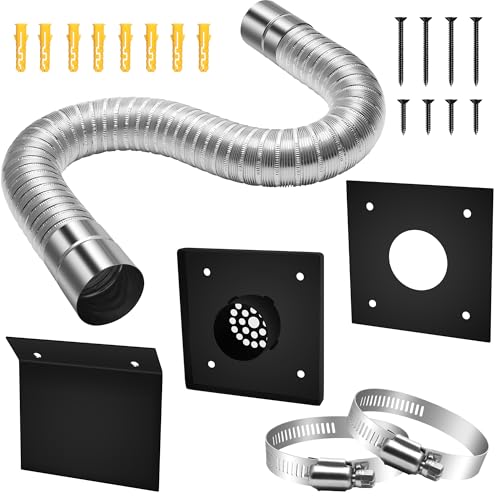
This kit features a 59-inch aluminum flex pipe plus weatherboard, outdoor faceplate, indoor faceplate, and clamps. Best for: flexible installation where weather resistance and easy bending are needed. Limitation: ensure weatherproofing compatibility with exterior mounting and sealing requirements in your basement wall.
Buying Guide
Choosing the right pellet stove basement vent kit depends on vent diameter, wall construction, and whether you need fresh air intake or exhaust-only solutions. Consider these questions:
- What is my stove’s vent size and the required through-wall configuration?
- Do I need a fresh air intake to improve combustion efficiency?
- Is horizontal through-wall venting feasible with my basement layout and wall type?
- What are the rust resistance and durability needs for my climate?
- Will I require flexible length to accommodate obstructions or tight spaces?
Key considerations by category:
- Exhaust venting: Stainless steel inner walls provide corrosion resistance and stable flue performance; choose 3″ or 4″ kits based on stove output and wall pass-through.
- Fresh air intake: Outside air kits help with tight houses and high-efficiency stoves; verify hose diameter and maximum extension to suit room size.
- Installation environment: Aluminum flex options offer bendability but ensure weather protection for outdoor components; wall plates and clamps are essential for secure mounting.
- Durability and materials: Stainless and aluminum components balance long-term durability with price; rustproof features protect in varying basement humidity.
- Compatibility: Confirm that the kit’s components match your stove model, wall thickness, and any clearance requirements around combustibles.
Comparison snapshot
- Best for tight 3-inch stoves: Duravent 3 Inch PelletVent kit — robust double-wall design for safe horizontal venting.
- Best for wall-through installation with moderate size: DURAVENT 4″ Pellet Vent KIT Stainless — straightforward through-wall vent for 4-inch systems.
- Best to boost combustion with outdoor air: Pellet Stove Fresh Air Intake Kit (2″ x 60″) and 2 in Pellet Stove Vent Pipe Kit — external air improves burn efficiency.
- Best flexible run and weather protection: Zhaoyao 2″ x 59″ Aluminum Flex Kit — bendable pipe with weatherboard and screens.
FAQ
- What is the purpose of a pellet stove basement vent kit?
It enables safe exhaust venting through a basement wall and can provide outside air for better combustion in sealed spaces. - Do I need a fresh air intake with every kit?
Not always. A fresh air intake is beneficial for tight homes or high-efficiency stoves but may not be required for all installations. - What diameter should I choose?
Choose the diameter that matches your stove’s exhaust and your wall pass-through requirements; common sizes are 3″ and 4″. - Can I install these kits myself?
Many kits are designed for DIY installation, but follow the manufacturer’s instructions and local codes; professional installation is advised if unsure. - Will outdoor components be affected by weather?
Weatherproof components and proper sealing are important; select weather-rated parts and use appropriate wall caps or rain shields. - Are there safety considerations I should plan for?
Ensure proper clearance from combustibles, proper vent termination, and airtight sealing to prevent leaks and moisture intrusion.