Best Overhead Propane Garage Heaters for Large Spaces and Workshops
Overhead propane garage heaters are designed to warm large spaces like garages, shops, barns, or warehouses efficiently. This guide highlights five well-suited models, explaining who they’re best for and why. If you need fast heat with ceiling-mounted installation, these options offer reliable warmth with different BTU outputs to match space size and insulation. The buyer’s need ranges from small hobby spaces to commercial-scale environments. Below is a quick table comparing the five selected units.
| Product | BTU / Type | Best For |
|---|---|---|
| Mr. Heater 50,000 BTU Forced-Air Unit Heater | 50,000 BTU | Smaller garages up to ~1,667 sq ft; thermostat-ready control |
| Mr. Heater 125,000 BTU Forced-Air Unit Heater | 125,000 BTU | Larger garages or workshops needing robust heat |
| Modine Direct Vent Hot Dawg HD45AS01-21 | 45,000 BTU | Direct vent, space-limited setups in garages |
| Mr. Heater 40,000 BTU Infrared Garage Heater | 40,000 BTU | Infrared heat for cost-effective warmth in mid-sized spaces |
| Reznor 60,000 BTU Propane Unit Heater UDXC-60 | 60,000 BTU | Commercial or larger residential spaces with ceiling mounting |
Mr. Heater 50,000 BTU Forced-Air Unit Heater

Best for compact to medium-sized spaces, this ceiling-mounted unit delivers 50,000 BTU to heat up to about 1,667 sq ft. It supports standard 24-volt thermostats or newer Wi-Fi enabled thermostats sold separately, offering flexible control. Best for: homeowners who want straightforward installation and compatibility with existing thermostat setups. Limitation: requires adequate ceiling clearance and venting considerations for proper operation.
Mr. Heater 125,000 BTU Forced-Air Unit Heater
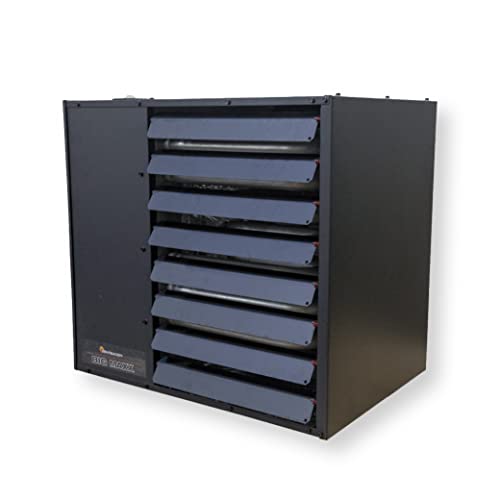
Better for larger garages or workshops, this high-output unit provides 125,000 BTU for rapid space heating. It is designed for propane or natural gas use and includes an electronic ignition. Best for: spaces with higher insulation needs or where fast, wide-area warmth is required. Limitation: higher BTU units may require more robust venting, clearances, and fuel supply considerations.
Mr. Heater 40,000 BTU Propane Garage Heater #MH40LP

Infrared heat with no electricity required makes this model efficient for heat retention in mid-sized spaces. Top clearance is 36 inches; sides and back require 30 inches, and below clearance is 68 inches. Best for: spaces where electrical supply may be limited or where IR heat minimizes energy use. Limitation: infrared warmth is more directional; ensure heat reaches occupied zones in the workspace.
Reznor 60,000 BTU Propane Unit Heater UDXC-60

Designed for commercial or residential spaces requiring ceiling-mounted heat, the UDXC-60 delivers 60,000 BTU with an 83% thermal efficiency rating. It is suitable for indoor use in workshops, warehouses, or factories. Best for: buyers seeking a robust ceiling-mount propane option with a focus on efficiency. Limitation: installation may require additional mounting hardware or brackets sold separately.
Mr. Heater 30,000 BTU Vent Free Blue Flame Propane Heater

Vent-free operation provides supplemental warmth in spaces around 1,000 sq ft, with a 30,000 BTU capacity. It includes a battery-operated electronic ignition. Best for: smaller garages or as a supplementary heat source. Caution: vent-free heaters require proper ventilation to avoid moisture or combustion byproducts buildup in enclosed areas.
Buying Guide: Key Considerations For Overhead Propane Garage Heaters
What space size and insulation level matter?
Evaluate the square footage, ceiling height, insulation, and whether the space is year-round or seasonally used. Higher BTU units, like 125,000 BTU, cover larger spaces but may be overkill for smaller garages. For well-insulated spaces, moderate BTU units may deliver efficient comfort with lower fuel use.
Ventilation and fuel type
Some units are designed for vented operation with direct venting, while others can be vent-free or rely on existing venting. Propane supply reliability, gas line run length, and local codes influence installation. Choose a unit compatible with your available fuel source and venting requirements.
Electrical considerations and thermostat control
Ceiling-mounted heaters may require electrical connections or be compatible with 24-volt or smart thermostats. If you want remote temperature control, consider models that support Wi-Fi or programmable thermostats. Note installation steps and clearance rules for safely mounting units on the ceiling.
Installation clearance and safety
All models specify clearances from ceilings, walls, and combustible materials. Follow manufacturer instructions to maintain safe operation, including clearance to combustible surfaces and proper venting where applicable. In some cases, professional installation is recommended.
Energy efficiency and running costs
Infrared heaters provide localized warmth with potentially lower energy use in certain layouts, while forced-air units spread heat across larger areas. Compare efficiency ratings and consider how heat distribution aligns with your workspace layout to balance comfort and fuel costs.
Frequently Asked Questions
- What size heater do I need for a typical garage? For a standard 2- to 3-car garage, a 50,000 BTU unit is common, but open or poorly insulated spaces may benefit from 70,000–100,000 BTU equivalents. Larger workshops may require 60,000–125,000 BTU units based on insulation and ceiling height.
- Do these propane heaters require electricity? Some infrared models operate without electricity, while many forced-air units need electricity for ignition or blower motors. Check the specific model’s power requirements.
- Are vented units safer for enclosed spaces? Vented units can be safer in poorly ventilated areas because they manage combustion byproducts through venting. Vent-free models require adequate room ventilation to avoid buildup.
- Can I install these myself? Many overhead propane heaters can be installed by skilled homeowners, but larger or higher-output units may benefit from professional installation due to venting, gas piping, and structural mounting considerations.
- Which heater is best for a cold, uninsulated garage? Higher BTU units with direct venting and good insulation typically perform best in cold spaces. However, ensure the space can safely accommodate the installation and fuel supply.
- What maintenance is required? Routine checks include fuel connections, venting integrity (for vented models), and ensuring the thermostat and ignition systems operate correctly. Follow the manufacturer’s maintenance guidelines.