Best Garage Heaters for Tough American Winters
Choosing the right garage heater involves balancing power, fuel type, installation needs, and energy efficiency. The following selections reflect popular options from reputable brands, spanning natural gas, propane, and electric models. Each product is evaluated for heating capacity, venting requirements, and practicality in typical American garages and workshops. Use this guide to compare features and determine which unit best fits your space and climate.
| Product | Brand | Fuel | Approx. BTU | Key Benefit |
|---|---|---|---|---|
| Mr. Heater F260590 MHU125NG | Mr. Heater | Natural Gas | 125,000 | High heat output; powered exhaust |
| Mr. Heater F260550 Big Maxx MHU50NG | Mr. Heater | Natural Gas | 50,000 | Versatile venting; accessible thermostat/gas access |
| TEMPWARE Electric Garage Heater | TEMPWARE | Electric | 25,590 | Digital controls; ECO mode; timer |
| Mr. Heater F260560 Big Maxx MHU80NG | Mr. Heater | Natural Gas | 80,000 | Strong mid-range heat; compact design |
| Modine Hot Dawg HD | Modine | Natural Gas | 30,000 | Power vented; aluminized heat exchanger |
Mr. Heater MHU125NG Unit Heater — 125K BTU
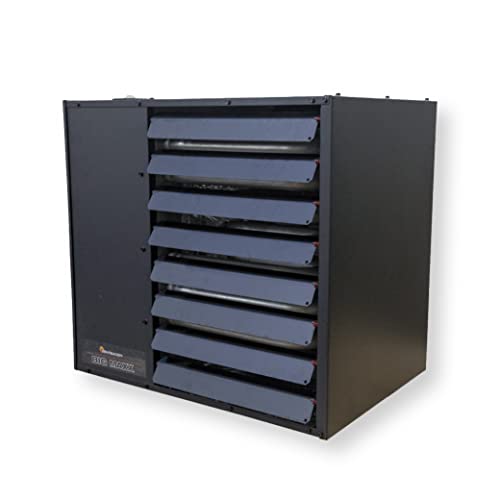
The Mr. Heater MHU125NG delivers high-capacity heating for larger spaces. Its 125,000 BTU output targets expansive garages or workshops, reducing cold spots quickly. Features include electronic ignition and powered exhaust, which helps with venting and air quality in enclosed spaces. The unit is designed for natural gas and includes a liquid propane conversion kit, offering flexibility if your fuel source changes. This model is suitable for users who need substantial warmth without frequent cycling in very cold environments.
Mr. Heater MHU50NG Big Maxx — 50K BTU
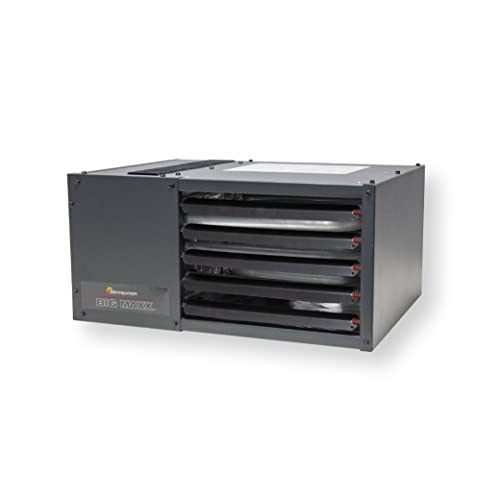
With 50,000 BTU per hour, this unit heats up to about 1,250 square feet. It supports vertical or horizontal venting via powered exhaust, offering flexible installation. An accessible outside area for thermostat and gas connections makes servicing straightforward. This model is ideal for mid-sized garages or workshops that need reliable, continuous heat without excessive fuel use. It balances output with practical venting options and ease of maintenance.
TEMPWARE 7500-Watt Electric Garage Heater
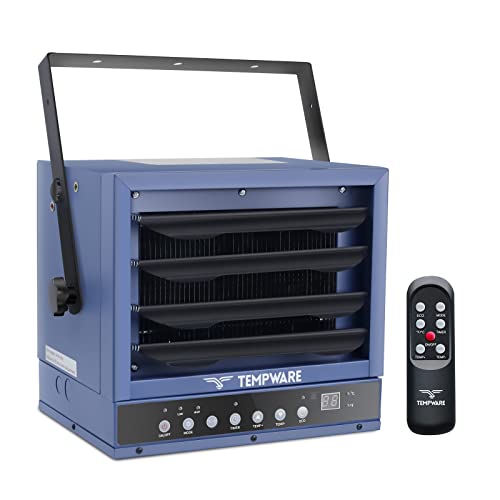
The TEMPWARE electric unit provides 7,500 watts of power for hardwired installation. It supports two heat settings and features ECO mode for energy efficiency, a full-function remote, and a 12-hour timer. A built-in thermostat allows precise temperature control, and an automatic shutoff protects against overheating. This electric option suits hobbyists or smaller shops where gas venting is impractical or prohibited, and it integrates cleanly with standard 240V circuits.
Mr. Heater MHU80NG Big Maxx — 80K BTU
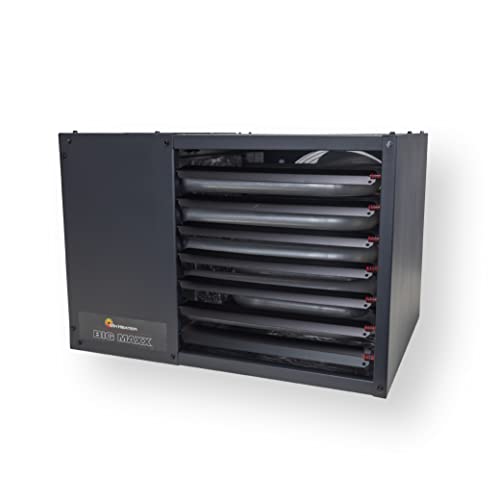
The Big Maxx MHU80NG provides 80,000 BTU for substantial heat output without occupying excessive floor space. It comes with basic inclusions such as two optional mounting brackets and a propane conversion kit, though the thermostat, hose, and regulator are not included. Its ventilation supports both vertical and horizontal configurations, making it adaptable to various garage layouts. This unit suits larger spaces requiring robust natural gas heating with flexible venting options.
Modine Hot Dawg HD — 30,000 BTU

The Modine Hot Dawg HD is a compact, power-vented natural gas unit heater rated at 30,000 BTU. It is designed for small to medium garages where space is limited but reliable warmth is needed. The 3-inch venting option helps manage exhaust efficiently, and the aluminized steel heat exchanger provides durability. It’s best suited for users who require a dependable, lower-capacity heater with straightforward installation.
Buying Guide: Key Considerations For Choosing A Garage Heater
Space and layout: Measure ceiling height, floor area, and available venting space. Gas heaters require venting and proper clearance; electric units avoid venting but rely on electrical supply and circuit capacity.
Fuel type and efficiency: Natural gas units typically offer low operating costs but require gas lines and venting. Propane and electric options present fewer installation hassles but may affect running costs and heat distribution. Look for units with efficient burners, smart controls, and reliable thermostats.
Heat output vs. space: Match BTU ratings to the garage size. Overkill wastes energy; under-delivery leaves the space cold. For larger garages, consider high-output units or modular setups.
Ventilation and safety: Gas heaters use venting and combustion air needs. Check for safety features like automatic shutoff, diagnostic indicators, and proper clearance distances. Electric heaters should have overheat protection and durable enclosures.
Installation and maintenance: Some units include external access for thermostat connections or gas lines, simplifying installation. Consider service accessibility, maintenance intervals, and availability of replacement parts.
Controls and convenience: Look for digital thermostats, ECO modes, timers, and remote controls. These features help manage energy use and keep the workspace comfortable without constant adjustments.
Durability and warranty: Heaters designed for garage environments should resist dust, moisture, and temperature fluctuations. Review product warranties and support from the brand to ensure long-term reliability.
Noise and air distribution: Fans and blowers influence noise levels and air movement. Ceiling-mounted or wall-mounted units can reduce clutter and improve heat distribution across corners of the space.