Best New Gas Heaters for Home and Small Spaces
Discover the latest gas heating options that combine efficiency, safety, and easy installation. This guide highlights five notable gas heaters designed to warm living rooms, basements, workshops, and compact spaces. Each model features reliable venting options, energy efficiency, and straightforward operation. Compare specs, performance, and installation considerations to choose the right gas heater for your needs.
Summary of Selected Products
- Mr. Heater F260560 Big Maxx MHU80NG Natural Gas Unit Heater – 80,000 BTU, covers up to 2,000 sq. ft.
- Mr. Heater F260550 Big Maxx MHU50NG Natural Gas Unit Heater – 50,000 BTU, versatile venting
- ProCom MN100TBA-B Ventless Natural Gas Blue Flame Space Heater – 10,000 BTU, for up to 500 sq. ft.
- Ashley Hearth DVAG17N Direct Vent Natural Gas Heater – 17,000 BTU, sealed burn for bedrooms and living spaces
- Mr. Heater 9,000 BTU Portable Buddy Radiant Heater – compact, indoor/outdoor use, 9,000 BTU
Mr. Heater Big Maxx MHU80NG Natural Gas Unit Heater
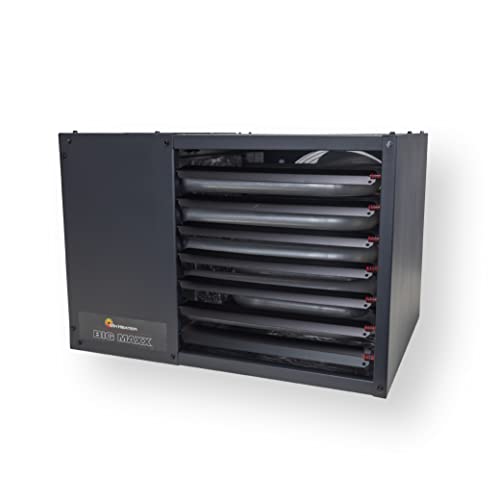
The Big Maxx MHU80NG is a powerful 80,000 BTU natural gas unit heater designed for larger spaces up to about 2,000 square feet. It provides robust warmth with a compact footprint and flexible venting options (vertical Category 1 or horizontal Category 3 venting). The unit ships with mounting brackets and a conversion kit for propane readiness, though thermostat control and regulator are not included in the package. This model is suitable for basements, workshops, or garages that require steady, high-output heat.
Mr. Heater Big Maxx MHU50NG Natural Gas Unit Heater
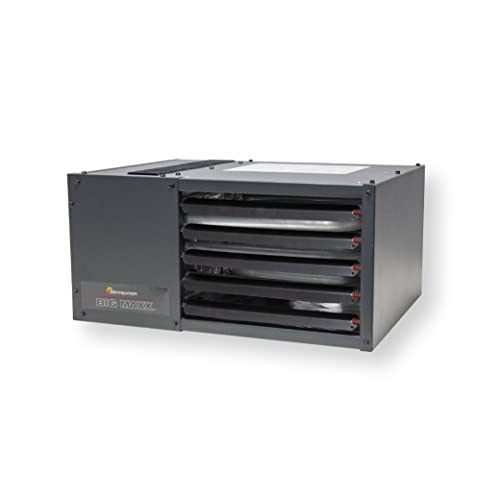
The Big Maxx MHU50NG delivers 50,000 BTU of heating power, suitable for mid-sized spaces up to roughly 1,250 square feet. This unit supports easy outside access to thermostats and gas connections, with powered exhaust enabling vertical or horizontal venting. It’s a practical option for finishing basements, garages, or workshops where steady heat is needed without frequent cycling. Venting versatility and reachable maintenance access are key advantages.
ProCom MN100TBA-B Ventless Natural Gas Blue Flame Heater

The ProCom MN100TBA-B is a compact ventless blue flame heater rated at 10,000 BTU, designed to heat up to about 500 square feet. It includes a thermostat control with High/Medium/Low settings and offers a slim, modern profile suitable for office spaces, bedrooms, or living areas. The unit is designed for wall mounting or floor placement with included hardware and feet, delivering quick, targeted warmth with simple operation.
Ashley Hearth DVAG17N Direct Vent Natural Gas Heater

The Ashley DVAG17N model provides 17,000 BTU of heat and is designed for indoor living spaces with a sealed burn system. This direct vent heater is suitable for bedrooms and living rooms where balanced, efficient warmth is important. The unit’s sealed combustion helps minimize indoor air intrusion while delivering steady heat, making it a viable option for tighter spaces or areas needing reliable ambient warmth without external venting complexity.
Mr. Heater 9,000 BTU Portable Buddy Radiant Heater

The Portable Buddy delivers 9,000 BTU of radiant heat and is designed for flexible use in both indoor and outdoor settings. It heats approximately 225 square feet and is a compact, portable solution for cabins, tents, garages, or temporary workspaces. Its mobility and simple controls make it a practical supplemental heater for seasonal use or backup heat during power outages.
Buying Guide: Key Purchase Considerations
- Heat output vs. space: Choose BTU ratings that match the size of the area you intend to heat. Higher BTU units are better for large garages or basements, while smaller spaces benefit from lower BTU models to avoid overheating.
- Ventilation and venting options: Venting requirements vary. Category 1 vertical venting or Category 3 horizontal venting offers installation flexibility for different spaces. Ventless options provide easier installation but may affect indoor air quality and humidity.
- Direct vent vs. ventless: Direct vent models pull combustion air from outdoors, reducing indoor air use. Ventless models can be simpler to install but may require ventilation in small rooms to maintain air quality.
- Thermostat and controls: Built-in thermostats help maintain a consistent temperature and improve energy efficiency. Some models offer multiple heat settings or smart controls as an optional add-on.
- Safety features: Look for overheat protection, tip-over shutoff, and child-safety considerations. Vent-free units should be used with caution in occupied living spaces and may require CO alarms in some jurisdictions.
- Fuel flexibility: Gas heaters are available for natural gas or propane. Some models include the option to convert to propane, expanding where they can be used.
- Installation location: Consider clearance requirements, mounting options, and accessibility of gas lines and electrical connections. Outdoor or workshop installations may require weather-resistant materials and robust venting.
- Maintenance needs: Regular checks of venting, gas connections, and thermostat calibration help maintain efficiency and safety over time.
Across these options, the selection balances space, installation complexity, and heat needs. For larger, fixed installations, unit heaters provide substantial, sustained warmth. For smaller rooms or portable usage, compact heaters deliver targeted comfort with flexible placement. Always verify local codes and safety guidelines before installation.