Best New Baseboard Heaters for Warmth and Efficiency
Choosing a modern baseboard heater involves balancing efficiency, safety, noise, and ease of installation. The following selections focus on compact design, reliable power, and practical features for American homes. Each option highlights different strengths—from silent operation and safety protocols to flexible mounting and thermostat control—so you can pick a model that fits your room size and heating needs.
| Product | Brand | Approx. Power | Notes |
|---|---|---|---|
| Cadet F Series 48″ Electric Baseboard Heater | Cadet | 1000/750 W | High heat for small–midsized rooms; universal wiring; safety shutoff |
| Air Choice 33” Baseboard Heater | Air Choice | 1500 W | Fanless design; top air outlet; remote thermostat |
| EZ-HEAT 1,500 Watt Baseboard Heater | EZ-HEAT | 1500 W | Two heat settings; stay-cool body; overheat protection |
| Comfort Zone 1,500W Baseboard Heater | Comfort Zone | 1500 W | Two heat settings; tip-over and overheat protection; quiet |
| BEYOND HEAT 1500W Baseboard Heater | BEYOND HEAT | 1500 W | Adjustable thermostat; dent-proof end panels; quiet operation |
The selection below highlights five baseboard heaters that balance performance, safety, and ease of use. Each product section includes a concise overview, key features derived from the manufacturer’s listing, and practical notes to help you compare options quickly.
Cadet F Series 48″ Electric Baseboard Heater
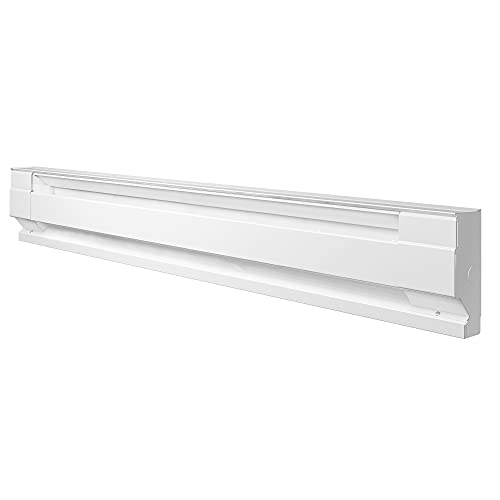
The Cadet F Series 48″ baseboard heater is designed for medium-sized rooms with a 1000/750 W rating at 240/208 V. Its installation is streamlined by universal wiring and pre-punched knockouts every inch, enabling flexible mounting on walls or floors with low installation cost. A high-temperature safety shutoff helps protect occupants, addressing essential safety concerns for homes and apartments. This model is well-suited for retrofit projects where wall space is accessible and a steady, quiet heat source is desired. The white finish blends with most décors.
Air Choice 33” Baseboard Heater

The Air Choice 33” baseboard heater features a 1500 W output with a fanless design for quieter operation and gentle warmth. Its top air outlet runs hot during use, so direct contact should be avoided. This unit is best placed on hard surfaces like tile or concrete rather than carpeted floors due to bottom clearance. Two modes—low (700 W) and high (1500 W)—allow flexible temperature control via remote and LED touch screen. Ideal for spaces up to about 270 square feet, it’s a strong option when quiet operation and rapid warming are priorities in larger rooms.
EZ-HEAT 1,500 Watt Baseboard Heater

The EZ-HEAT CZ600 provides 1500 W of convection heating with two heat settings and an adjustable thermostat. Safety is emphasized through a stay-cool body, dent-proof end panels, a tip-over switch, and overheat protection. This unit is designed for medium-sized rooms and silent operation, contributing to a comfortable living or working environment. The combination of robust safety features and adjustable temperature makes it a versatile choice for spaces where noise and safety are a concern, such as bedrooms or home offices.
Comfort Zone Electric Baseboard Heater

The Comfort Zone CZ600 mirrors EZ-HEAT’s 1500 W capacity with two heat settings and an adjustable thermostat. It emphasizes safety with a tip-over switch and overheat protection, and features a stay-cool body and quiet operation. The unit is designed for medium-sized rooms, offering efficient convection heating without disruptive noise. Its durable construction and consistent warmth make it suitable for living rooms, bedrooms, and home offices where reliable, low-noise heat is needed.
BEYOND HEAT Electric Baseboard Heater

The BEYOND HEAT 1500W baseboard heater provides adjustable thermostat control and overheat protection, with a focus on quiet operation and safety. The unit’s dent-proof end panels contribute to durability, while its stay-cool body minimizes incidental contact risk. This model is well-suited for bedrooms and offices where occupants require steady, unobtrusive warmth without noise or motion distractions. It offers a practical balance of performance, safety, and ease of use for a wide range of interior spaces.
Buying Guide: Key Considerations When Selecting a Baseboard Heater
- Room size and heating needs: Assess square footage and insulation to choose wattage. Higher wattage models (1000–1500 W) are typically suitable for mid-size rooms with standard insulation.
- Electrical compatibility: Check voltage requirements (commonly 120 V or 240 V). Ensure your electrical panel and circuits can support the heater’s load.
- Noise and operation: Fanless designs reduce noise, while convection-based heaters provide steady warmth without moving parts; your preference will affect comfort in bedrooms and living areas.
- Safety features: Look for tip-over switches, overheat protection, stay-cool casings, and dent-proof end panels. Safety shutoffs add important protection for households with children or pets.
- Installation and mounting: Some units are designed for wall or floor mounting with universal wiring; others are portable. Consider existing wall space and flooring to minimize installation costs.
- Thermostat control: Adjustable thermostats and remote controls offer precise temperature management. Decide between basic dial controls and programmable or touch-screen interfaces for convenience.
- Maintenance and durability: Powder-coated finishes and tempered steel constructions resist corrosion and wear. Look for models with solid build quality and protective features that extend lifespan.
- Aesthetics and fit: White or neutral finishes help baseboard heaters blend with most decor. Slim profiles minimize protrusion into rooms and maintain furniture clearance.
Across these selections, potential buyers should weigh quiet operation, safety systems, and compatibility with home electrical infrastructure. For new installations or renovations, consider panel capacity and local electrical codes. If you prioritize maximum warmth with minimal noise, a high-wattage, fanless model might be preferable. For spaces where easy control and quick warmth are essential, a model with a programmable thermostat and remote control can enhance comfort and energy management. Evaluating these factors will help identify the best new baseboard heater for your household needs.