Best Natural Gas Heaters for Garages and Workshops
If you’re heating a garage, workshop, or barn, a natural gas heater can deliver consistent warmth with strong heating capacity. This guide highlights five reliable options, from ceiling-mounted forced-air units to vented wall heaters, to help buyers choose the right model based on space, fuel type, and installation needs. The selections emphasize suitability for larger spaces, easy installation, and durable construction for garage environments. Each product is best for a specific scenario, such as high-heat coverage, ceiling mounting, or space-saving wall installation.
| Product | BTU | Best For |
|---|---|---|
| Mr. Heater 50,000 BTU Forced-Air Unit Heater | 50,000 | Medium to large garages; ceiling-mounted warmth |
| Mr. Heater 80,000 BTU Forced-Air Unit Heater | 80,000 | Large garages or barns; rapid heat |
| Mr. Heater 30,000 BTU Vent Free Blue Flame | 30,000 | Smaller garages or spaces with venting flexibility |
| Modine HD45AS0111 Natural Gas Garage Heater | 45,000 | Low-profile, quiet operation in various spaces |
| Reznor UDXC-60 Natural Gas Garage Heater | 60,000 | Ceiling-mount installations; commercial-grade warmth |
Note: All products listed use natural gas or propane configurations as noted in their descriptions. Always verify compatibility with your local venting requirements and professional installation guidelines for safety and efficiency.
Mr. Heater 50,000 BTU Forced-Air Unit Heater

Brand: Mr. Heater. This ceiling-mounted unit converts garages, barns, and workshops into heated spaces. It delivers up to 50,000 BTUs, heating roughly 1,667 sq ft (about a 3-car garage). It is compatible with standard 24-volt or newer Wi-Fi enabled thermostats (sold separately). Best for medium-sized spaces requiring reliable ceiling-mounted warmth. Consider this if you want straightforward installation and compatibility with smart thermostats. Limitation: thermostat compatibility requires separate components.
Mr. Heater 80,000 BTU Forced-Air Unit Heater
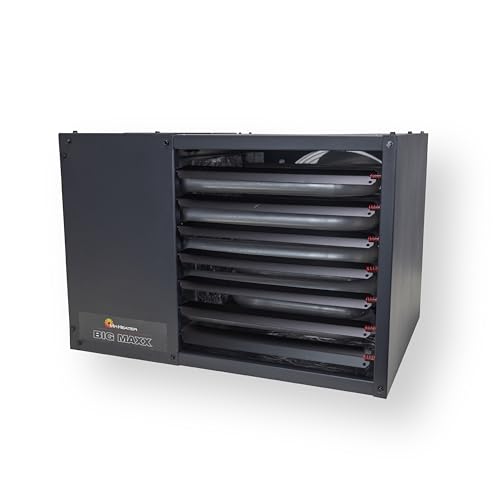
Brand: Mr. Heater. A high-capacity ceiling-mounted option for larger garages, barns, and workshops. It provides up to 80,000 BTUs and can heat up to about 2,667 sq ft. This model is best for expansive spaces or quick warming needs. Choose this if you have a large space and require faster heat delivery. Caution: color may vary between grey and tan, which may affect aesthetics in some installations.
Mr. Heater 30,000 BTU Vent Free Blue Flame Natural Gas Heater

Brand: Mr. Heater. This vent-free unit emits 30,000 BTU/hr and heats up to 1,000 sq ft. It features a battery-operated electronic ignition (battery included) for convenient startup. Best for smaller spaces or where venting is restricted. Limitations: vent-free operation depends on room size and air exchange; ensure proper clearances and local codes.
Modine HD45AS0111 Natural Gas Garage Heater
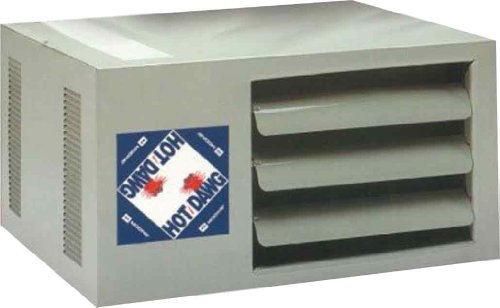
Brand: Modine. A 45,000 BTU unit designed for garage applications with a focus on low-profile installation and neutral appearance. The heater emphasizes quiet operation and is certified for residential, commercial, and industrial use. Best for spaces where a compact ceiling or corner unit is desirable. Limitation: heavier installation considerations may apply for ceiling mounting in some garages.
Reznor UDXC-60 Natural Gas Indoor Garage Heater

Brand: 1HVAC (Reznor). A 60,000 BTU unit rated for indoor use, suitable for garages and workshops requiring reliable forced-air heating. Its design supports ceiling mounting with a low-static propeller fan for quiet operation. Best for installations needing strong warmth with commercial-grade reliability. Consider mounting options and brackets as mounting hardware sold separately.
Buying Guide: Key Considerations For Garage Natural Gas Heaters
- Space and heat load: Match BTU output to your garage size. Larger spaces benefit from higher BTU units, while smaller spaces may be adequately heated by lower BTU options.
- Ventilation and venting: Vented vs. vent-free models affect installation and indoor air quality. Vent-free units must comply with clearance and room-exchange requirements.
- Installation type: Ceiling-mounted vs. wall-mounted units—consider structural support, ceiling height, and reach of ducting or exhaust.
- Thermostat control: Look for compatibility with standard 24-volt thermostats or smart thermostats for precise scheduling and energy savings.
- Fuel flexibility: Some models support both propane and natural gas; verify gas supply and conversion options if needed.
- Efficiency and emissions: Choose units with strong efficiency ratings and compliant emission standards for safer operation.
- Noise and vibration: Quiet operation is important in a workspace to avoid disruptiveness during work tasks.
- Maintenance: Consider accessibility of ignition systems, filter or air pathways, and service support in your area.
Frequently Asked Questions
- What size natural gas heater do I need for a typical 2-car garage? – A heater in the 40,000–60,000 BTU range is common for 400–600 sq ft spaces, depending on insulation and climate.
- Is venting required for all natural gas heaters in garages? – No, venting requirements depend on the model (vented vs. vent-free) and local codes. Check appliance labeling and local regulations.
- Can I install a gas heater myself in a garage? – Installation often involves gas supply connections and venting considerations. A licensed professional is recommended for safety and code compliance.
- Are dual-fuel heaters safer for garage use? – Some units support multiple fuels (propane or natural gas). Confirm gas line compatibility and proper conversion procedures with a technician.
- Do ceiling-mounted heaters require special mounting hardware? – Yes, ceiling mounting typically requires brackets and hardware compatible with the heater’s weight and your garage structure.
- What maintenance should I perform regularly? – Regular ignition checks, venting inspections, and ensuring clear airflow paths help maintain efficiency and safety.