Best Gas and LP Garage Heaters With Thermostats for 2026
Finding a reliable garage heater with a thermostat helps maintain a consistent workspace, improves comfort, and supports safer, more efficient work sessions. This guide reviews top LP and natural gas options available on Amazon, focusing on units designed for garages, workshops, and job sites. We compare BTU output, venting, safety features, and installation considerations to help you choose a model that fits your space and energy needs.
| Product | BTU / Heat Range | Vent Type | Notes |
|---|---|---|---|
| Mr. Heater F260550 Big Maxx MHU50NG | 50,000 BTU/hr | Natural gas, vertical or horizontal venting | Wide coverage up to 1,250 sq. ft. |
| Mr. Heater F260560 Big Maxx MHU80NG | 80,000 BTU/hr | Natural gas, vertical or horizontal venting | Large garages, robust heat |
| Gasland MHA18BN Propane Radiant | 18,000 BTU | Propane; portable | No electricity needed; mobile unit |
| Heat Storm HS-6000-GC | 3,000–6,000 watts (10,000–20,000 BTU) | Hardwired; ceiling/wall mount | WiFi enabled |
| InoKraft MH125 125,000 BTU | 125,000 BTU | Propane; portable | Auto 25–95°F on/off control |
Mr. Heater Big Maxx 50,000 BTU NG Unit Heater
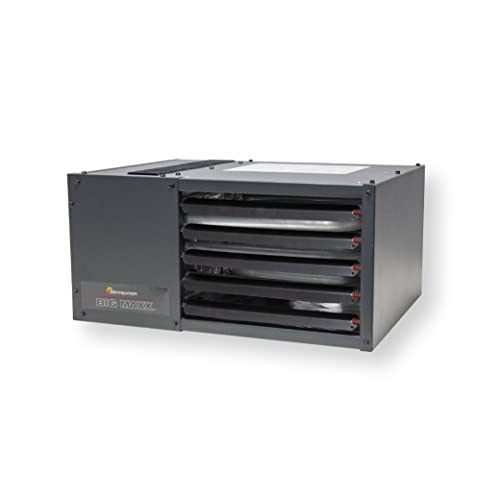
This natural gas unit heater delivers 50,000 BTU per hour and can heat spaces up to about 1,250 square feet. Its design supports vertical or horizontal venting, offering flexible installation for garages with existing venting or spaces that require a particular orientation. A quick-access thermostat and gas connection area simplify adjustments without pulling the unit out of service. The model is well-suited for medium-sized garages and workspaces that require steady, moderate heat with straightforward maintenance access.
Mr. Heater Big Maxx 80,000 BTU NG Unit Heater
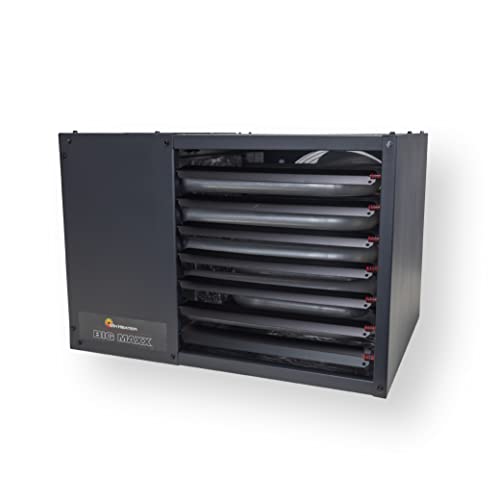
With 80,000 BTU and a broad coverage profile, this natural gas heater targets larger garages and spaces requiring more intense heat. It accommodates vertical or horizontal venting and includes compatibility features for thermostat integration and gas connections from the outside. The unit’s dimensions and airflow design support efficient warm-up times, making it a strong choice for colder climates or spaces with higher heating demands.
Gasland MHA18BN Propane Radiant Heater

Gasland’s radiant LP heater operates without electricity, relying on a 20-lb propane cylinder. It includes safety features like tip-over and low-oxygen shut-off, which enhance safe operation in ventilated garages and workshops. Its portable design and built-in wheels enable easy movement between work zones. This unit provides reliable heat output for small to mid-sized areas where electrical access is limited or where you want a quick, movable heat source.
Heat Storm HS-6000-GC 7-Inch Deep Wall/ Ceiling Heater

This versatile heater delivers 3,000–6,000 watts (10,000–20,000 BTU) and supports ceiling or wall mounting with hardwired installation. It can be integrated with a smart control system via WiFi, enabling remote operation from a phone. Its compact design fits smaller garages and workshops while still delivering meaningful warmth for extended work sessions.
InoKraft Maxheat MH125 125,000 BTU Propane Heater

Offering 125,000 BTU, the InoKraft Maxheat is designed for larger garages and job sites. It includes auto On/Off control in the 25–95°F range and a 10-foot hose for flexible placement. The unit is built for heavy use and supports vented operation in spaces up to several thousand square feet, depending on insulation and airflow. Its safety features and portable design make it suitable for frequent relocations across work environments.
Buying Guide
- Space and BTU needs: Larger garages may require higher BTU units (e.g., 80,000 BTU) for effective warming, while smaller spaces can benefit from 18,000–50,000 BTU models.
- Fuel type: LP gas vs natural gas models influence venting, installation, and operating costs. LP units are portable, whereas natural gas units often require fixed connections and venting considerations.
- Ventilation: Consider whether horizontal or vertical venting is feasible in your space, plus any required clearance and exhaust routing.
- Thermostat and control: Look for built-in thermostats, auto-on/off features, and compatibility with smart controls or remote management for consistent comfort.
- Safety features: Tip-over, low oxygen shut-off, overheat protection, and CSA/UL certifications improve safe operation in busy garages and workshops.
- Electrical and installation: Some heaters require hardwiring or dedicated circuits; others run on gas with external thermostat connections. Assess electrical panel capacity and local code compliance.
- Mobility vs. permanence: Portable LP/gas heaters provide flexibility across work sites, while fixed NG units are effective for a dedicated space with stable heat demands.
- Fuel availability and operating costs: Factor fuel supply reliability and relative costs in your region to estimate ongoing expenses.
Across the options above, you’ll find models designed for different scales and setups—from portable propane radiants to high-capacity natural gas unit heaters. When selecting, prioritize space coverage, venting feasibility, thermostat control, and safety features to align with your garage’s layout and usage patterns.