Best HVAC Nitrogen Purge Kit for Clean, Oxidation-Free Brazing
Answer: For reliable HVAC nitrogen purging, choose a kit that provides precise flow control, a stable nitrogen supply, and compatibility with common hoses and fittings. This article highlights five top options, ideal for technicians, contractors, and serious DIYers who braze copper lines or perform inert gas purging. Each choice targets different workstyles—from compact, hand-held purgers to rugged, field-ready regulators. Read on to compare features, determine best-for-your-needs, and avoid common pitfalls.
Overview at a glance:
| Product | Type | Best For | Key Benefit |
|---|---|---|---|
| Uniweld NV1 NitroVue | Nitrogen flow indicator | Precision flow control for brazing | Clear flow readout with adjustable valve |
| SWIPROY VN-500 | Hybrid regulator/flowmeter | Rugged field work | Purge and Braze preset rates |
| RX WELD Nitrogen Purge Tool (HVAC Brazing Regulator) | Regulator with purge/braze modes | Versatile, general use | 50 psi setup; supports up to 200 psi |
| MyClenkpro Purge Boot | Hands-free purge boot | Oxidation-free brazes, solo work | O-ring tight seal, quick 1/4″ SAE hookup |
| AWLOLWA Nitrogen Purge Tool | Flow regulator with dial | Simple three-mode control | Three-click Purge/Braze/Off |
Uniweld NV1 NitroVue Nitrogen Flow Indicator

The Uniweld NV1 combines a precision-adjustable valve with a bright visual indicator, enabling clear, low-flow control for brazing operations. This kit is best for users who prioritize accurate, repeatable nitrogen flow during copper tube brazing and need a straightforward, easy-to-read display.
- Best for: Technicians who require precise, low-flow control during brazing.
- Why selected: Visual confirmation plus adjustable control helps reduce oxidation and waste.
- Limitation: Flow readings rely on the indicator; no integrated regulator on this unit.
SWIPROY VN-500 Nitrogen Purging Regulator

The VN-500 integrates regulator and flowmeter in a single hybrid unit with a rugged brass body, designed for field use. It supports preset PURGE and BRAZE flow rates, making it suitable for pros performing repeated purges in varied environments.
- Best for: Professionals who need a durable, ready-to-use purging solution in the field.
- Why selected: Combines regulation and flow measurement for quick setup.
- Limitation: The preset rates may require calibration for some applications.
RX WELD Nitrogen Regulator, 0-600 PSI

This regulator features a CGA580 inlet and a 1/4″ flare outlet, with easy-to-read dual gauges and protective boots. It supports a broad pressure range and is well-suited for HVAC purging, inertization, and pressure testing. It’s best when compatibility with common hoses is essential.
- Best for: Those who need clear pressure readouts and robust protection for gauges.
- Why selected: Wide pressure range supports multiple purging and brazing steps.
- Limitation: Displays up to 600 PSI, which can be higher than typical purge needs; verify actual operation range.
MyClenkpro Nitrogen Purge Boot
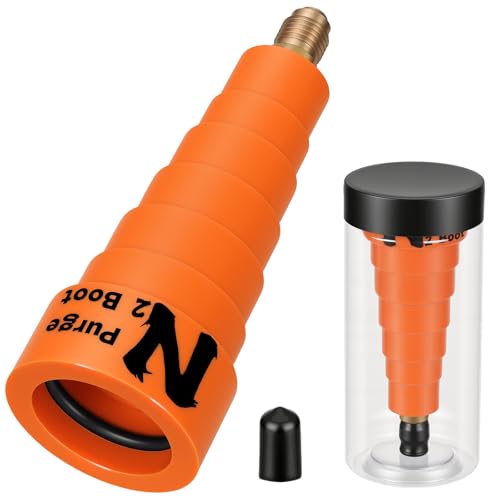
The MyClenkpro purge boot delivers a hands-free seal with a standard 1/4” SAE connection. Its multi-size O-ring design helps maintain a stable, low-pressure nitrogen flow, minimizing air ingress during brazing. This option is ideal when maintaining a sealed worksite is crucial and you’re working solo.
- Best for: Single-operator brazing where you want steady hands-free operation.
- Why selected: Tight O-ring seal reduces oxidation risk and air leakage.
- Limitation: Replacement O-rings are not user-serviceable due to precision fit.
AWLOLWA Nitrogen Purge Tool

The AWLOLWA tool offers a three-position quick-dial for Purge, Braze, and Off, with a 50 psi inlet and up to 200 psi maximum. It emphasizes ease of use with a simplified three-click control and no need for a flow indicator dial. This option suits users who value speed and straightforward operation.
- Best for: Quick, repetitive brazing tasks where speed matters.
- Why selected: Simple three-mode control reduces setup time.
- Limitation: Lacks detailed flow readouts; less ideal for highly precise purging.
Buying Guide: Key Considerations For HVAC Nitrogen Purge Kits
What should you look for when choosing a nitrogen purge kit for HVAC work?
- Flow control precision: Look for units with clear indicators or gauges to set exact flow rates during purge and braze cycles.
- Inlet/outlet compatibility: Ensure the regulator or boot uses common fittings (1/4″ SAE) and standard refrigerant hoses to fit your setup.
- Pressure range: Many purging tasks operate around 50 psi to 100 psi. Choose a unit that covers your typical needs without unnecessary complexity.
- Durability: Field work benefits from brass bodies, robust gauges, and protective boots to resist wear and accidental drops.
- Ease of use: Three-mode dials or intuitive flow indicators reduce setup time and mistakes, especially in tight spaces.
- Sealing reliability: O-ring and seal design matters for preventing air ingress and oxidation during long brazes.
Frequently Asked Questions
- What is the main purpose of a nitrogen purge in HVAC brazing?
To displace air and moisture from the copper tubes, reducing oxidation and producing cleaner, more reliable brazed joints.
- Do I need a regulator and a purge tool separately?
Not always. Some kits combine regulator and flow measurement in one unit, while others pair a separate purge boot or indicator with a regulator.
- What pressure should I use for purging?
Many purges operate around 25-50 psi for brazing; follow the tool’s recommended setting to avoid under- or over-pressurizing.
- Is a visual flow indicator necessary?
It helps ensure you’re delivering a stable, low flow, which is beneficial for consistent brazes, though some users prefer dial-only controls.
- Can I reuse purge gas after purging?
Nitrogen used for purging is typically vented; it is not practical to reuse it since it may contain moisture or contaminants.
- What setup is best for solo HVAC work?
A hands-free purge boot or a compact regulator with easy-to-use dials can improve single-operator efficiency and consistency.