Best Home a/C Control Panel Options for Easy Climate Control
Answering the question most buyers have: which home A/C control panel is best for a simple, reliable setup? This guide highlights five solid options for single-stage cooling and heating systems, focusing on ease of installation, compatibility, and energy savings. Ideal for homeowners upgrading a traditional thermostat, renters seeking straightforward installation, and DIY enthusiasts who want better energy management. The table below helps compare key choices at a glance.
| Product | Best For | Why Pick It |
|---|---|---|
| Suuwer Non-Programmable Thermostat (Blue Backlight) | Simple single-stage systems | Low-cost, straightforward 1H/1C control for conventional furnaces and A/C |
| Amazon Smart Thermostat | Alexa-enabled homes | Smart features, energy rebates, voice control |
| Garystat Upgraded Digital Thermostat | Budget non-programmable options | Clear display, single-stage control, humidity readout |
| ecobee Smart Thermostat Essential | Energy savings with smart scheduling | Energy Star, broad compatibility, future-ready software |
| Google Nest Thermostat | Smart home integration | Energy savings, simple setup, compatibility checker |
Suuwer Non-Programmable Thermostat (Blue Backlight)

This is a basic, non-programmable thermostat designed for conventional single-stage heating and cooling. It supports up to 1 heat and 1 cool, making it suitable for homes with standard furnaces or electric/gas/oil systems that do not require multi-stage control. It uses a blue backlight for easy visibility in dim rooms and is best for buyers who want a budget-friendly, straightforward replacement for an older dial or fixed-contact thermostat.
Who it’s best for: homeowners with traditional single-stage systems who prefer a simple, manual control and a clear, backlit display. Why selected: its uncomplicated wiring and compatibility with many conventional setups keep installation quick and predictable. Caution: verify that your existing wiring matches the base’s compatibility (2–5 wires) to avoid compatibility issues.
Amazon Smart Thermostat – Save money and energy

The Amazon Smart Thermostat brings Alexa compatibility and voice control to a standard one-stage heating/cooling setup. It’s designed to work with Alexa-enabled devices to automate temperature adjustments based on presence or schedules, potentially reducing energy usage. This model is a solid pick for homes already using Alexa devices or pursuing hands-free climate management. It also mentions post-purchase rebates from energy providers, which can offset the initial investment.
Who it’s best for: smart-home beginners or users who want voice control and easy compatibility with Ring/Alexa ecosystems. Why selected: its seamless smart features and rebate opportunities make it a practical upgrade for energy-conscious households. Caution: ensure your system supports a C-wire requirement if needed by your configuration.
Garystat Upgraded Digital Non-Programmable Thermostat
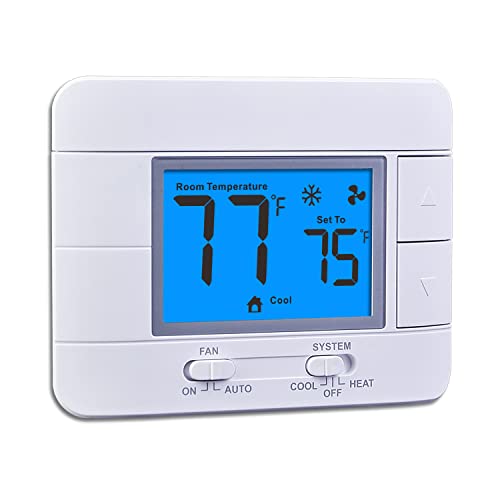
This upgraded digital thermostat is non-programmable and supports 1 heat/1 cool for conventional single-stage systems. It features a large blue LCD display and a humidity monitor, aiding visibility and comfort awareness. It’s suitable for straightforward installations where budget and easy operation take priority, and it clearly states non-support for multistage or heat pump setups.
Who it’s best for: users seeking a cost-effective display with humidity information for single-stage systems. Why selected: the large LCD enhances readability and can be easier for all household members to operate. Caution: verify compatibility with your current wiring and ensure your system isn’t multistage or heat-pump based.
ecobee Smart Thermostat Essential

The ecobee Smart Thermostat Essential emphasizes energy savings and broad system compatibility, with an Energy Star rating and a color touchscreen interface. It supports automatic scheduling, remote access via the app, and ongoing software upgrades. This model is well-suited for homes seeking advanced energy management alongside a user-friendly interface, even if some advanced features require internet connectivity.
Who it’s best for: households aiming to maximize energy savings and remote control across multiple rooms. Why selected: strong energy management features and reliable software updates provide long-term value. Caution: verify system compatibility online to avoid compatibility gaps with older or specialized HVAC setups.
Google Nest Thermostat
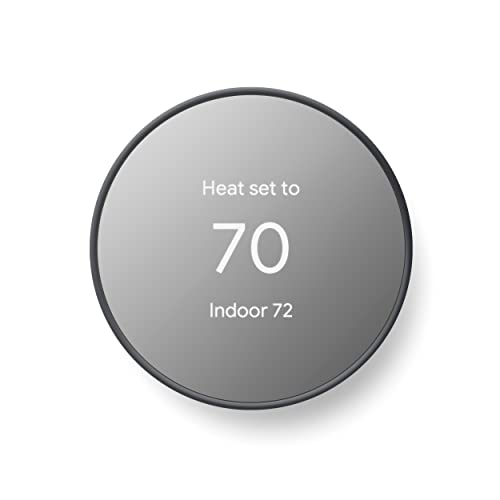
The Google Nest Thermostat emphasizes smart home integration, energy savings, and a user-friendly setup. It supports Wi‑Fi connectivity and can operate with or without a C wire, depending on your system. It’s designed to learn routines and adjust temperatures accordingly, helping minimize energy use when the home is empty or occupied. This model is ideal for users who want a sleek, adaptable thermostat with strong compatibility checks.
Who it’s best for: tech-forward homes seeking seamless Google ecosystem integration and energy savings. Why selected: its adaptive features and compatibility options suit a wide range of HVAC configurations. Caution: some heating-only or cooling-only systems may require a C wire or power accessory for optimal performance.
Sensi Lite Smart Thermostat

The Sensi Lite Smart Thermostat is a budget-friendly, DIY-friendly option with Wi-Fi connectivity and energy-saving features. It requires a common wire for heat pump and heat/cool systems but isn’t always needed for standard setups. The model supports flexible scheduling, remote access, and usage reports, making it a practical choice for simple, energy-conscious homes.
Who it’s best for: homeowners seeking an easy installation without extra bells and whistles. Why selected: practical balance of comfort features and energy savings at a friendly price. Caution: ensure your system can support the common-wire requirement if you’re cooling or heating with a heat pump or dual-stage configuration.
Sensi Smart Thermostat ST55

The Sensi ST55 is another DIY-friendly option that emphasizes ease of installation and energy savings. It commonly works with many conventional HVAC systems and often does not require a C wire in typical single-stage setups. It’s designed to help reduce HVAC energy use through flexible scheduling and remote access, making it suitable for practical energy management without complex setup.
Who it’s best for: users wanting a straightforward, low-friction upgrade with reliable energy savings. Why selected: the combination of simple installation, notable energy savings, and privacy protections. Caution: verify your specific HVAC configuration for best results and confirm whether a C wire is optional or required in your case.
Buying Guide
- System compatibility: Confirm single-stage vs. multi-stage capabilities. If you have a single-stage heating and cooling system, most options in this guide will work; multi-stage or heat-pump configurations often require specialized thermostats.
- Wiring requirements: Check for C-wire needs. Some models perform well without a C wire, while others rely on it for constant power.
- Smart features vs. basic control: Decide whether you want voice control, remote access, energy reports, or simple manual operation to control comfort.
- Energy savings: Look for Energy Star certification or stated efficiency benefits to gauge potential long-term savings.
- Home integration: If you use Alexa, Google Assistant, or Apple HomeKit, choose a thermostat designed to integrate with your ecosystem for smoother automation.
- Display and usability: Large displays and clear interfaces help in households with varied tech comfort levels; consider humidity monitoring if moisture control matters.
- Future-proofing: Software updates and compatibility checkers can extend usefulness as your home automation grows.
FAQ
Do I need a C-wire for a new thermostat?
Many smart thermostats require a C-wire for reliable power. Some models work without it, but performance can vary by system.
Can these thermostats control both heating and cooling?
Yes, most listed options support 1 heat/1 cool single-stage systems. Always verify compatibility with your specific HVAC setup.
Are smart thermostats worth it for energy savings?
Smart thermostats can reduce energy use through scheduling, geofencing, and remote access, but savings depend on usage patterns and climate.
Will these work with my existing home automation?
Many are compatible with popular ecosystems. Check each product’s compatibility notes and online support tools.
How do I choose between a basic and a smart thermostat?
Choose basic for simple control and lower cost; choose smart if you want remote access, schedules, and potential rebates.