Best High-Quality Water Heaters to Meet Any Home Need
Find the best high-rated water heaters for instant hot water, energy efficiency, and reliable performance. This guide highlights five top options across electric, gas, and RV/class-B trailer setups. It’s ideal for homeowners, RV enthusiasts, and small households seeking dependable on-demand hot water without waste. Below you’ll see who each product is best for, plus clear, buyer-friendly considerations.
| Product | Type | Best For |
|---|---|---|
| Rheem 18kW 240V Tankless Electric Water Heater | Electric Tankless | Homes needing strong electric on-demand hot water |
| APUS Tankless Water Heater Propane Gas, Indoor | Gas Tankless | Homes with propane, multiple simultaneous uses |
| ThermoMate CZ422NG Natural Gas Tankless | Gas Tankless | Whole-home, energy-efficient on-demand |
| Westinghouse Smart Tankless Electric 14kW | Electric Tankless | Smart-home compatible, compact spaces |
| Westinghouse Tankless Gas Indoor, 7.9 GPM | Gas Tankless | Whole-home, multiple fixtures |
Rheem 18kW 240V Tankless Electric Water Heater
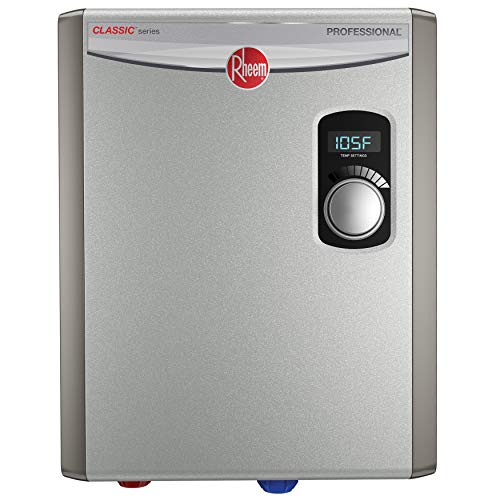
The Rheem model is an electric tankless unit with external digital thermostatic control and LED display for precise temperature management. It uses self-modulation to adjust power according to hot water demand and features durable copper immersion elements. It supports flow rates up to about 4.4 GPM, making it suitable for smaller homes or condos that require dependable hot water without a storage tank. Best for households with single or two-point usage patterns, where precise temperature control is valued. Caution: ensure your electrical service can support the required amperage on a dedicated circuit, and consult local codes for installation.
APUS Tankless Water Heater Propane Gas

APUS delivers a high-capacity propane tankless unit with 95,000 BTU heating and a 4.42 GPM max flow. It’s designed to meet simultaneous hot-water demands—such as two showers plus a sink—while maintaining stable temperatures via smart sensors. Best for homes or cabins with propane supply and a need for steady, on-demand hot water. Choose this if you want robust performance without a storage tank. Caution: proper venting and safe gas installation are essential; professional installation is recommended.
ThermoMate CZ422NG Natural Gas Tankless

The ThermoMate CZ422NG is designed for whole-house use with up to 5 GPM and 113,000 BTU. It uses multiple ceramic heating cores and a smart flow sensor to maintain temperature within ±1°F, even when multiple fixtures run. Best for larger homes or households needing continuous hot water with low temperature fluctuation. Safety protections guard against common failure modes. Caution: installation requires proper venting and gas line sizing per local codes.
Westinghouse Smart Tankless Electric 14kW
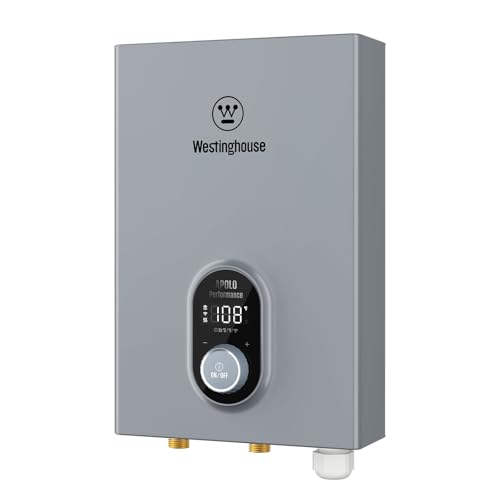
This 14kW electric tankless unit pairs smart WiFi control with Alexa and Google Home compatibility. It delivers up to 3.38 GPM with a starting flow of 0.5 GPM, enabling simultaneous use of a shower and sink in a compact footprint. Best for smart homes seeking remote control and responsive temperature adjustments. Limitation: flow rate is lower than some gas units, so expect comfortable performance for modest hot-water needs rather than peak-usage scenarios.
Westinghouse Tankless Gas Indoor 7.9 GPM

Designed for whole-home use, this gas-powered indoor unit delivers up to 7.9 GPM and 180,000 BTU. It supports multiple fixtures with precise ±1°F temperature stability via self-modulating technology. Best for larger households needing generous hot-water capacity and reliable performance across several outlets. A caution: ensure adequate gas supply and proper venting for safe operation.
Buying Guide: Key Considerations For Your Next Water Heater
- Hot water demand: Estimate your peak simultaneous usage. Gas tankless models often provide higher practical flow rates and faster recovery, while electric models excel in smaller spaces with good electrical service.
- Ventilation and fuel type: Gas units require proper venting and a gas supply. Electric units need sufficient electrical capacity and correct wiring. Determine what’s available in your home before choosing.
- Space and installation: Tankless units are compact but require clearances, venting (gas), and electrical or gas supply paths. Consider whether you prefer indoor or outdoor installation and whether space permits wall mounting.
- Temperature control: Look for units with precise thermostatic control and minimal fluctuation. Smart features (WiFi control, app monitoring) add convenience for some homes.
- Energy efficiency: Gas models with high thermal efficiency can reduce operating costs. For electric models, higher efficiency often translates to better performance in tight spaces with adequate electrical service.
- Maintenance and serviceability: Field-serviceable parts and accessible elements can lower long-term maintenance costs. Check for components that are easy to replace or service.
- Safety features: Anti-scald design, freeze protection, and fault-detection aid safe operation. Ensure the unit has protections suitable for your climate and usage patterns.
- Installation costs: Factor in venting, gas piping, electrical upgrades, and potential permit requirements. A professional installation is often essential for gas models and high-flow electric units.
Frequently Asked Questions
- What is the difference between tankless and traditional water heaters?
– Tankless heaters heat water on demand, offering endless hot water with no storage. Traditional water heaters store a reservoir of hot water, which can run out during peak demand. - Which type is best for a family home?
– A gas tankless system with high flow capacity is often well-suited for multiple simultaneous uses, though electric options can work with proper electrical service and modest hot-water needs. - Do I need professional installation for tankless units?
– Yes. Gas models require venting and proper gas line sizing; electric models require correct electrical wiring and circuit protection. - How do I choose the right GPM rating?
– Assess your highest simultaneous usage and pick a model that meets or exceeds that flow rate at your expected inlet water temperature. - Are smart tankless heaters worth it?
– For homes with smart home ecosystems or desire remote temperature control, smart-enabled models offer added convenience and energy awareness. - What maintenance do these units require?
– Regular descaling (especially in hard water areas) and periodic checks of fittings, venting, and electrical connections help maintain performance.