Best High Efficiency Electric Baseboard Heating for Fast, Even Home Warmth
Electric baseboard heaters that deliver high efficiency can improve comfort while helping manage energy use. This guide highlights five models well-suited for American homes, outlining who benefits most from each and why they were selected. Use this overview to compare heat output, wiring needs, and noise levels to pick the best fit for bedrooms, living spaces, or home offices.
Buyer snapshot table
| Product | Best For | Key Benefit | Note |
|---|---|---|---|
| Cadet F Series 24″ 2F350W | Small rooms, apartments | Compact, adjustable wattage | Not suited for large spaces |
| Stelpro Brava 500W AB0501W | Quiet, 50 sq ft areas | Convection heat, wall thermostat options | Hardwired |
| Stelpro Brava 1000W AB41001W | Medium rooms | Strong convection, quiet operation | Hardwired |
| Stelpro Brava 1000W with Built-In Thermostat AB41002W | Plug-in-free control | Integrated thermostat, tidy install | Requires 240V or 208V supply |
| Cadet F Series 36″ 3F750W | Living rooms, open layouts | Higher heat with simple install | Convection with universal wiring |
| Cadet 48″ 4F1000-1W-A | Open floor plans | High output, wide coverage | 120V hard wired |
Cadet F Series 24″ Electric Baseboard Heater
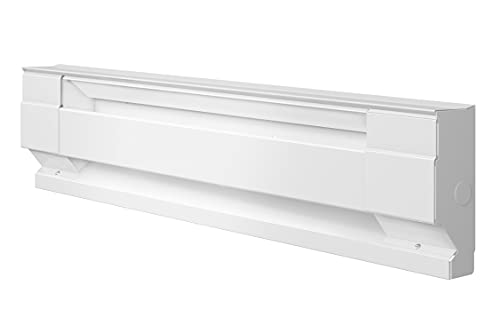
Product highlights: Cadet’s F Series uses a compact 24-inch design in white steel. It operates at 350/262 watts with 240/208-volt compatibility, offering a straightforward, space-saving solution for smaller rooms or zones. This unit is best for apartments or bedrooms where space is at a premium and a discrete, steady heat is desired. The heater relies on convection to distribute warmth.
Best for: small bedrooms, studios, or offices where a compact, easy-to-install baseboard is preferred. It’s a simpler, affordable option for targeted heat in a defined area.
Caution: This model is most effective in smaller spaces; larger rooms may require higher wattage or supplemental heating. Installation requires standard electrical wiring and mounting clearance.
Stelpro Brava 500W AB0501W
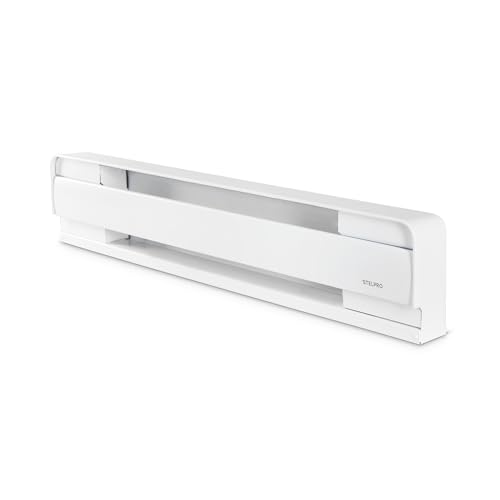
Product highlights: This 500W Stelpro Brava heater delivers quiet convection heat suitable for rooms up to about 50 square feet. It requires hardwiring and supports various thermostat options for room control (sold separately). The full-length thermal protection and one-piece steel cabinet reduce expansion noises, making it a reliable, silent choice for bedrooms or home offices.
Best for: small living spaces or study areas where quiet operation matters and wall thermostat integration is planned later. Better for zones that require steady, unobtrusive heat without a plug-in unit.
Caution: Not a plug-in model; installation involves permanent wiring. If you’re aiming for simple plug-and-play, this one isn’t ideal without a separate thermostat setup.
Stelpro Brava 1000W AB41001W

Product highlights: At 1000W, this Stelpro Brava model provides robust heat for medium-sized rooms. It’s designed for permanent hardwired installation and uses a no-end-cap, one-piece design to minimize noise and improve durability. Optional thermostat kits enable wall control or built-in functionality for precise temperature management.
Best for: living rooms, family areas, or home gyms where consistent warmth is needed without fans or noise. Choose this if you want a solid, mid-range option with flexible control.
Caution: It is not a plug-in unit; ensure electrical wiring compatibility and proper mounting clearance during installation.
Stelpro Brava 1000W With Built-In Thermostat Kit AB41002W

Product highlights: This bundle combines a 1000W Brava heater with a built-in two-pole thermostat kit, delivering precise temperature control without needing a separate wall thermostat. It’s designed for spaces up to about 100 square feet with silent, natural convection and a durable steel housing.
Best for: rooms where quick, uniform warmth is desired and a self-contained control solution is preferred. Offers streamlined installation for a clean wall appearance.
Caution: The built-in thermostat requires correct voltage matching and may limit future thermostat options if you plan to upgrade controls later.
Cadet F Series 36″ Electric Baseboard Heater
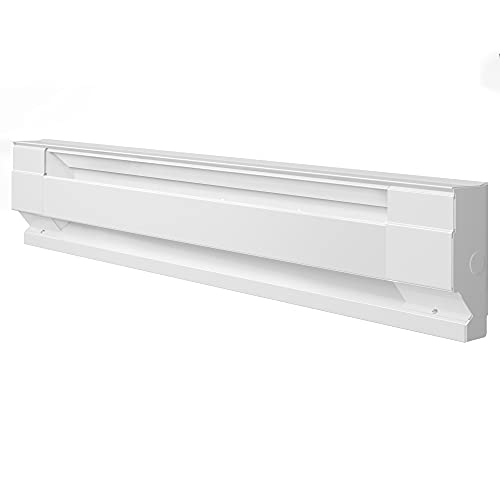
Product highlights: This Cadet F Series 36-inch unit provides 750/563 watts at 240/208 volts, circulating warmth through convection. It features universal wiring and pre-punched knockouts for a straightforward install in medium-to-large spaces.
Best for: living rooms or open-concept areas that need stronger coverage than a 24-inch unit. A good balance between heat output and wall space usage.
Caution: Higher wattage requires appropriate electrical service and careful mounting to maintain even heat distribution.
MOLLIFII 48″ Electric Baseboard Heater

Product highlights: This 48-inch baseboard heater provides 1000W at 120V, with a standard white finish. It offers substantial heat output for larger rooms while maintaining a slim profile.
Best for: larger bedrooms, family rooms, or home offices where a longer heater helps distribute heat more evenly across the space. A solid choice when wall space allows for a longer unit.
Caution: Ensure the space around the heater meets clearance requirements to avoid obstruction of airflow and prevent overheating.
Buying Guide: Key Considerations For High Efficiency Electric Baseboard Heating
What size room needs baseboard heat? Select wattage to match room square footage and insulation. Conservative estimates favor 10 watts per square foot for well-insulated spaces and up to 15 watts per square foot for colder climates or poorly insulated rooms.
Hardwired vs plug-in: Many high-output models require hardwiring, while some bundles offer built-in thermostats for simplified control. Consider existing electrical panels and future thermostat goals when choosing a model.
Thermostat integration: Decide whether you want a standalone wall thermostat, a built-in thermostat, or no thermostat at all. Built-in options can reduce wall clutter and provide seamless control in one unit.
Noise and airflow: Baseboard heaters operate via convection and are typically silent. Metal cabinets with no-end-cap designs can reduce expansion noises and improve durability.
Safety features: Look for thermal protection, tip-over sensors, and stay-cool housings. These features help prevent accidental contact and overheating in busy rooms.
Installation considerations: Confirm clearances around the heater, wall mounting requirements, and whether a unit is suitable for retrofit in existing rooms or new construction.
FAQ
- What is the main difference between plug-in and hardwired baseboard heaters? Plug-in units are easier to install and portable, while hardwired models are typically used for higher wattage and permanent installations. Hardwired models often require thermostat compatibility and dedicated circuits.
- How many watts should I choose for a medium room? For a 100–200 square foot room, 500–1000 watts is common depending on insulation and climate. More insulation or smaller spaces may require less.
- Are built-in thermostats better than wall thermostats? Built-in thermostats shorten wiring and reduce wall clutter, offering convenient control. Wall thermostats provide flexibility if you want to upgrade or relocate controls later.
- Do baseboard heaters take long to feel warm? Convection bases heat relatively quickly but the time to reach comfort depends on room size, insulation, and how well the heater is matched to the space.
- Is 1000W enough for a 100 sq ft room? Generally yes in standard conditions, but very cold climates or poor insulation may require higher wattage or multiple units for even warming.
- Can I mix different brands in the same room? Yes, but ensure compatible voltage and thermostat control. Mixing can complicate control and efficiency if not planned carefully.