Best Heaters for Shed: Reliable Warmth for Your Workspace and Projects
Choosing a heater for a shed involves balancing portability, safety, and efficient heating for spaces that can be drafty and uneven in temperature. This guide reviews five highly capable options, focusing on reliability, energy use, and ease of installation. Each product below is suitable for sheds, garages, workshops, and similar outbuildings with varying heating needs. Read on to compare models, features, and practical considerations to help you select the right heater for your space.
| Product | Brand | Key Benefit |
|---|---|---|
| Dreo Space Heater (2025 Upgraded) | Dreo | Fast, broad heat with smart controls |
| NewAir NGH160GA00 | NewAir | Portable, safe garage heating |
| Shinic Electric Ceiling Mounted Radiant Heater | shinic | Ceiling mounting with adjustable angle |
| DR Infrared Heater DR-268 Smart | DR. INFRARED HEATER | IPX5 rated, digital control for greenhouse and shed |
| ENVI Plug-in Wall Heater | ENVI | Quiet, low-wattage, safe for 24/7 use |
Overview: The following five heaters are selected for sheds and similar spaces where compact size, straightforward installation, and reliable heat output matter. They span portable electric models, ceiling-mounted options, and wall-mounted solutions, giving you choices based on space, power access, and how you prefer heat to distribute through a shed’s interior.
Dreo Space Heater: Compact Power With Smart Features

The Dreo Space Heater combines a 1500W Hyperamics ceramic heating system with a refined heat funnel design. This configuration accelerates warmth and extends airflow reach, which is particularly useful in drafty shed spaces. A digital display and multi-mode operation provide versatility for both rapid warming and sustained comfort. The unit includes a tilt-detection sensor for tip-over protection, ETL-certified safety features, and a thermostat that supports precise temperature control in small-to-medium sheds. For those who want quick warmth with careful energy use, this model offers a balanced mix of performance and safety.
Key features include rapid heat delivery, enhanced safety with flame-retardant materials, and precise temperature control within a broad range. The compact footprint makes it easy to place near workbenches or entryways so you can quickly warm up as you work. The 12-hour timer helps manage heat during longer projects. Suitable for garages or sheds where you need dependable, safe heat without heavy installation or noise.
NewAir NGH160GA00: Portable Garage Heating

The NewAir NGH160GA00 offers a compact, portable design suitable for sheds and small garages. It features a cool-to-the-touch exterior, an internal thermostat, and automatic shut-off to prevent overheating. With two heat modes and a tilting head plus a built-in carry handle, this unit can be moved between work areas easily. A ceramic heating plate paired with a robust fan ensures a fast, steady flow of warm air, helping to elevate shed temperatures quickly during cold mornings or evenings. It prioritizes safety and mobility as core benefits for shed environments.
Considerations for shed use include portability, safety features, and the ability to target heat toward specific zones. This model supports flexible placement, allowing you to position it where you most often work, while the modest power draw helps manage electrical load in smaller properties. For occasional, targeted heating, the NewAir option provides dependable warmth without demanding professional installation.
Shinic Ceiling Mounted Radiant Heater
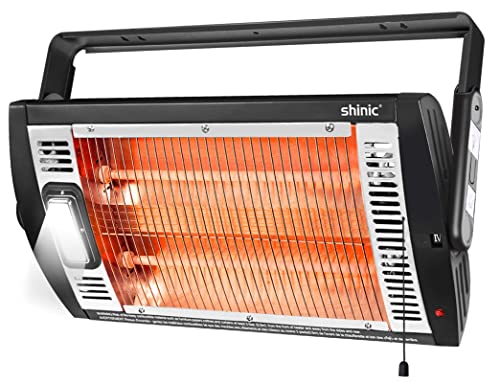
This ceiling-mounted radiant heater emphasizes space-saving installation with 90° adjustable heating angles. The dual quartz heating elements deliver rapid warmth, making it well-suited for sheds where floor space is at a premium or where a mounted unit can heat a wider area. The unit combines high heat output with built-in lighting options, providing both warmth and practical illumination for workshops. The five-mode setup enables flexible use across different seasons and work tasks.
Performance considerations include heat distribution patterns, mounting requirements, and electrical load. Ceiling installation reduces clutter and improves safety by keeping cords and heaters off the floor. For sheds that double as workrooms, this option can offer efficient heat coverage while preserving floor space for tools and materials.
DR Infrared Heater DR-268 Smart Greenhouse Heater

The DR-268 Smart Greenhouse Heater is designed for challenging shed environments, offering water resistance (IPX5) and infrared heat that warms objects and occupants directly. A digital display and built-in thermostat provide straightforward ambient temperature control, while selectable Auto or Manual modes give you flexible operation depending on how actively you want to manage heat. The heater supports multiple mounting options, including wall, ceiling, or hanging installation, which is ideal for sheds with varied layouts or ceiling heights.
Key considerations include humidity and moisture exposure, particularly in outdoor sheds or greenhouses. Infrared heat can be efficient for targeted warmth, reducing energy waste. With versatile mounting and a robust control system, this unit is a strong option for spaces requiring reliable heat even in damp or outdoor-adjacent environments.
ENVI Wall Heater: Quiet, Energy-Efficient
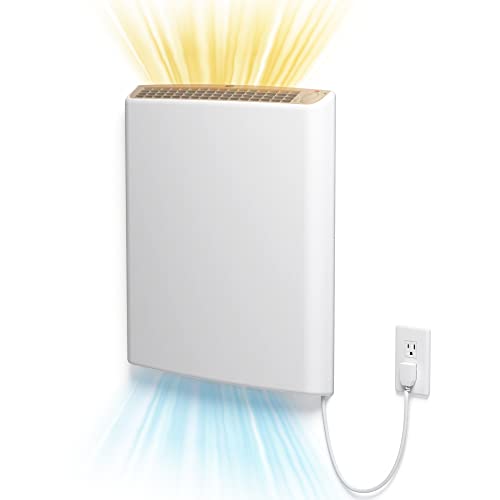
The Envi Plug-in Electric Panel Wall Heater emphasizes low-wattage operation with a fan-less design, making it suitable for sheds where quiet operation is valued. The wall-sense safety sensor helps prevent accidental removal, and the 24/7 capability supports consistent climate control in spaces that require steady heating. The patented stack convection design helps distribute warmth evenly while minimizing dust movement, which can be important for sheds with stored materials or dust-prone environments.
Important considerations include safety features for spaces used by contractors or hobbyists, the need for discreet heat with minimal noise, and energy-conscious operation. This model can serve as a near-permanent solution in sheds that require reliable, ongoing warmth without the complexity of a full heating system. Its emphasis on safety and quiet operation makes it attractive for enclosed outbuildings where people spend time regularly.
Buying Guide: Key Considerations For Shed Heaters
- Space size and heat reach: Evaluate the shed’s square footage and layout to determine whether you need a compact portable heater or a mounted solution that delivers even heat across the area.
- Safety features: Look for tip-over protection, overheat protection, cool-to-touch exteriors, and moisture resistance if your shed is exposed to humidity or rain. Automatic shut-off and ETL or equivalent certifications add reliability.
- Mounting options and placement: Ceiling-mounted, wall-mounted, or free-standing heaters offer different installation requirements and heat distribution patterns. Ceiling and wall installations save floor space in crowded sheds.
- Heat type and distribution: Infrared radiant heaters directly warm objects and occupants, while convection heaters warm the air. For workshop use, a balance of both can be most effective depending on the activities performed.
- Power considerations: Check available electrical service and outlet capacity. Choose models with appropriate wattage ratings to avoid overloading circuits, especially in older sheds.
- Controls and convenience: Thermostats, timers, multiple heat modes, and remote controls can simplify maintaining a comfortable shed environment during projects.
- Durability and weather exposure: If the shed sees moisture, IP-rated models or indoor-outdoor rated units provide better reliability. For garages, consider models rated for tough environments.
- Maintenance needs: Some heaters require regular cleaning of vents or dust removal. Fan-less designs reduce dust scattering, which can be beneficial in sheds with stored materials.