Best Gas Heaters for Basements That Save Space and Warm Up Fast
Finding a reliable gas heater for a basement involves balancing size, BTU output, venting needs, and ease of installation. This guide highlights five practical options that suit different basement layouts and heat demands. Whether you want a compact unit for a small finished space or a higher-capacity heater for a larger area, these picks help you compare features, installation options, and potential limitations. The top picks favor immediate warmth, simple setup, and clear suitability for basements with or without electrical access.
| Product | Best For | BTU / Coverage | Key Benefit |
|---|---|---|---|
| Mr. Heater 30,000 BTU Vent Free | Small to mid basements | 30,000 BTU / up to 1,000 sq ft | Battery ignition for reliable starts |
| ProCom MN100TPA-B | Moderate spaces | 10,000 BTU / up to 500 sq ft | Thermostat control and slim profile |
| ProCom MN300HPA-B | Medium to large basements | 30,000 BTU / up to 1,200 sq ft | Manual control with safety features |
| MIZUDO Tankless Water Heater | Whole-house flexibility | 120,000 BTU (water heater, not space heater) | Indoor/outdoor install options |
| ProCom MN300TPA-B | Large living areas | 30,000 BTU / up to 1,400 sq ft | Thermostat control and compact design |
Mr. Heater 30,000 BTU Vent Free Blue Flame Natural Gas Heater

Best for small to mid basement spaces where you want quick, direct warmth without complex venting. This unit emits 30,000 BTU per hour and can heat up to about 1,000 square feet, making it a strong choice for enclosed basements or open concept lower levels. The battery-operated electronic ignition aids reliable startup even during brownouts. It is best for buyers seeking a straightforward, vent-free solution with dependable ignition and substantial heating capacity for its size. Caution: Vent-free heaters influence indoor oxygen levels and humidity; ensure proper room ventilation and follow safety guidelines. This model is well-suited for spaces where electricity is available for the ignition battery and controls.
ProCom MN100TPA-B Ventless Infrared Plaque Heater
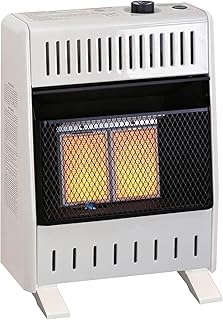
This compact infrared heater is best for smaller basements or zones where a quick, quiet heat source is preferred. At 10,000 BTU, it heats up to 500 square feet and offers a simple thermostat control (High/Medium/Low). The slim, modern profile makes it easy to place in corners or against walls, with the option to wall-mount or use base feet included. Choose this if you want a space-saving heater with a visible design and straightforward temperature control. Limitation: Lower BTU output means less effective heating for larger areas or drafty basements.
ProCom MN300HPA-B 30,000 BTU Ventless Infrared Plaque Heater
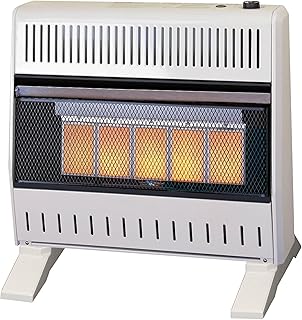
Best for larger basements up to about 1,200 square feet where a higher heat output is needed without electricity. This unit provides 30,000 BTU and uses natural gas only, with manual control featuring Low/Medium/High settings and a built-in Oxygen Depletion Sensor with automatic shut-off for safety. It is ideal for spaces where electrical power is limited or intentionally avoided. Caution: Ventless operation relies on adequate ventilation to maintain air quality; ensure proper room sizing and follow installation guidelines to manage oxygen and humidity. This model is a solid pick for zones where gas heat is preferred over electric heat for larger, open basements.
ProCom MN300TPA-B Ventless Infrared Plaque Heater

Best for large living areas or big basements where a strong heat source is needed and space is at a premium. This unit delivers 30,000 BTU and covers up to 1,400 square feet, making it suitable for open-plan basements with high ceilings. It includes thermostat control and a slim profile designed to blend into a room’s layout. Choose this if you want a balance of strong heating and a compact footprint. Limitation: As with ventless heaters, ensure adequate ventilation and comply with local building codes when installing in larger spaces.
Buying Guide: Gas Heaters for Basements
- Heat output vs. space: Larger basements require higher BTU (12,000–30,000+). For smaller rooms, 10,000–20,000 BTU often suffices. Match BTU to square footage and insulation level.
- Ventilation needs: Ventless units are convenient but rely on room ventilation. Check oxygen depletion sensors and ensure adequate airflow to prevent CO2 buildup.
- Power source considerations: Some models operate without electricity. If outages are common, these can be advantageous; otherwise, consider units with electronic ignition for reliability.
- Installation flexibility: Wall-mountable or freestanding options offer placement flexibility in basements with limited floor space.
- Safety features: Look for automatic shut-off, CO/OD sensor compliance, and tip-over protection where applicable. Follow all local codes for gas appliance installation.
- Maintenance and service: Regular venting checks, gas line inspection, and proper clearance from combustibles are essential for safe operation and longevity.
Frequently Asked Questions
- Is a ventless gas heater safe for basements? Yes, when used with proper ventilation, oxygen depletion sensors, and adherence to safety guidelines. Always install in accordance with local codes.
- What size heater do I need for a 600 sq ft basement? A heater in the 20,000–30,000 BTU range is typically suitable, depending on insulation, ceilings, and climate.
- Do these heaters require electricity? Some models have battery ignition or operate without electricity, while others require power for controls or fans.
- Can I install these heaters myself? Installation should comply with local codes and may require professional assistance for gas line connections and ventilation assessment.
- What maintenance is required? Regular inspection of gas lines, venting, and safety sensors is recommended; ensure clearances and clean air pathways around the unit.
- Are vent-free heaters affordable to operate? They can be cost-effective for supplemental heating, but efficiency and fuel costs vary with BTU and usage patterns. Monitor energy use to optimize performance.