Best Garage Gas Heaters for Winter: Top Picks and Buying Guide
Choosing the right garage gas heater can make a big difference in comfort and energy efficiency. This guide highlights five top models, based on heat output, versatility, and residential suitability. Each entry includes a quick snapshot of features to help you compare at a glance.
| Product | Brand | BTU / Coverage | Vent Type |
|---|---|---|---|
| Mr. Heater F260550 Big Maxx MHU50NG | Mr. Heater | 50,000 BTU | Vertical/Horizontal Venting |
| Mr. Heater F260560 Big Maxx MHU80NG | Mr. Heater | 80,000 BTU | Category 1 Vertical / Category 3 Horizontal |
| Modine HD45AS0111 Natural Gas Hot Dawg | Modine | 45,000 BTU | Direct venting options |
| Mr. Heater F272800 MH40NG | Mr. Heater | 40,000 BTU | Infrared heating for spaces |
| ProCom MN300TBA-B | ProCom | 30,000 BTU | Ventless wall/window mount |
The following sections detail five recommended models. Each entry includes a concise overview, notable features, and how the unit suits typical garage layouts and insulation levels. All information reflects the listed specifications and common installation scenarios.
Mr. Heater Big Maxx MHU50NG (50,000 BTU)
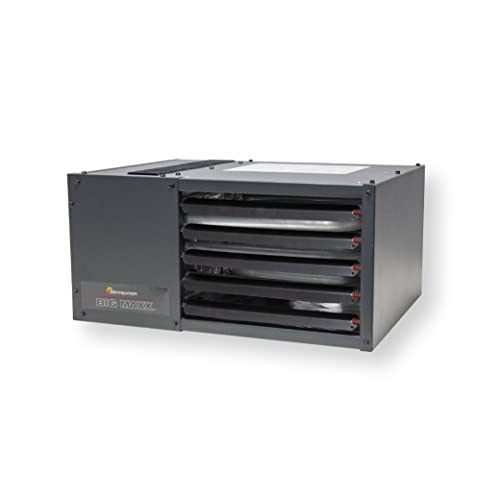
The Big Maxx MHU50NG delivers 50,000 BTU per hour, heating up to about 1,250 square feet. Its powered exhaust supports vertical or horizontal venting, providing flexible installation options for common garages. External access to the thermostat and gas connection simplifies servicing and adjustments after installation. This unit is suitable for moderate-to-well-insulated garages where a mid-range heating capacity is adequate. It is designed for natural gas supply and standard venting configurations commonly found in residential garages.
Mr. Heater Big Maxx MHU80NG (80,000 BTU)
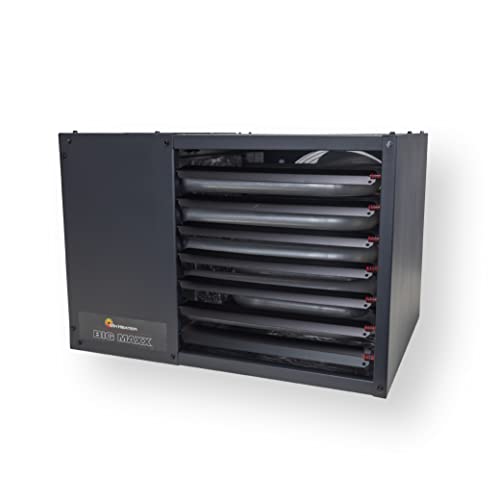
The Big Maxx MHU80NG operates at 80,000 BTU and is designed for larger spaces, including bigger garages or workshop areas. It lists a vertical category 1 venting option and horizontal category 3 venting, offering installation flexibility where ceiling or wall venting is accessible. Note that the thermostat, hose, and regulator are not included, so add-ons may be required. This unit is best for users needing robust heat output without compromising efficiency in larger spaces.
Modine HD45AS0111 Hot Dawg (45,000 BTU)
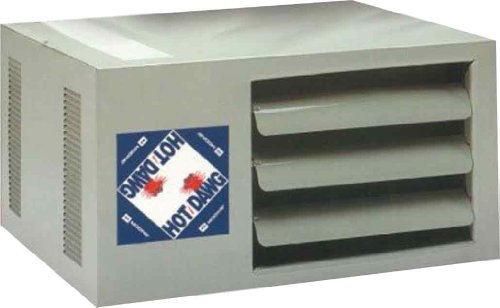
The Modine HD45AS0111 Hot Dawg provides 45,000 BTU with a low-profile design, emphasizing quiet operation and broad residential, commercial, and industrial certification. Its compact footprint helps with tighter garage layouts or spaces where ceiling height is a concern. The unit balances efficiency with a modest heat output, making it suitable for modestly insulated garages or as a supplemental heat source alongside existing HVAC systems.
Mr. Heater MH40NG (40,000 BTU)

The MH40NG offers 40,000 BTU and infrared heating characteristics designed for efficient warming of occupied spaces. It is well-suited for garages with mid-range ceilings and standard layouts, where direct heat delivery to people and objects can improve perceived warmth. The unit emphasizes cost-effective operation and dependable infrared performance, which can reduce energy consumption compared with forced-air options in specific configurations.
ProCom MN300TBA-B Ventless 30,000 BTU

This ventless option provides 30,000 BTU of natural gas heat and can heat spaces up to 1,400 square feet. It includes wall mounting and base feet, offering flexible placement in a garage with limited venting infrastructure. Ventless design means quick installation in appropriate spaces, though it requires proper clearance from combustibles and adheres to safety guidelines for indoor use.
Buying Guide: Key Considerations For Garage Gas Heaters
- Space size and insulation: Larger garages with poor insulation need higher BTU units or supplemental heating. For smaller, well-insulated spaces, mid-range BTU models can deliver comfortable warmth with lower energy use.
- Ventilation and venting options: Some units support vertical or horizontal venting, while ventless models exist. Ensure your garage has appropriate venting or air exchange to maintain indoor air quality and safety.
- Fuel type and efficiency: Natural gas units are common for fixed installs; propane is common for portable units. Look for efficiency ratings and infrared vs. forced-air designs to match your needs.
- Installation requirements: Consider clearance distances, ceiling height, and whether a professional installation is advisable. Some models require an external thermostat or additional components not included in the box.
- Maintenance and safety features: Automatic shut-off, oxygen depletion sensors, and corrosion-resistant materials improve long-term safety. Noise levels and startup reliability should align with garage use and occupancy.
- Operational costs: BTU rating, energy source price, and efficiency affect ongoing costs. Infrared heaters may feel warmer at lower settings, while high-BTU units raise room temperature quickly.
- Vent-free versus vented design: Vent-free heaters save installation complexity but require careful space monitoring for CO safety, especially in attached garage spaces with living areas nearby.
- Compatibility with existing systems: Some heaters pair with existing gas lines and regulators; verify compatibility and any required adapters or accessories before purchase.
Across these options, evaluate how often you use the garage, typical climate, and whether you prefer quick heat delivery (infrared) or uniform air distribution (forced air). Checking installation space, clearance, and venting routes will help ensure safe, efficient operation and a comfortable workspace all winter.