Best Commercial Infrared Heaters for Businesses and Outdoor Spaces
Choosing the right commercial infrared heater involves evaluating heat output, durability, installation options, and safety features for high-traffic areas. This article reviews five top picks designed for patios, garages, restaurants, and warehouses. Each product section highlights its strengths, ideal use cases, and what to consider before buying.
The following summary table provides a quick reference to the featured products. It lists the core type, target space, and power characteristics to help you compare at a glance.
| Product | Type / Power | Ideal Space | Notable Feature |
|---|---|---|---|
| Dr. Infrared Heater 10,260 BTU | Infrared, 3000W | Patios, Garages, Indoor/Outdoor | Remote, IP55 weatherproof |
| Commercial SunWave 3000W (Muskoka) | Infrared, 3000W | Restaurants, Outdoor patios | Remote control, low glare |
| East Oak Patio Heater 3000W | Infrared, 3000W | Commercial outdoor spaces | UL/ETL certified, IP65 waterproof |
| Bromic Tungsten 4000W | Infrared, 4000W | Large outdoor areas | Dual quartz elements, durable finish |
| Winco ESH-36 850W | Infrared, 850W | Pass-through stations, kitchens | 36” element, anchors for mounting |
Dr. Infrared Heater 10,260 BTU Infrared Heater
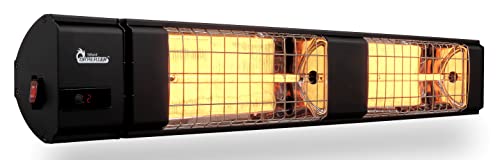
The Dr. Infrared Heater model delivers 10,260 BTU (about 3000W) of carbon infrared heat, designed for both indoor and outdoor use. It operates on 220-240V and includes a remote for convenient operation. Its weatherproof design carries an IP55 rating, making it suitable for patios and garages as a primary or supplemental heat source. The unit supports two power levels and a standby mode, enabling flexible heat management for commercial settings with variable occupancy and outdoor exposure.
Target scenarios include restaurant patios, warehouse entrances, and workshop spaces where fast, direct warmth improves comfort without relying on broad air heating. The included mounting hardware supports ceiling and wall installs, helping installers tailor heat distribution to seating layouts or work zones. The compact footprint is an advantage in spaces where floor space is at a premium. When planning installation, consider clearances from combustibles and the length of the power run from 220V receptacles.
Commercial SunWave 3000W Infrared Patio Heater (Muskoka)
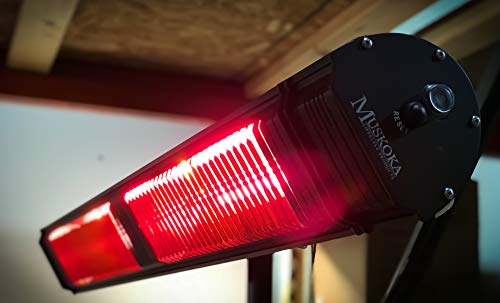
This Muskoka Lifestyle product delivers a 3000W infrared output with a focus on low glare and ambient warmth. The included wireless remote allows easy, distance-controlled adjustments across three heat levels. Its compact, powder-coated housing makes it attractive for commercial patios and outdoor lounges where guests expect a consistent, comfortable temperature without harsh light or noise. The heater emphasizes ambient warmth that complements dining or social spaces, reducing the need to raise centralized HVAC in small outdoor areas.
Key considerations include the scope of coverage (up to around 80% improved ambient warmth in some designs) and the remote’s responsiveness in busy outdoor environments. Installation options are typically wall-mounted for patio ceilings or awnings, enabling flexible heat direction toward tables and seating clusters. As with all infrared units, heat is directed to people and surfaces, rather than warming air, which can be advantageous for outdoor dining areas with variable airflow.
East Oak Patio Heater 3000W (Commercial, 240V)

The East Oak unit is designed for commercial outdoor use with 240V operation and a 3000W infrared element. The design emphasizes rapid warmth with a 45-degree heat angle to target larger seating areas efficiently. The unit features IP65 waterproof and dustproof ratings, along with ETL and UL certifications for safety compliance in restaurant decks, warehouses, or factory outdoor spaces. Tough aluminum construction helps resist high temperatures and corrosion in humid or salty environments.
Considerations for this heater include its mounting versatility and weather resistance. Its 240V requirement ensures robust performance for larger spaces but requires appropriate electrical infrastructure. The included remote control supports simple adjustments, which is helpful for shift changes or outdoor events where seating layouts shift frequently. Overall, East Oak offers a balance of reliability, industry certifications, and rapid outdoor warmth for commercial settings.
Bromic Tungsten Smart Heat 4000W Electric Patio Heater

This Bromic model uses dual quartz infrared elements to deliver 4000W of heat, designed for fast, direct warmth across outdoor spaces. It covers up to about 130 square feet and boasts a durable stainless steel construction with a high-temperature finish that resists corrosion and weathering. The unit supports flexible mounting, with recommended clearances for wall and ceiling installation and an option to recess with a separate kit. It’s well suited for upscale patios, decks, and commercial terraces where performance and aesthetics matter.
Key decision factors include heat distribution control, mounting flexibility, and the long-term durability under outdoor conditions. The dual-element design helps maintain warmth during sudden outdoor temperature drops, while the rugged finish is built for public spaces with higher risk of wear and tear. For venues needing precise heat targeting, Bromic’s adjustable orientation and lighting balance can be advantageous to enhance guest comfort while preserving energy efficiency.
Winco ESH-36, 36-Inch Electric Strip Heater

The Winco ESH-36 is a 36-inch electric strip heater designed for commercial food service applications and pass-through stations. Its infrared element distributes heat evenly along the length of the strip, helping to keep prepared foods at safe serving temperatures. The undermount design simplifies installation in counters or under shelves, with included mounting hardware and hanging chains for flexible placement. Aluminum heat reflectors focus warmth along the surface area to maximize holding times and energy efficiency.
Suitable scenarios include back-of-house warmers, buffet lines, and any service area requiring steady, localized warmth without interior-side heat loss. Mounting options and heat distribution are important to optimize comfort for both staff and customers while minimizing energy costs. As with other infrared devices, consider any fire safety guidelines and keep clearances from combustibles and flammable materials.
Buying Guide
- Heat output and space coverage: Larger areas may need 3000W to 4000W units or multiple heaters. Assess seating layouts, worker zones, and entryways to determine optimal placement.
- Voltage and electrical requirements: Many commercial heaters operate at 220-240V. Ensure your electrical infrastructure can support the load and consider dedicated circuits if needed.
- Weather resistance and approvals: For outdoor use, IP ratings (like IP55 or IP65) and safety certifications (UL, ETL) are important for durability and compliance.
- Mounting flexibility: Wall, ceiling, or recessed options affect heat distribution and safety. Check required clearances and installation hardware.
- Remote control and user interface: A remote or easy-access controls help adjust heat levels without approaching hot surfaces, benefiting hospitality and warehouse staff.
- Heat distribution strategy: Infrared heat targets people and surfaces rather than circulating air. Plan heat angles to cover seating areas or work zones without creating hot spots.
- Energy efficiency vs. comfort: Infrared heaters can be energy-efficient when used to complement HVAC or occupy only the spaces needing warmth. Compare standby modes and multiple heat levels.
- Maintenance and durability: Stainless steel or weather-resistant housings reduce corrosion; check warranty terms for commercial setups with frequent use.
Selecting the right commercial infrared heater involves balancing heat coverage, installation practicality, and durability. For outdoor dining, hospitality, or industrial environments, prioritizing safety certifications, weather resistance, and precise heat distribution will help ensure a reliable, comfortable space for guests and staff alike.