Best Commercial Electric Unit Heaters for Large Indoor Spaces
Answer: For upgrading or outfitting commercial spaces, these five electric unit heaters offer strong heat output, versatile mounting options, and practical safety features. They’re best suited for workshops, garages, warehouses, and other industrial environments where durable, hardwired heating is preferred. This guide explains who each product is best for and why it stands out, plus a quick buying table to compare core details at a glance.
| Product | Brand | Approximate Power | Best For |
|---|---|---|---|
| DR. Infrared Heater DR-966 | DR. INFRARED HEATER | 3000/6000 W | Hardwired garages and workshops needing high heat output |
| Marley 3750/5000W 208/240V | Marley | 3750/5000 W | Industrial spaces with ductwork or standalone use |
| Dura Heat EUH1465 | Dura Heat | 1500 W (PTC) + fan | Smaller spaces needing quick warm-up |
| VEVOR 10000W Digital | VEVOR | 10000 W | Large garages with ceiling or wall mounting |
| Cadet Com-Pak CSC151TW | Cadet | 1500 W | Controlled, small to mid-sized spaces |
DR. Infrared Heater DR-966 240V

- Heavy Duty 240V single-phase 3000/6000 W operation; designed for hardwired installation.
- UL/CUL Listed; supports wall or ceiling mounting with included bracket.
- Power cord not included; suitable for garages and commercial spaces needing robust heat.
Best for: Larger garages or workshops that require high heat output and a robust, hardwired setup. This model suits environments where ceiling or wall mounting is preferred for space optimization.
Why selected: High wattage options offer flexible heat output to meet varying occupancy and ventilation conditions. The hardwired design aligns with commercial electrical practices. Caution: Ensure proper electrical capacity and professional installation to meet local codes.
Marley 3750/5000W 208/240V Unit Heater
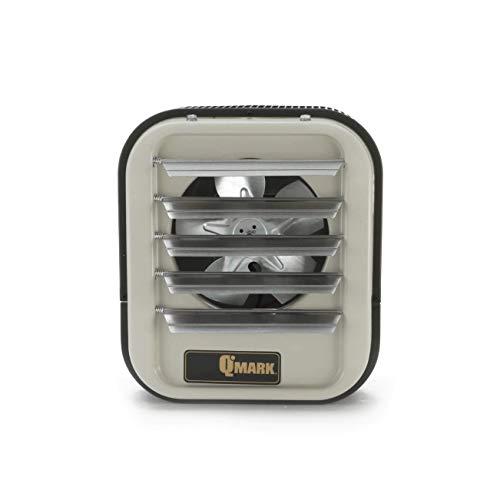
- Even heat distribution with a sturdy metal build and pull-through air design.
- Versatile use: standalone or compatible with existing ductwork.
- Safety features include a linear thermal cutout for element protection; 24V control transformer in most models.
Best for: Industrial spaces that need a balance of footprint, heat distribution, and compatibility with duct systems. Better for environments where duct integration improves overall climate control.
Choosing note: The unit’s larger footprint makes it ideal for spaces where floor or wall placement is feasible without crowding critical zones.
Dura Heat EUH1465 Electric Forced Air Heater

- 1500 W PTC ceramic heating for quick warmth in small spaces.
- Rugged steel construction; versatile heat or fan-only settings.
- Pivoting base option provides flexible placement near work areas.
Best for: Smaller garages or workshops needing fast, targeted warmth without overpowering the room. Choose this if space is constrained and you want flexible operation modes.
Limitation: Lower maximum wattage means it won’t heat very large spaces as effectively as higher-watt models.
VEVOR Electric Garage Heater 10000W

- Wide coverage up to 90 sq. m with 10000W output; two adjustable power levels.
- Precise temperature control with intelligent regulation; stable performance.
- ETL listed and built with SPCC cold-rolled steel; overheat protection.
Best for: Large, open-plan garages or maintenance bays that require consistent convection and scalable heat output. Better for spaces that justify a higher wattage heater with strict temperature control.
Caution: Professional installation is recommended due to electrical load and mounting requirements. Ensure electrical panel capacity supports 10000 W load.
Cadet Com-Pak CSC151TW Electric Wall Heater

- 5120 BTU output; 120V; 1500 W; compact wall-mounted unit.
- Thermostat-equipped for precise comfort; easy to install on walls.
- Model CSC151TW designed for quick, targeted heating in compact spaces.
Best for: Small to medium rooms or offices within a larger commercial space where discrete heating is preferred. Ideal for retrofit projects where wall-mounting minimizes floor footprint.
Limitation: Lower overall heat output compared to high-wattage models; may require multiple units for very large areas.
Buying Guide: Key Considerations For Commercial Electric Unit Heaters
- Heat output vs. space size: Match wattage to room square footage and insulation. Larger spaces typically need higher wattage or multiple units.
- Mounting options: Wall versus ceiling mounting affects space usage and heat distribution. Consider existing structures and access for maintenance.
- Electrical requirements: Check voltage, phase, and circuit capacity. Professional installation is often required for 240V/208-240V systems.
- Controls and safety: Look for thermostats, overheat protection, and ETL or UL listings. Quiet operation and safety features reduce risk and improve comfort.
- Installation complexity: Hardwired units demand electrical work and potentially duct integration. Factor in installation time and costs.
- Energy efficiency and running cost: Higher efficiency units save energy over time, especially in spaces with long heating seasons.
- Maintenance: Metal housings and accessible components simplify servicing. Consider airflow design that minimizes dust buildup.
FAQ
- What is the typical best used space for a 10000W unit heater?
Answer: Large garages, warehouses, or maintenance bays with open layouts. - Do unit heaters require professional installation?
Answer: Often yes, especially for 240V/208V units and ceiling mounting, to meet safety codes. - Can I use a unit heater with existing ductwork?
Answer: Some models are designed for ducted setups; others are standalone. Check the product description for compatibility. - Are there safety features I should prioritize?
Answer: Overheat protection, thermostat control, and proper enclosure materials help prevent hazards. - How do I determine the right wattage for a space?
Answer: Calculate the volume of the space and insulation quality; higher volumes and poorer insulation require more heat output. - Is fanless operation available?
Answer: Some models include fanless convection features; check product specs if silent operation is needed.