Best Cattle Trough Heaters for Winter Nutrition and Water Access
Keeping livestock hydrated during freezing conditions is essential for health and productivity. The following cattle trough heaters offer thermostatic control, safety features, and durable construction to prevent water from freezing in cold weather. The selections below cover floating and submersible options, cast aluminum designs, and models suitable for large tanks, making it easier to keep water accessible for cattle, horses, and other livestock all winter long.
| Product | Key Benefit | Best For |
|---|---|---|
| K&H Pet Products Ultimate Stock Tank Deicer | Thermostatic control; floating or submersible; full cage | Small to mid-size troughs |
| Ritchie Omni Fount 2 Automatic Heated Waterer | USA-made; easy maintenance; large access panel | High-traffic livestock watering |
| FHTONGE 500W Aluminum Cast Water Heater | Aluminum cast body; energy-efficient; multi-application | Large capacity troughs and ponds |
| API Heated Water Bucket for Cattle | Overheat protection; durable plastic bucket | 20-quart capacity; small farms |
| Tujoe 500W Stock Tank Heater | Cast aluminum; thermostatic control; 5 ft cord | Livestock and poultry watering |
K&H Pet Products Ultimate Stock Tank Deicer
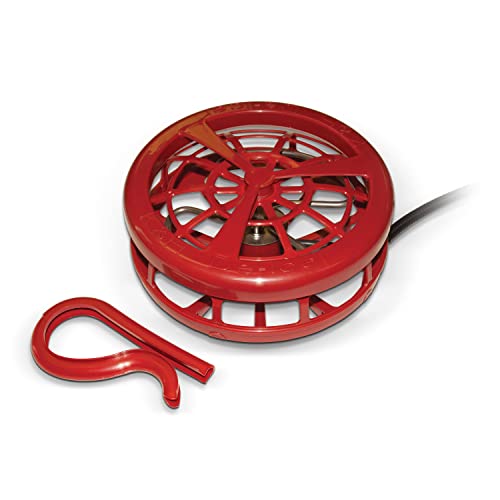
The K&H Ultimate Stock Tank Deicer offers versatile placement as either a floating deicer or a submersible unit. It operates with thermostatic control to switch on and off as needed, helping to prevent freezing without overheating water. The product comes with a full cage and cord clip, simplifying installation and keeping cords secure in outdoor environments. The design is safe for all stock tanks and supported by a two-year K&H warranty, which provides peace of mind for farm managers seeking long-term reliability. Ideal for small to mid-size troughs used by cattle and other livestock.
Ritchie Omni Fount 2 Automatic Heated Waterer

Ritchie’s Omni Fount 2 is a heated waterer designed for reliable water access in demanding farm environments. Built in the USA, this unit emphasizes ease of maintenance with a large access panel for servicing heating components and waterlines. While focused on high-traffic livestock, its robust construction and accessible design make it suitable for cattle, horses, and other large animals that require consistent water availability during winter. The product highlights straightforward cleaning and long-term durability, reducing downtime and maintenance costs on busy farms.
FHTONGE 500W Aluminum Cast Water Heater

The FHTONGE 500W water heater uses a solid cast aluminum heating element, offering high thermal conductivity and corrosion resistance. The design is intended for large-capacity troughs and outdoor use, with a safe submersible profile suitable for plastic, rubber, or other water containers. The unit activates around freezing and maintains a temperature band that helps protect drinking water from dropping below functional levels. Its robust materials make it a practical option for farmers needing dependable de-icing across larger livestock operations.
API Heated Water Bucket for Cattle

The API Heated Water Bucket combines a compact 20-quart capacity with thermostatic control and overheat protection to prevent water from becoming dangerously hot. Constructed from impact-resistant polyethylene, the bucket is designed to resist cracking and warping in winter weather. This option is well-suited for smaller operations or as a supplementary water source in larger pastures, offering a straightforward solution for maintaining drinkable water without heavy electrical demands.
Tujoe 500W Stock Tank Heater
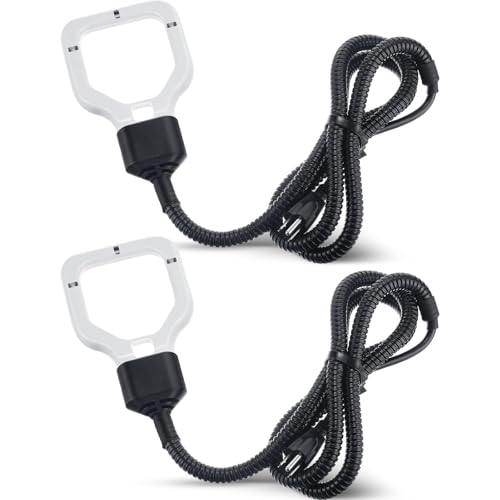
Tujoe’s 500W stock tank heater is a cast aluminum, submersible de-icer with thermostatic control and a long five-foot cord. The design emphasizes safety and energy efficiency, starting as water approaches freezing and shutting off at the upper threshold. It’s positioned as a versatile solution for livestock, poultry, and outdoor water projects, offering dependable performance in cold winter conditions. The heavy-duty aluminum construction supports durability in farm environments where animals may interact with equipment.
Buying Guide: Key Purchase Considerations
- Heat source method: Decide between floating vs. submersible deicers. Floating models stay at the surface, reducing the risk of damage when tanks are full, while submersibles provide uniform heating at the tank bottom, which can be more effective in deeper troughs.
- Thermostatic control: Look for units with automatic on/off settings based on water temperature. This feature saves energy and avoids overheating, while ensuring water remains unfrozen in extreme cold.
- Tank compatibility: Check tank material (plastic, rubber, metal) and capacity. Cast aluminum and stainless options suit larger troughs; plastic buckets are best for small to medium setups.
- Durability and safety: Weatherproof housings, cord management features, and safety listings help prevent damage and electrical hazards in outdoor winter conditions.
- Maintenance requirements: Access panels, easy cleaning, and components that resist mineral buildup extend service intervals and reduce downtime during busy seasons.
- Power and efficiency: Consider wattage relative to trough size. Higher capacity systems (e.g., 500W-750W) typically cover larger volumes, but energy efficiency matters for ongoing costs.
- Warranty and support: A multi-year warranty and responsive customer support reflect product reliability and vendor confidence, important for farm operations.
- Safety in use: Ensure cords and fixtures are positioned to prevent animal chewing, freezing, or water splash hazards. Follow all manufacturer guidelines for installation.
When selecting a trough heater, balance initial cost with long-term operational costs, maintenance, and the farm’s specific water trough size and livestock load. For farms with frequent freezing, a thermostatically controlled unit with robust construction and easy maintenance offers the best combination of reliability and efficiency. Always verify that the heater is listed for outdoor use and suitable for the intended livestock class to maintain water access and animal welfare throughout winter.