Best Camping Propane Heaters for Indoor Use in 2026
Looking for a dependable camping propane heater you can use indoors or in well-ventilated spaces? This guide highlights five top options, each chosen for safe indoor performance, portability, and easy operation. Ideal buyers include weekend campers needing compact heat, small-garage hobbyists, and outdoor enthusiasts who want reliable heat without electricity. The table below compares key choices at a glance to help you decide quickly.
| Product | BTU | Best For | Notable Advantage |
|---|---|---|---|
| Mr. Heater 9,000 BTU Portable Buddy | 4,000/9,000 | Small spaces up to 225 sq ft | Indoor/outdoor use approved |
| Mr. Heater Buddy 4,000-9,000 BTU | 4,000-9,000 | Indoor-safe versatile option | Indoor and outdoor use with safety features |
| Heat Hog 4,000 BTU Portable | 4,000 | Small rooms, garages, tents | Angled head for directed heat |
| MOZODAWN 2 in 1 13,000 BTU | 13,000 | Outdoor heating plus cooking | Two-in-one heater and stove |
| OKF 6,000–18,000 BTU Indoor/Outdoor | 6,000/12,000/18,000 | Variable warmth, larger areas | Three heat modes and safety features |
Mr. Heater 9,000 BTU Portable Buddy Radiant Propane Heater
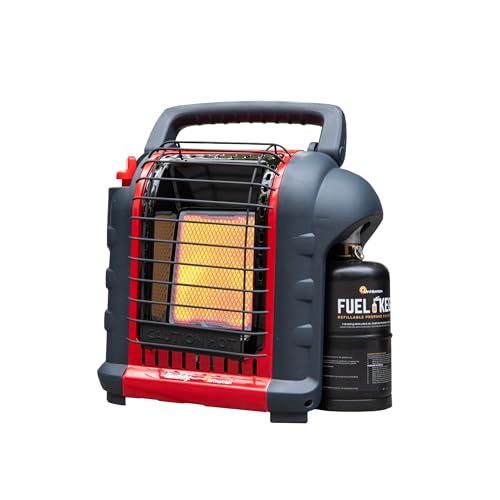
This compact radiant heater offers 4,000 or 9,000 BTU per hour and is designed for both indoor and outdoor use. It heats spaces up to about 225 square feet, making it a solid choice for small cabins, tents with proper ventilation, or workshops. Choose this if you need a versatile unit that shifts between 4,000 and 9,000 BTU depending on the space. Caution: ensure adequate ventilation to avoid buildup of combustion byproducts.
Mr. Heater MH9BX Portable Propane Heater

This Massachusetts/Canada-approved unit provides a 4,000–9,000 BTU radiant output suitable for spaces up to 225 square feet. It is designed for outdoor use and emphasizes clean burning with high efficiency. Best for campers who require a heat source that can tolerate higher altitudes with a warning about shutdown risk above 7,000 feet. It includes auto shut-off features if tipped, pilot light extinction, or low oxygen detected. Consider this for reliably managed heat in variable outdoor environments.
Mr. Heater 3,800 BTU Little Buddy
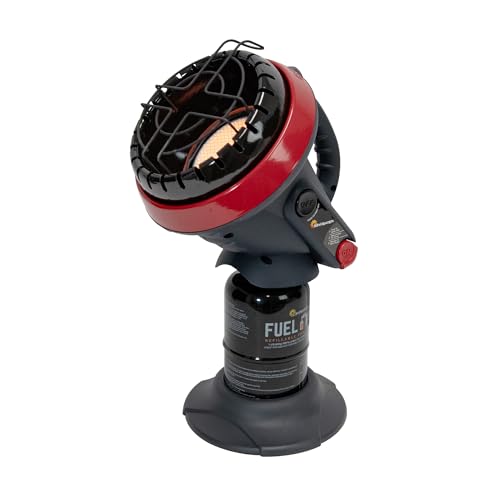
The Little Buddy delivers 3,800 BTU per hour and is dedicated to propane use. It heats small areas up to about 95 square feet, making it ideal for compact tents, small campers, or intimate outdoor spaces. This option is best for users prioritizing a lightweight, straightforward heater with predictable warmth for compact layouts. Limitation: lower BTU output means slower warm-up in larger spaces.
Heat Hog 4,000 BTU Portable

This 4,000 BTU heater is designed for versatile use in garages, tents, and camping spaces with no electricity required. It features an angled head to direct heat and a 33-degree wider heating area. Best for outdoor enthusiasts who want a portable heat source that can operate independently of power supply. Better for targeted warmth than uniform room heating; avoid if you need broad, even heat in larger interiors.
Propane Heater 6,200 BTU by Gasfargo

This 6,200 BTU outdoor propane heater is designed for use outdoors in well-ventilated spaces and includes a sturdy cylinder stand and a built-in USB lighter. It is a practical option for patios, camping setups, or open work areas where electricity is unreliable. Important: this unit is intended for outdoor use; do not operate indoors or in enclosed spaces without proper ventilation.
OKF Propane Heater, 6,000–18,000 BTU

This unit offers three heat modes (6,000, 12,000, 18,000 BTU) with safety features such as auto shutoff for low oxygen and tip-over. It heats up to about 450 square feet outdoors and provides indoor versatility with caution about ventilation. Best for larger spaces or mixed indoor/outdoor use in ventilated areas. The three-mode design supports energy-efficiency in variable conditions.
Buying Guide: Key Considerations For Indoor Camping Heaters
- Ventilation and safety: Indoor use requires adequate ventilation. Look for low-oxygen shutoff and tip-over protection. Consider models with automatic shutoff for oxygen depletion.
- BTU range and space: Higher BTU is not always better for small spaces. Match BTU to the room size to avoid overheating or excessive fuel use.
- Portability: If you travel often or camp in tents or cabins, weight, handle design, and compact form factor matter for ease of transport.
- Fuel compatibility: All options use propane. Check cylinder requirements, fuel availability, and whether a regulator or hose is included or needed.
- Safety features: Pilot light safety, flame sensors, and tip-over shutoffs are important. Verify that the unit has overheat protection and sturdy stands.
- Dual-use capabilities: Some models combine cooking or stove functionality with heating. Use these only in well-ventilated areas and follow manufacturer guidance.
Common Questions
- Can I use a camping propane heater indoors? Yes, but only in well-ventilated spaces and with proper safety measures; never in enclosed rooms without ventilation.
- Do these heaters require electricity? Most portable propane heaters do not require electricity, but some features or models may include electronic ignitions.
- What size space can I heat with a 9,000 BTU heater? Approximately up to 225 square feet under typical indoor conditions, depending on insulation and air exchange.
- Are there safety warnings for altitude? Some models may shut off or behave differently at very high altitudes; check product details for altitude guidance.
- Is it better to choose a 4,000 BTU or 9,000 BTU unit for a small tent? For small tents, 4,000 BTU is often sufficient and safer for limited ventilation; choose 9,000 BTU only if you need faster heating in a larger area.
- Should I avoid propane heaters in enclosed spaces? Yes—propane combustion consumes oxygen; ensure outdoor use or well-ventilated indoor spaces and have a carbon monoxide detector nearby.