Best Attic Power Vent Fans for Efficient Home Ventilation
Answering the search for attic power vent fans: these options deliver reliable attic cooling, reduce heat buildup, and can lower your cooling costs. The top picks below suit different buyers—from DIY homeowners seeking strong airflow to solar-powered setups for off-grid or sunny climates. Each product section explains who it’s best for and why it was chosen, plus a practical caveat to consider.
Buying table
| Product | Power Source | CFM | Best For | Why Picked |
|---|---|---|---|---|
| Master Flow ERV6 | Electric | 1,500 | Large attics up to 2,800 sq ft | Solid 1,500 CFM with thermostat control |
| Master Flow Shingle Match | Electric | 1,500 | Similar sized attics; shingle-matching look | Thermostat control; robust airflow |
| VEVOR Solar Attic Fan | Solar | 2,800 | Solar-ready homes; hot climates | MPPT, remote control, all-weather |
| Hon&Guan Solar Attic Fan | Solar | 2,000 | Sun-rich locations; eco-friendly cooling | MPPT controller; dual power options |
| Windigaga 15″ Gable Vent | Electric | 1,800 | Mid to large attics; remote operation | Thermostat, 3 speeds, timer |
Master Flow ERV6 1500 CFM Roof Mount Attic Fan

The Master Flow ERV6 is designed for larger attic spaces, with a maximum airflow of 1,500 CFM and suitability for up to 2,800 sq ft. It includes a thermostat/humidistat to start cooling when needed, supporting energy savings and comfort. This option is best for buyers who want strong, reliable electric ventilation and a built-in screen for protection.
Best for: Homes with large attics and a preference for direct electric ventilation with automatic temperature control.
Why selected: High airflow capacity combined with automatic cooling logic helps manage heat buildup efficiently in bigger spaces.
Limitations: Electric operation means ongoing energy use; installation requires a roof-mounted setup and electrical access.
Master Flow 1500 CFM Roof Mount Attic Fan (Shingle Match)
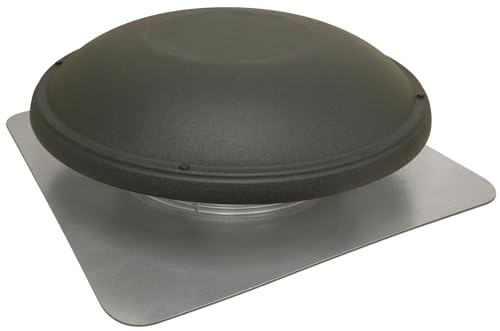
This model mirrors the ERV6’s airflow (up to 1,500 CFM) with a focus on a shingle-match aesthetic to blend with weathered-wood or traditional roof lines. It also includes a thermostat controller for efficient cooling. It’s best for homeowners who want strong attic ventilation while preserving curb appeal.
Best for: Large attics where appearance matters and electric ventilation with thermostat control is desired.
Why selected: Reliable airflow and integrated thermostat make seasonal temperature control predictable.
Limitations: Similar to other electric fans, it relies on home electrical wiring and roof penetration for installation.
VEVOR Solar Attic Fan, 2800 CFM

The VEVOR solar attic fan uses a 42W solar setup with MPPT regulation, delivering up to 2,800 CFM. It includes a smart temperature/humidity controller and remotes for convenience. It switches to electric operation at sunset for continuous cooling on cloudy days. This option excels for sunny locations seeking lower energy bills.
Best for: Solar-ready homes or properties seeking energy autonomy for attic cooling.
Why selected: High maximum airflow with intelligent control supports year-round attic health while reducing electricity use.
Limitations: Solar performance depends on sunlight; may require an alternative power path for low-sun days.
Hon&Guan Solar Attic Fan with Thermostat
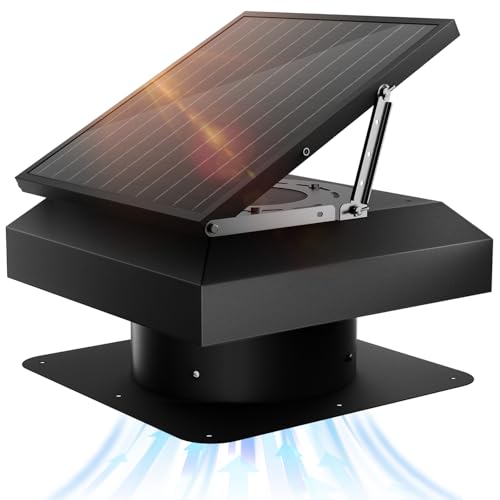
This 40-watt solar roof vent delivers up to 2,000 CFM and cooling for up to 2,500 sq ft. It uses an MPPT controller and offers dual power modes with an auto-switching thermostat for consistent attic comfort. It’s a strong pick for eco-minded buyers needing reliable solar-assisted ventilation.
Best for: Solar-powered cooling in hot climates where roof exposure is high.
Why selected: Strong solar performance with flexible operation modes addresses varying sun conditions.
Caution: No battery backup; continuous operation depends on solar input and grid backup if needed.
Windigaga 15″ Gable Vent Fan with Thermostat

The Windigaga 15-inch attic fan provides up to 1,800 CFM with a built-in thermostat and three speeds, plus an 18-hour timer. It’s wired for plug-and-play use and includes a remote for convenient control. Best for mid-sized attics and users who want adjustable cooling without frequent manual intervention.
Best for: Mid-sized attics where remote-control convenience and programmable timing matter.
Why selected: Combines solid airflow with flexible scheduling and temperature-based auto operation.
Limitations: Highest efficiency occurs with properly insulated ducting and a compatible thermostat setup.
Buying Guide
- Attic size and airflow needs: Match CFM to attic square footage. Larger spaces typically require 1,500 CFM or more for effective cooling.
- Power source: Electric fans deliver consistent performance; solar fans reduce energy use but depend on sun exposure and daylight.
- Controls: Thermostat or humidistat help optimize operation; consider remote control for hard-to-reach installations.
- Installation considerations: Roof-mounted models require structural access, flashing, and electrical or solar wiring. Gable-mounted or wall-mounted units may offer easier installation in some homes.
- Weather and noise: Look for weatherproof housing and low noise levels (dB) to minimize disruption in living spaces.
- Hybrid options: Some solar fans switch to electric automatically, offering resilience on cloudy days. If you anticipate long periods without sun, plan for a reliable electrical backup.
- Maintenance: Built-in screens and durable galvanization reduce maintenance; inspect blades and housings periodically for debris and wear.
FAQ
- What size attic fan do I need? For attics up to about 2,000 sq ft, 1,000–1,500 CFM is common; larger spaces may require 2,000–3,000 CFM.
- Are solar attic fans as effective as electric ones? Solar fans work best in sunny climates and can provide substantial airflow, but performance depends on sun exposure and controller efficiency.
- Is installation difficult? Installation ranges from plug-and-play to roof flashing and wiring; follow manufacturer guidelines or hire a professional for roof penetrations.
- Do attic fans reduce cooling costs? Yes, by reducing attic temperatures, they can lessen the load on air conditioning, especially in hot climates.
- What maintenance is required? Regular cleaning of screens and inspection of blades, housings, and mounts helps maintain performance and longevity.
- Can I use a fan in a vented attic with insulation? Yes, attic ventilation is most effective when insulation reduces heat transfer, but ensure the fan’s intake is not blocked by insulation.