Best Air Vents With Fans for Faster HVAC Flow and Room Comfort
If you’re shopping for air vents with fans, you’re looking for a practical upgrade to boost airflow, balance temperatures, and save on energy costs. The following five models are tailored for 4″ x 10″ register openings and cover floor, wall, or ceiling installations. They’re suitable for small to medium rooms, bedrooms, home offices, and spaces with uneven airflow. This guide highlights who benefits most from each option and why they stand out.
| Product | Best For | Why It Stands Out |
|---|---|---|
| Orabriz AC Vent Booster Fan 4″ x 10″ Register | Small rooms, bedrooms, offices | Quiet operation, 10-speeds, aroma pad slot |
| Howeall Super Quiet Register Booster Fan | Smart control enthusiasts | Dual thermostat and WiFi app control |
| VIVOHOME 4” x 10” Register Booster Fan | Energy-conscious homes | EC motor, up to 120 CFM, quiet |
| BIOWIND Quiet Register Booster Fan | Quiet, stylish installs | Quiet operation, programmable LED controller |
| VELLEE 6” x 10” Register Booster Fan | Higher-volume airflow needs | 10-speed, smart control, strong airflow |
Orabriz AC Vent Booster Fan 4″ x 10″ Register
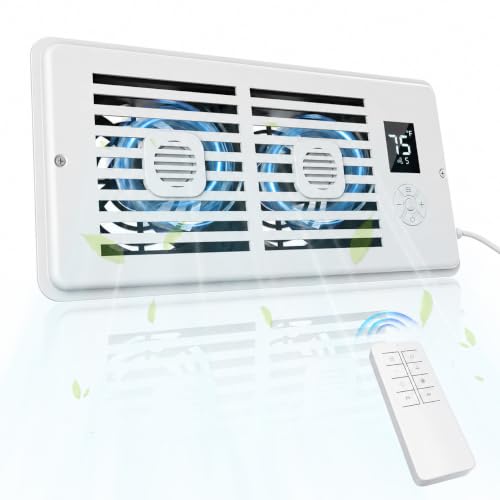
The Orabriz model is best for rooms that need stronger airflow without loud operation. It fits 4″ x 10″ openings and provides 10 speed levels for precise cooling or heating distribution. A built-in thermostat helps keep comfort consistent, while the aroma pad slot adds optional scent to the airflow. This is a solid pick for small bedrooms or home offices where you want a quiet, controllable boost to HVAC performance. A note: verify register dimensions before purchase to ensure correct sizing.
Howeall Super Quiet Register Booster Fan

This option is ideal for buyers who want smart, hands-off control. It combines dual thermostat and WiFi app control, allowing you to adjust airflow remotely and maintain even temperatures throughout the day. The 2026 upgrade emphasizes intelligent programming that turns the booster on or off at optimal times, supporting energy savings. Choose this if you value automated scheduling and remote management, but be aware that initial setup requires a compatible WiFi environment.
VIVOHOME Register Booster Fan

The VIVOHOME model appeals to users seeking a balance of quiet operation and noticeable airflow. It uses an EC motor to deliver up to 120 CFM and runs below 18 dB in normal operation. It supports floor, wall, or ceiling mounting, with a thermostat that operates automatically according to preset temperatures. Best for households prioritizing energy efficiency and daytime comfort, with a caveat that measurements must match your vent opening before purchase.
BIOWIND Quiet Register Booster Fan

Biowind focuses on quiet operation and a sleek, modern look. It features a programmable LED controller and a high-precision temperature sensor that automaticall y adjusts the fan for balanced temperatures. This is a good fit for living spaces where aesthetics matter as much as airflow. A potential limitation is that some users may prefer a dedicated mobile app for control rather than LED-based scheduling.
VELLEE Quiet Register Booster Fan

VELLEE is best for users needing stronger airflow with a compact footprint and 10-speed control. It emphasizes a smart temperature sensor and a chip that adjusts automatically, reducing manual setup. It’s well-suited for larger rooms or spaces with persistent temperature differences. A note: install requires accurate vent sizing and may be noticeable at higher speeds depending on room acoustics.
MOTCTQVD Smart Register Booster Fan
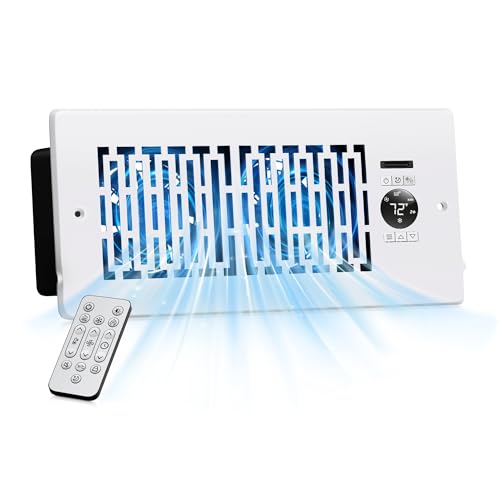
This model combines a thermostat-controlled vent booster with a 10-speed range and a quiet PWM-driven motor. It’s a practical option for 4″ x 10″ vents in homes that want reliable temperature control and consistent airflow. The back housing dimensions are provided to help verify fit. Consider this if you want a straightforward, automated control without requiring a separate app.
MATULSA Register Booster Fan

MATULSA offers a simple plug-and-play installation for 4″ x 10″ vents with a low-profile design. Its 10-speed remote and thermostat control provide flexible comfort, especially in rooms with variable use patterns. It emphasizes safety with a triangular hollowed-out surface for finger safety. Best for quick upgrades and easy setup, with a reminder to measure vent size precisely before purchase.
Buying Guide: Key Purchase Considerations
- Vent size compatibility: Ensure your register opening is exactly 4″ x 10″ or within the listed tolerances.
- Control method: Choose between manual controls, remote or app control, and thermostat-based automation based on how you prefer to operate the device.
- Noise and airflow: Look for PWM motors and low decibel ratings to balance power with quiet operation; higher CFM is better for larger rooms.
- Installation type: Confirm whether the unit is suitable for floor, wall, or ceiling mounting and whether it requires an outlet nearby for power.
- Aesthetics and materials: Consider a unit with a slim profile and finishes that blend with your decor for visible installations.
- Energy considerations: Programmable thermostats and automatic on/off features help reduce energy use over time.
Frequently Asked Questions
- What does a vent booster fan actually do? It improves airflow from HVAC vents, helping balance room temperatures and reduce hot or cold spots.
- Do I need a smart model or is a basic fan enough? Smart models offer automatic control and remote access, which can save energy and simplify usage in busy homes.
- How do I size my vent for a booster fan? Measure the register opening precisely. Most boosters list 4″ x 10″ as the standard size to fit.
- Will a booster fan be loud? Many models advertise quiet operation (under 18 dB to around 20 dB at low speeds). Noise levels rise with higher speeds, so select a speed that suits your tolerance.
- Can I install these myself? Most are designed for DIY installation, but confirm mounting type, power access, and vent fit before starting.
- Is it better to buy a model with a thermostat? A thermostat helps automate airflow based on room temperature, which can improve comfort and energy efficiency.