Best Air Handler Condensate Pump Options for Quick Choose-From Clarity
If you’re selecting an air handler condensate pump, this guide identifies reliable, compact models suitable for HVAC, refrigeration, and dehumidifier setups. Best for residential systems is a small, low-profile pump with automatic float switches; for commercial or larger homes, a higher GPH pump with longer tubing proves more dependable. The following picks cover common needs: compact footprint, automatic operation, and clear compatibility with attic, closet, or equipment rooms. The summary table below helps compare key specs at a glance.
| Product | GPH | Head Height | Key Benefit | Best For |
|---|---|---|---|---|
| Little Giant VCMA-15ULST | 65 | — | Compact, auto condensate removal, overflow switch | Small to medium residential systems |
| Little Giant VCMA-20ULS | 80 | — | Higher flow, reliable protection | Medium to larger residential setups |
| Little Giant VCMA-20ULST | 80 | — | Tubing option, taller run capability | Basements, closets, or attics with longer runs |
| Cleartide Condensate HVAC Pump | 127 | 24.6 ft | Ultra-quiet operation with advanced indicators | Quiet installations or noise-sensitive spaces |
| DiversiTech CP-22 | 22 | 22 ft | Compact, tubing included, reliable for standard applications | Budget-friendly, standard condensate removal |
Little Giant VCMA-15ULST 65 GPH Condensate Pump

Best for small air handlers or compact HVAC installations. This model uses a vertical-type switch to minimize footprint while providing automatic condensate removal from boilers, furnaces, air conditioners, and de-humidifiers. It features a thermally protected, fan-cooled motor and a robust ABS tank with a stainless steel motor shaft for durability. Suitable for water up to 140°F, it’s a compact solution for tight spaces.
Best for: small apartments, compact mechanical rooms, or retrofit projects where space is at a premium. Caution: the 20-foot tubing option is not included here, so plan for shorter runs if you’re limited on outlet access.
Little Giant VCMA-20ULS 80 GPH Condensate Pump

Better for mid-size residential systems or split systems needing higher condensate removal. It delivers 80 GPH with a 1/30 HP motor and a 6-foot cord, plus thermal protection and a durable ABS tank and motor mount. The design supports a long service life under normal operation in climate-controlled spaces.
Best for: homes with larger condensate loads or installations where a longer cord is helpful. Caution: 6-foot cord may require an outlet closer to the pump location to minimize extension needs.
Little Giant VCMA-20ULST 80 GPH Condensate Pump with 20-Foot Tubing

This variant offers the same high-embodied reliability as other Little Giant units but includes longer tubing for easier routing in practical installations. It uses a vertical switch, remains thermally protected, and has a 1/30 HP motor. It’s capable of handling typical condensate temperatures up to 140°F.
Best for: installations needing longer discharge tubing or where the pump must sit farther from a drain. Caution: ensure tubing runs avoid sharp bends that could impede flow.
Cleartide Condensate Pump Ultra-Quiet 127 GPH

Best for quiet operation in residences or bedrooms, this pump runs at just 25 decibels with a water-cooled brushless DC motor and a 24.6-foot lift height. It includes an advanced monitoring system with three indicators (power, operation, malfunction) and an overflow safety switch. The 5/8 gallon tank minimizes cycling and reduces noise-related issues.
Best for: noise-sensitive spaces or where continuous monitoring is valued. Caution: higher GPH and lift height may be more than needed for tiny condensate loads.
DiversiTech CP-22 Series Automatic Condensate Pump

Best for standard HVAC/R condensate removal with a removable check valve, the CP-22 offers a 22′ lift and a 120V motor. It’s designed for common condensate management tasks and includes tubing to support typical installations. It is a practical option for contractors or homeowners upgrading an existing system.
Best for: straightforward, proven condensate removal in typical residential or light commercial apps. Limitation: data highlights general dimensions; verify room fit and drain configuration before purchase.
DiversiTech CP-22LP Automatic Condensate Pump

Best for standard condensate management in HVAC/R with a 22′ lift. This model emphasizes compatibility with typical equipment while providing a 120V motor and straightforward installation. It’s a cost-effective option for everyday condensate removal needs.
Best for: budget-conscious installations needing dependable, standard-performance pumps. Caution: does not emphasize extra features like advanced indicators found on higher-end models.
MSELTOS 66 Ft Mini Split Condensate Pump

Best for mini-split installations or spaces with longer discharge runs. This dual-voltage unit operates at 115V/230V, with a quick-flow 10.6 GPH and a 66-foot head height. It uses an automatic safety switch and features a quiet operation profile, suitable for ceiling lines or tight mechanical rooms.
Best for: professional mini-split setups or installations requiring long vertical discharge. Caution: some users may find the 10.6 GPH flow modest for high condensate loads.
Westinghouse 132 GPH Condensate Pump with Safety Switch
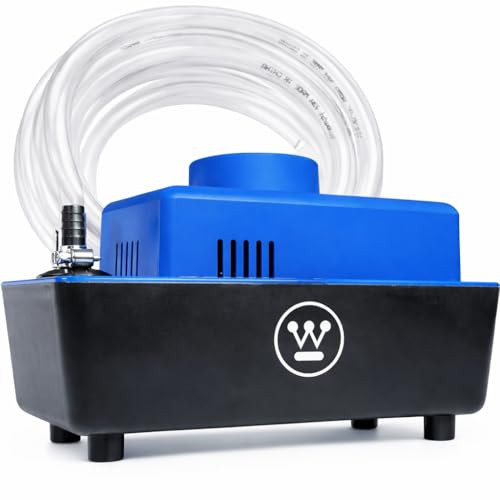
Best for reliable residential or light commercial condensate removal with an integrated safety switch. This unit pumps up to 132 GPH, powered by a 1/20 HP motor, and includes a safety switch to protect HVAC equipment from overflow. It’s a straightforward, dependable option for standard drain pan applications.
Best for: typical AC/furnace drain setups where overflow protection is important. Caution: ensure the safety switch wiring is accessible for service checks and that tubing is compatible with your drain system.
Buying Guide: Key Considerations For Air Handler Condensate Pumps
- Capacity vs. Lift: Match GPH to your condensate load. Higher GPH is useful for larger systems, while lower GPH suffices for compact units. Also check the maximum lift height to ensure proper drainage to the drain line.
- Power and Cord Length: Confirm voltage compatibility (115V typical in the US) and cord length to avoid outlet placement issues. A longer cord helps with distant pumps but may require a plug strip or extension in some setups.
- Float Switch and Safety Features: Overflow detection and safety switches help prevent water damage. Look for thermal protection on the motor for longer life and reliability in humid environments.
- Durability and Materials: ABS tanks with stainless steel shafts and rugged motor housings reduce corrosion and wear. Consider noise level if the pump is in living areas or bedrooms.
- Tubing and Installation: Check included tubing lengths and diameter compatibility. Longer tubing enables flexible routing, while removable check valves can simplify maintenance and reduce backflow risk.
- Installation Environment: Attics, basements, and mechanical closets may require compact footprints or longer discharge paths. Noise, vibration, and accessibility should guide placement decisions.
Frequently Asked Questions
- What is condensate pump capacity best for a typical home HVAC system? Answer: For standard residential systems, pumps in the 65–80 GPH range are common and adequate for typical condensate loads.
- Do condensate pumps require a safety switch?
- Can I use a condensate pump with a mini-split system?
- Is tubing length important?
- What maintenance is needed for condensate pumps?
Answer: Safety switches help prevent overflow and protect HVAC equipment from water damage, making them a practical feature.
Answer: Yes, many condensate pumps are compatible with mini-split setups, especially models designed for longer discharge or quieter operation.
Answer: Yes. Longer tubing allows flexible routing but ensure proper gradient and avoid kinks to prevent backflow or air locks.
Answer: Regularly inspect tubing for clogs, test the overflow switch, and clean the intake area to maintain efficient operation.