Best Air Conditioner Pressure Washer Solutions for Coil Cleaning
When choosing an air conditioner pressure washer, look for models designed to clean HVAC coils and evaporator fins effectively, with portable designs and safe water delivery. This guide highlights five options suited for residential and light-commercial coil cleaning, clarifying who each product is best for and why. Ideal buyers include HVAC technicians, homeowners maintaining mini-splits, and DIY enthusiasts cleaning outdoor condenser coils. The table below summarizes key picks to compare at a glance.
| Product | Best For | Key Benefit |
|---|---|---|
| ZPB140 Portable Pressure Washer with 3.5 Gallon Water Tank (ToughAid) | Professional coil cleaners and contractors | Backpack-tank design for easy transport |
| ZPB140 Portable Pressure Washer, Port A Blaster HVAC Coil Cleaning (JOYTRADE) | Cordless cleaning on-site | Battery-powered with true cordless freedom |
| WIPCOOL C10B-AC Portable HVAC Coil Cleaning Machine | Field technicians needing dual power | AC & DC dual power for flexible power sources |
| Updated ZPB140 Port A Blaster HVAC Coil Cleaning, Portable Washer | Indoor and outdoor coil cleaning | Two pressure modes and water-based operation |
| Oiktylr Mini Split Cleaning Kit Bag with 2L Sprayer | Mini-split upkeep and indoor units | Compact kit for targeted indoor cleaning |
ZPB140 Portable Pressure Washer with 3.5 Gallon Water Tank, ToughAid

The ZPB140 from ToughAid is a 100-120V, 80W portable pressure washer with a 3.5-gallon backpack water tank and 4 L/min flow. It includes a mini washer pump, removable filter, high-pressure gun, and a multi-tube hookup for coil cleaning. Best for HVAC technicians and do-it-yourselfers who need a compact, all-in-one kit for indoor or outdoor coil maintenance. The large shoulder straps and padded back panel reduce fatigue during longer spray sessions. The unit operates with a working pressure range of 0.7–1.0 MPa and uses a simple hose-and-suction setup to draw cleaner from a container. Use best with water or non-corrosive coil cleaners. A noted limitation is that it relies on a water source or external cleaner supply, which may require planning for field jobs.
Who it’s for: HVAC pros and dedicated homeowners who want a ready-to-use, portable coil cleaning solution with a built-in water tank. Why selected: Combines mobility, water storage, and a 4 L/min flow suitable for coil jets in tight spaces.
ZPB140 Portable Pressure Washer, Port A Blaster HVAC Coil Cleaning

This JOYTRADE model is a cordless version featuring an 18V battery connection and an 80W motor, with a 4 L/min flow and a 3.5-gallon water tank. It ships with a selection of nozzles (0° and 220°) and an extension wand, plus a lumbar support and battery adapter, enabling true on-site operation away from a main power outlet. Best for outdoor coils or locations where dragging a power cord is inconvenient. Battery not included is a common caveat to consider for upfront readiness. It’s ideal for cleaners who prioritize mobility and indoor/outdoor versatility, especially when power outlets are scarce.
Who it’s for: Cleaners who need cordless operation and broad nozzle options for indoor and outdoor coil maintenance. Why selected: True cordless capability paired with a backpack tank supports flexible cleaning in challenging spaces.
WIPCOOL C10B-AC Portable HVAC Coil Cleaning Machine
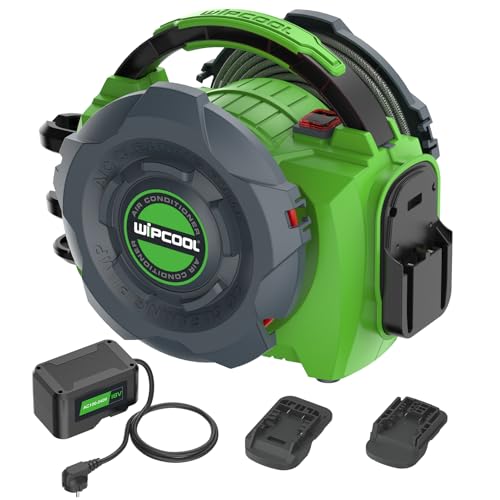
The WIPCOOL C10B-AC provides true AC & DC dual power, allowing operation from AC outlets or 18V battery packs. It offers two pressure ranges (44–73 PSI and 102–145 PSI) to adapt to indoor evaporator coils and outdoor condensers. Includes a plug-in converter and battery adapters for popular brands, making it suitable for professional service calls where power availability varies. A caution is that batteries are not included, so compatibility with preferred brands must be planned. This tool aims at technicians who need reliable power flexibility and adjustable pressure to protect fins and coils during cleaning.
Who it’s for: HVAC technicians and field contractors needing consistent performance with both AC power and battery mobility. Why selected: Dual power capability and adjustable pressure support precise cleaning across indoor and outdoor coils.
Updated ZPB140 Port A Blaster HVAC Coil Cleaning (Indoor/Outdoor)

This updated ZPB140 version shares a 4 L/min flow, 0.7–1.0 MPa working pressure, and a 100–120V power supply, with a carbon-friendly design for indoor or outdoor coil cleaning. It emphasizes a dual-port connection system and clear instructions for drawing water or non-corrosive coil cleaner through the wand, supporting controlled mist or direct spray modes. Best for users who want a reliable, water-based coil cleaner that can alternate between indoor and outdoor cleaning by adjusting the spray mode. Limitation: it requires a water source or cleaner reservoir to function as intended.
Who it’s for: Cleaners who need a straightforward, water-based coil cleaning solution with indoor/outdoor versatility. Why selected: Clear dual-mode operation and precise spray control help protect delicate fins during cleaning.
Oiktylr Mini Split Cleaning Kit Bag

The Oiktylr kit focuses on mini-split maintenance with a 2L high-pressure sprayer, included brushes, waterproof cleaning cover, and protective film to shield circuit boards. It does not include cleaning fluids, so users must source their own solution. Best for indoors with tight access or for maintenance tasks where precision spraying and board protection matter. A limitation is that this kit lacks a built-in water reservoir, so it relies on separate water sources. This makes it ideal for quick indoor cleanups and targeted components rather than full outdoor coil blasts.
Who it’s for: Homeowners and technicians focusing on mini-split units or delicate indoor cleaning. Why selected: Compact kit with protective measures for electronics and a targeted 2L sprayer for precise cleaning.
Buying Guide: Coil Cleaning With Air Conditioner Pressure Washers
What should you consider before buying?
- Power source and mobility: Do you need corded, cordless, or dual-power options? Cordless units are more portable but rely on battery availability.
- Water source and capacity: A built-in tank simplifies field work, but some kits require external water or coil cleaner solutions.
- Pressure range and flow: Indoor coils benefit from lower pressure to avoid fins damage; outdoor condensers may require higher flow and spray modes.
- Included accessories: Nozzles, wands, and adapters affect versatility and ease of cleaning different coil configurations.
- Weight and ergonomics: Backpack or padded harness designs reduce fatigue during extended cleaning sessions.
- Compatibility and safety: Ensure the unit’s materials resist corrosion from coil cleaners and that electrical specs match your working environment.
Indoor vs outdoor cleaning: what to choose?
- Indoor evaporator coils: Prefer lower pressure, mist-like spray to avoid bending fins and causing damage.
- Outdoor condensers: Higher spray pressure is acceptable for removing stubborn debris, dirt, and grime on the coil fins.
Maintenance and safety tips
- Always use non-corrosive, coil-safe cleaners and follow the manufacturer’s dilution guidelines.
- Rinse thoroughly after cleaning to prevent residue buildup on fins and coils.
- Inspect hoses and filters for wear before use to minimize leaks and ensure consistent spray.
FAQ
- What should I use to clean air conditioner coils? – Use coil-safe cleaners designed for HVAC coils, along with water or approved cleaners as recommended by the tool’s instructions.
- Can these devices damage my AC fins? – Improper pressure or improper nozzle use can bend fins; select the correct mode for indoor vs outdoor cleaning and ensure gentle mist for indoor units.
- Are cordless units as effective as corded ones? – Cordless models offer mobility but depend on battery life; for prolonged jobs, corded or dual-power units can be more reliable.
- Is it necessary to disconnect power before cleaning? – Yes. Always ensure the system is powered down and safe to access before starting any cleaning task.
- Do these tools work with all brands? – Many are designed to be compatible with common AC units, but confirm nozzle types and battery compatibility for your specific brand or model.
- What is the best practice for indoor coil cleaning? – Use a low-pressure spray on the indoor unit, keep the spray angled to avoid direct impact on fins, and avoid soaking electronics unless the kit includes protective measures.