Best Air Conditioner Base Pad Options for Outdoor Units and Mini Splits
If you’re searching for a stable, moisture-proof base for an outdoor AC condenser or mini-split, a high-quality pad is essential. These units rest on a level platform to minimize ground moisture exposure, reduce vibrations, and prevent shifting. The top pads listed here are suitable for residential and small commercial setups, and they’re designed for easy installation, even by a single person. This guide highlights five well-rounded choices and who each is best for, helping you pick the right pad for your climate and equipment.
| Product | Best For |
|---|---|
| Cambridge Black AC Condenser Pad/Base, 36x36x3 in | Mid-to-large condensers; stable base with strong load capacity |
| Cestluck Mini Split Pad, 24 x 24 x 3 in | Smaller outdoor units; lightweight, easy install |
| Memrita Equipment Pad, 24x24x2 in | Budget-friendly, dual-height options; compact spaces |
| Cambridge Gray AC Condenser Pad/Base, 24x48x3 in | Longer footprint for wider condensers; good moisture protection |
| Cambridge Black AC Condenser Pad/Base, 24x24x3 in | Compact systems; easy one-person setup |
Cambridge Black AC Condenser Pad 36x36x3

Best for mid-to-large outdoor condensers requiring a broad, stable platform. The pad’s solid wall construction helps resist cracks and chips, supporting heavy units with a high load-bearing capacity. Ribbing underneath keeps the unit steady, while the textured surface reduces movement and dampens vibrations for quieter operation. Lightweight enough for one-person installation and drillable for secure attachment when needed. Consider this option if your condenser sits on soft ground and you value long-term stability and reduced noise.
Caution: Ensure you have enough space around the pad for airflow and maintenance access. Over-tightening or improper mounting could limit airflow or vibration dampening benefits.
Cestluck Mini Split Pad 24x24x3
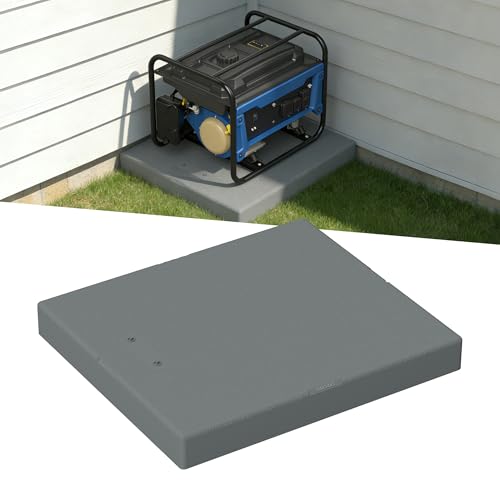
Best for smaller outdoor mini-split systems and heat pumps where a compact footprint matters. This pad supports up to 660 lbs, uses a textured anti-slip surface, and features a reinforced ribbed structure to curb vibrations. Made from UV-stabilized polypropylene, it withstands rain, sun, and temperature swings. It’s a good pick for installations on soil, grass, gravel, or concrete. Choose this if you need a sturdy, weather-resistant pad that’s easy to position in tight spaces.
Limitation: While the pad handles typical outdoor loads well, verify your unit’s exact weight and BTU range to ensure compatibility with the 660 lb rating.
Cambridge Gray AC Condenser Pad/Base 24x48x3

Best for longer, rectangular condensers that need a generous platform and moisture protection. The pad’s design emphasizes load-bearing capacity and a level surface to prevent moisture exposure. Ribbed construction aids stability, while the textured top helps keep the unit from slipping. It remains relatively light for one-person placement and can be drilled for secure mounting. This option suits installations where a wider base is preferred for even weight distribution and ground dampness mitigation.
Caution: Ensure there is adequate clearance for maintenance access around the longer pad area and around all sides of the condenser.
Cambridge Black AC Condenser Pad 32x32x3

Best for mid-size condensers where a square base provides steady footing. This pad shares Cambridge’s hallmark features: solid wall construction to resist damage, ribbing for weight support and stability, a textured surface to minimize shifting, and a lightweight profile for easy handling. It’s a practical choice when you want a reliable, drill-ready pad that balances load support with straightforward installation.
Limitation: The 32×32 size may be less suitable for wider units; verify your condenser’s footprint before purchasing to avoid overhang or instability.
Cambridge Black AC Condenser Pad 24x24x3

Best for compact outdoor units or limited spaces where a square, small footprint is required. The pad offers Cambridge’s core benefits—moisture resistance, stability, and ease of installation—with a compact 24×24 base. It is ideal for smaller AC condensers or mini-splits located in tight setups, balconies, or patios. A caution is to check if the unit’s width matches the pad’s 24-inch dimension to ensure full contact and stability.
Buying Guide: Key Purchase Considerations
- Size and footprint: Match the pad dimensions to your condenser or mini-split base. A larger footprint spreads weight and reduces ground pressure but may not fit in tight spaces.
- Load capacity: Confirm the unit’s weight or BTU range falls within the pad’s load ratings. Too small a pad risks sinking or shifting during wind and weather.
- Material and weather resistance: Look for UV-stabilized plastic or reinforced polypropylene for durability against sun, rain, and temperature swings.
- Stability features: Ribbing, textured surfaces, and anti-slip designs improve grip and dampen vibrations to reduce noise.
- Installation: Consider whether you need a lightweight pad for one-person setup or a pad with mounting options for added security.
- Maintenance access: Ensure there is sufficient clearance around the unit for routine checks and filter changes.
Frequently Asked Questions
- What is an air conditioner base pad used for?
It provides a level, moisture-protected foundation for condensers and mini-splits, improving stability and reducing ground contact.
- How do I know which size pad to buy?
Measure your unit’s footprint and check the pad dimensions. Choose a pad that offers a little extra space on each side for airflow and mounting if needed.
- Can base pads support heavy outdoor units?
Yes, pick a pad with a load rating that meets or exceeds your unit’s weight. Larger pads typically offer higher load capacity and stability.
- Are plastic base pads weatherproof?
Most are UV-stabilized polypropylene or similar materials designed to resist cracking, chipping, and deformation from sun and rain.
- Do I need to drill the pad to secure the unit?
Some pads are drill-ready for secure mounting; others rely on weight and friction. Follow the manufacturer’s instructions for your model.
- What maintenance is needed for an AC base pad?
Periodically check for cracks, movement, or soil erosion beneath the pad and clear debris to maintain airflow around the unit.