Best 60 000 BTU Garage Heaters for Large Spaces and Cold Weather
Finding a reliable 60,000 BTU garage heater can transform a cold workspace into a comfortable, productive area. This guide reviews five solid options that provide robust heat output, safety features, and practical convenience for garages, workshops, and job sites. Each product section includes an at-a-glance look at key specs, plus real-world considerations to help you choose the right model for your space.
| Brand | Name | ||
|---|---|---|---|
| Habitio | 60,000 BTU Forced Air Propane Heater | 40,000 – 60,000 | Portable Torpedo |
| Remington | LP Forced Air Heater | 60,000 | Propane |
| Mr. Heater | 60,000 BTU Forced Air Propane Space Heater | 30,000 – 60,000 | Propane |
| InoKraft | MaXheat MH68 68,000 BTU | 30,000 – 68,000 | Propane |
| Dura Heat | LPC80 50-80,000 BTU Propane Convection Heater | 50,000 – 80,000 | Propane |
Note: The products listed here are selected for relevance to a 60,000 BTU target in general garage and workshop spaces. Always verify compatibility with your space size, ventilation, and local safety regulations before purchase.
Habitio 60,000 BTU Propane Heater

Heating capacity ranges from 40,000 to 60,000 BTU per hour, with coverage suitable for large spaces up to about 2,195 sq ft. This model emphasizes a portable torpedo form factor, ease of setup with a 10 ft hose and regulator, and a safety-centric design that includes overheat protection and auto-shutdown on power loss. A warning in the manual highlights tightening gas connections with a wrench to prevent leaks, underscoring the importance of proper installation.
Mr. Heater 60,000 BTU Propane Space Heater
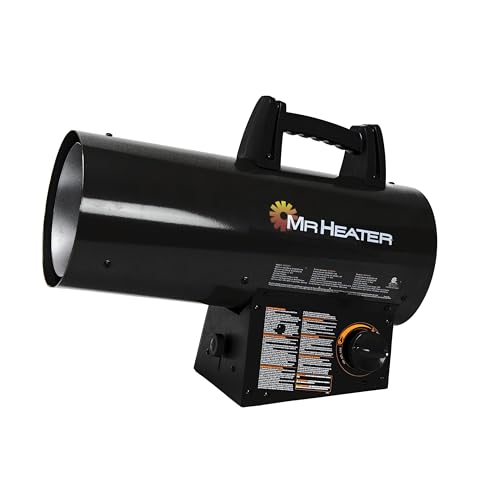
This model supports a 30,000–60,000 BTU range and includes a 10 ft hose and regulator. It features a large, glove-friendly handle for portability and user-friendly operation. While designed for propane use, it emphasizes safety features typical of Mr. Heater products, including stable ignition and reliable shut-off mechanisms. It is well-suited to medium-to-large garages, barns, or workshops where 60,000 BTU provides the needed warmth without excessive fuel consumption.
InoKraft MaXheat MH68 68,000 BTU

Offering a 30,000-68,000 BTU output, the InoKraft unit heats areas up to 1,600 sq ft. Its heavy-duty furnace-style design provides rapid heating within minutes via a fan-forced system. The heater includes multi-protection safety features to support clean burning and reduced odor, along with CSA certification. Notably, it allows adjustable heat angles and emphasizes low-noise operation for a more comfortable work environment.
Dura Heat LPC80 50-80k BTU Propane Convection

The LPC80 model provides a 360-degree convection heating design with a variable output range of 50,000 to 80,000 BTU. It operates on LP gas and can heat large areas, up to 1,900 sq ft, for up to about 17 hours on a 40 lb cylinder. The heater does not require electricity to operate and uses a piezo igniter for simple operation. It’s marked for substantial space heating in garages and workshops that don’t have consistent electrical access.
Mr. Heater MH170QFAVT 170,000 BTU Portable

While this option surpasses the 60,000 BTU target with 125,000-170,000 BTU per hour, it remains a relevant reference point for large-scale spaces. It heats up to 4,250 sq ft and includes safety features such as a high-temperature limit switch and thermoelectric safety valves. Its quiet burner technology reduces noise, and rugged construction supports heavy-duty outdoor and job-site use. Consider this if you anticipate needing heat for very large facilities or open-air work scenarios.
Buying Guide: Key Purchase Considerations
When choosing a 60,000 BTU garage heater, consider space size, ventilation, fuel type, and safety features. The most important factors include heat output versus space, energy efficiency, and the availability of shut-off protections in the event of tipping, overheating, or power loss.
- Space sizing: For garages up to about 2,000 sq ft, a 60,000 BTU heater is often appropriate, provided there is adequate ventilation. For larger spaces, models in the 68,000–80,000 BTU range may be more effective.
- Fuel type and availability: Propane is common and easy to source, but ensure supplier accessibility and storage safety. Natural gas units require a gas line and professional installation.
- Ventilation: Proper exhaust and fresh air supply are essential to avoid buildup of combustion byproducts. Some models offer built-in venting options, while others are best used in well-ventilated areas.
- Safety features: Look for automatic shut-off on tip-over or overheating, flame-out protection, and a thermocouple or regulatory valves. CSA or UL certifications indicate adherence to safety standards.
- Electrical considerations: Some units rely on electricity for ignition or fans; confirm circuit capacity and outdoor-use suitability if you plan to operate near damp or exposed areas.
- Portability and setup: 10 ft hoses, regulators, and ergonomic handles improve mobility. Wrench-tightened gas connections are a safety reminder for proper installation.
- Noise level: Some models advertise quieter operation; consider this if the workstation requires a conducive listening environment.
- Maintenance: Regular inspection of connections, ignition components, and filters helps ensure consistent performance and safety throughout seasonal use.
Compared to smaller, indoor-only heaters, 60,000 BTU units are designed for larger garages and workspaces. If your space has high ceilings, consider models with superior air distribution and heat up times to avoid cold zones. Always follow manufacturer guidelines for setup, operation, and storage to maximize performance and safety.