Best 40,000 BTU Pool Heat Pumps for Inground and Above Ground Pools
When you need reliable, year‑round heating or cooling for a 12,000‑gallon pool, a 40,000 BTU heat pump is a strong choice. This guide highlights five top models, explains who each is best for, and compares key features like WiFi control, energy efficiency, and operating range. Ideal buyers include families seeking steady water temperatures, pool owners upgrading from smaller heaters, and those prioritizing app control and energy savings.
Summary table of selected products:
| Product | Best For | Key Feature | Approx. COP/Performance | Power |
|---|---|---|---|---|
| Varpoolfaye 40000 BTU Pool Heater (B0FB3L1NS4) | Above/Inground pools up to 12,000 gal | WiFi control, 59–104°F heating | COP 6.2 | 220V |
| Albott 40,000 BTU Pool Heater (B0GSZ9NCH8) | All-season comfort for 12k gal pools | Smart app control, 44–104°F heating | COP up to 12 | 220V |
| VARMINPOOL 40,000 BTU Smart Heat Pump (B0GXVZZX6R) | Smart control lovers, up to 12k gal | WiFi via Smart Life, timer | High efficiency via inverter | 240V |
| VARMINPOOL 40,000 BTU with Timer (B0FB8S8KPS) | Stable heating, robust performance | Timer, APP control, heat/cool | 40,000 BTU class | 240V |
| Albott 40,000 BTU With App Control (B0GVZ4P89S) | Extended seasons, quiet operation | Inverter energy efficiency, 44.6–104°F | 12 COP | 220V |
Varpoolfaye 40000 BTU Pool Heater for 12,000 Gal
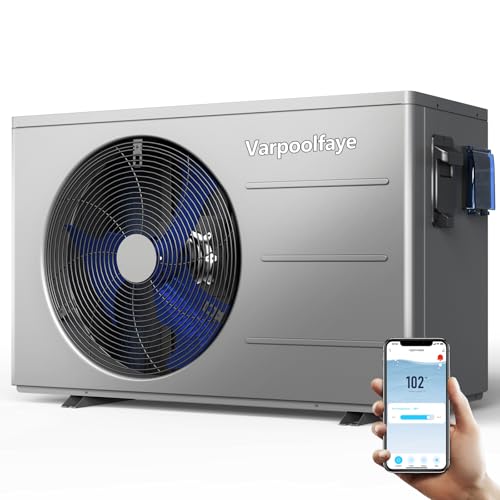
Best for: Above-ground and in-ground pools up to 12,000 gallons. This model delivers rapid heating with a high-pressure compressor and a COP of 6.2, supporting both heating (59°F–104°F) and cooling (45°F–86°F). It features WiFi control and scheduling for convenient management. The 220V supply enables robust operation year-round.
Why selected: It combines strong BTU output with smart control, making it suitable for those who want quick temperature adjustments and remote monitoring. The cooling mode is a plus for hot summer days when you want to keep water comfortable without over-heating the environment.
Caution: Specific installation considerations may apply for 120V vs 240V wiring setups; ensure electrical compatibility before purchase.
Albott 40,000 BTU Pool Heater for 12k Gal
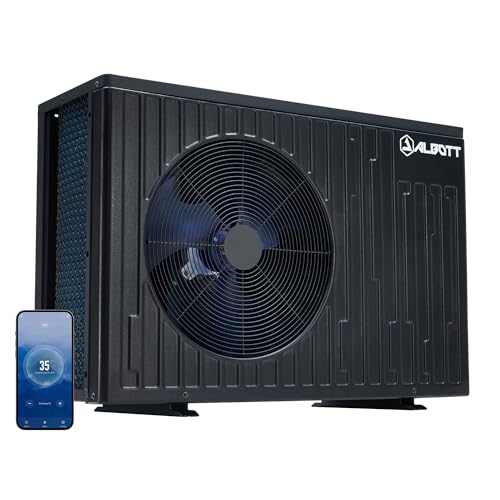
Best for: All-season pool heating for both above-ground and inground setups up to 12,000 gallons. It offers accurate temperature control in the 44–104°F range and includes mobile app control for on‑the‑go adjustments.
Why selected: The inverter‑based system and defrost function help maintain steady performance in cooler weather, improving reliability across seasons. High heating power supports faster warm-up.
Caution: Higher power demands may require professional electrical installation and dedicated circuit planning due to 220V requirements.
VARMINPOOL 40,000 BTU Smart Heat Pump (B0GXVZZX6R)

Best for: Pool owners who want app-based control and scheduling for up to 12,000 gallons. This model emphasizes smart connectivity and energy monitoring for efficient operation.
Why selected: The Smart Life app integration and timer functions provide flexible control, helping users optimize heating and cooling while managing energy use. Titanium heat exchanger supports corrosion resistance for longer life.
Caution: 240V electrical setup is typical; ensure wiring and space for the unit’s footprint before purchasing.
VARMINPOOL 40,000 BTU with Timer (B0FB8S8KPS)

Best for: Pools up to 10,000 gallons needing strong heating and reliable cooling with programmable control. The timer function enables routine scheduling for daily operation.
Why selected: It delivers consistent 40,000 BTU heating and includes app control for remote management, making it a solid mid‑range option with practical scheduling features.
Caution: Designed for 240V operation; verify electrical setup and local codes before installation.
Albott 40,000 BTU Pool Heater With App Control

Best for: Homeowners seeking extended swim seasons with precise temp control from a mobile app. Suitable for pools up to 12,000 gallons.
Why selected: Inverter energy efficiency and a wide operating range (44.6–104°F heating, 44.6–83°F cooling) support long-season use while reducing energy waste compared with resistance heating.
Caution: Installation usually requires a dedicated circuit and professional electrical work for optimal performance.
Buying Guide
What should you consider when choosing a 40,000 BTU pool heat pump?
- Pool size compatibility: Most 40,000 BTU units target pools up to 12,000 gallons. Confirm your pool’s volume to avoid under or over‑powering.
- Heating vs. cooling needs: Decide if you primarily need heating, or if cooling is a beneficial feature for hot climates or intense sun exposure.
- Energy efficiency: Look for high COP values and inverter technology to reduce long‑term operating costs. Inverter systems adapt power to demand, saving electricity.
- Control and connectivity: App control, scheduling, and energy monitoring can simplify maintenance and optimize usage. Ensure the app is compatible with your device ecosystem.
- Electrical requirements: Most models run on 220–240V. Verify circuit capacity, wiring, and outdoor installation code compliance.
- Durability and environment: Titanium or corrosion‑resistant heat exchangers extend life in chlorinated water and outdoor conditions.
Common questions
- Do 40,000 BTU heat pumps work in cold weather? Yes, but performance depends on ambient temperature; some units include defrost cycles to improve operation.
- Is 40,000 BTU overkill for a 12,000‑gallon pool? It can heat more quickly and maintain temperatures during shoulder seasons, but electrical load and climate matter.
- What maintenance is required? Regular cleaning of air intakes, checking hoses, and seasonal testing of the defrost and control systems.
- Can I install these myself? Some models permit DIY installation if you are comfortable with electrical work; many setups require a licensed professional.
- Which model is best overall? The best choice depends on your priorities: energy efficiency, smart features, and installation constraints.